August Beauty Gardenia Bloom Time and Flower Color Guide
Late summer and early fall are peak season for watching gardenias reach their peak. If you've just planted an August Beauty Gardenia or are planning to, understanding its bloom pattern is key to timing your garden for maximum fragrance and color. This guide walks you through exactly when flowers appear, what color to expect, and how to time your care to match the blooming season.
When Does August Beauty Gardenia Bloom?
August Beauty Gardenia has a predictable but region-dependent bloom window. The plant produces its heaviest flush of flowers in late spring and early summer. In most climates, expect blooms to begin appearing in May or June and peak through July. Many gardeners see the strongest show during this window, with buds opening steadily as temperatures warm.
What makes this cultivar special is its ability to keep flowering into summer and beyond. Unlike some gardenia cultivars that stop after a single flush, August Beauty often produces repeat or sporadic blooms that continue into fall, depending on your climate and summer heat levels. In warmer zones (9 and 10), the plant may bloom more continuously through hot weather. In zone 7b and 8, blooms may slow during peak summer heat and then pick up again as temperatures moderate in September.
Container-grown plants purchased from a nursery often show flowers right away, sometimes delivering blooms within their first season. Nursery specimens have usually reached enough maturity to support flowering. This means a new August Beauty Gardenia can add immediate color to a patio or porch while it continues establishing its root system.
August Beauty Gardenia Flower Color
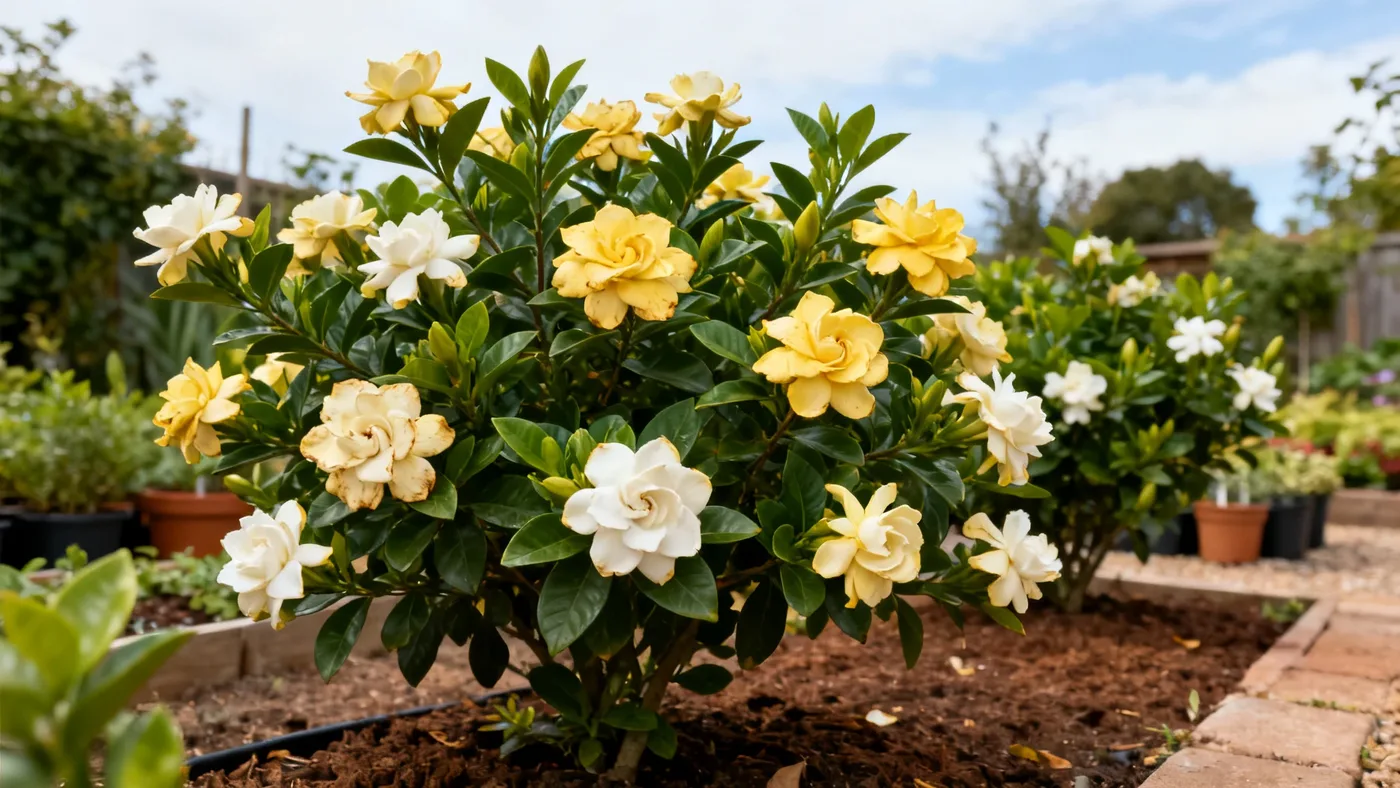
Expect creamy white flowers. This is the signature color of August Beauty Gardenia, and the petals have that rich, warm white tone that makes the blossoms stand out against the glossy dark green foliage. Each flower is double-form (extra petals), creating a fuller, more ornamental appearance than single-bloom gardenias.
As the flowers age, they gradually shift toward ivory and yellowish tones. A fresh bloom may be pure cream-white when it first opens. After a few days, subtle yellow undertones begin appearing, especially toward the center of the flower. This color change is completely normal. By the end of the bloom period (typically 3 to 7 days per flower), the petals may show more pronounced ivory or pale yellow coloring before dropping.
The changing color is one of the reasons gardeners enjoy having multiple blooms open at the same time. A shrub in peak bloom will show a mix of fresh white flowers and older ivory ones, creating visual interest as the display ages. If you're cutting flowers for arrangements or enjoying them close-up near a patio, this progression is one of the small pleasures of growing gardenias.
Bloom Time by Zone
Your USDA hardiness zone shapes when August Beauty Gardenia blooms. The plant thrives in zones 7b through 10, and bloom timing varies across this range.
Zone 7b: This is the northern edge of August Beauty Gardenia's range, and it requires winter protection in cold years. Bloom typically begins in late May or early June. The first flush peaks in June and July. Repeat blooms are less reliable in zone 7b; cold snaps or stress can reduce fall flowering.
Zones 8 and 9: These are the ideal zones for consistent, abundant blooming. Late spring and early summer (May through July) bring the heaviest show. Repeat blooms are common in early fall (September and October) if the plant has been watered consistently during hot months.
Zone 10: In warm southern climates, gardenias can bloom nearly year-round if kept warm and well-watered. The main flush still occurs in late spring and early summer, but you may see flowers sporadically through summer and into fall or even winter in frost-free years.
Factors That Influence Blooming Season
Timing isn't just about zone. Several things in your garden can shift when August Beauty Gardenia blooms and how reliably it produces flowers.
Sunlight: August Beauty Gardenia needs full sun to part shade. In hot southern climates, morning sun with afternoon shade is ideal. More sunlight generally supports more blooms, but excessive heat without afternoon shade can stress the plant and reduce flowering.
Water: The plant requires moderate to consistently moist soil. Underwatering during the growing season can trigger bud drop, cutting your bloom display short. Inconsistent watering in summer often causes the plant to drop developing flowers rather than open them. Once buds form (usually in late spring), consistent moisture becomes critical.
Soil pH: August Beauty Gardenia prefers acidic soil around 5.0 to 6.5 pH. High soil pH can cause chlorosis (yellowing leaves and poor vigor), which reduces flowering. If your garden soil is neutral or alkaline, amending with sulfur or using an acid-loving plant fertilizer can help restore blooming vigor over time.
Temperature swings: Sudden cold snaps or temperature fluctuations, especially in spring, can cause bud drop. In zone 7b, late freezes after buds have formed can wipe out the bloom for that season. This is one reason winter protection matters in marginal zones.
Extended Bloom Tips
To maximize your August Beauty Gardenia's blooming window, time your care to support flowers at every stage.
Pruning after bloom: Prune lightly right after the main flowering flush (usually in August or early September). Never prune in late summer or fall, which removes next year's flower buds. Light pruning for shape and to remove spent blooms keeps energy going into new growth rather than seed production.
Summer feeding: Feed with an acid-loving plant fertilizer (azalea or camellia type) in early spring and again right after the first bloom flush. This supports bud formation for potential fall blooms. Excess nitrogen can reduce flowering, so stick to a balanced formula designed for acid-loving shrubs.
Iron management: If leaves start to yellow while veins remain green, chlorosis is setting in. Apply iron chelate or chelated micronutrients as directed. Yellowed foliage reduces the plant's ability to support new flowers.
Moisture during summer: Consistent watering from June through September sustains the plant's energy for repeat blooms. Let the top inch of soil dry between waterings, but don't let the plant dry out completely. In zones 9 and 10, afternoon shade and mulch help conserve moisture and keep roots cool during heat spikes.
Common Bloom Problems
Bud drop before flowers open: This is usually a sign of temperature swings, underwatering, or low humidity. It can happen in spring if a cold snap follows warm weather. Summer bud drop often points to inconsistent watering or stress from heat. Move the plant to afternoon shade if it's in a hot southern garden, and water more frequently during dry spells.
Failure to bloom: If your August Beauty Gardenia is mature but not flowering, check three things: over-pruning (pruning in late summer removes next year's buds), excess nitrogen (promotes foliage over flowers), and light (the plant needs at least 4 to 6 hours of direct sun). Mature plants that are otherwise healthy should bloom within 1 to 2 years of planting from a container nursery specimen.
Few or sparse flowers: Nutrient deficiency or chlorosis can reduce flowering. Ensure soil pH is in the 5.0 to 6.5 range. If foliage looks yellowed, treat with iron chelate. Feed in spring and after the first bloom flush to sustain energy for repeat blooms.
Pairing Bloom Time with Garden Design
August Beauty Gardenia's bloom window makes it a reliable mid-to-late summer focal point. Plant it near a patio or window where you can enjoy the fragrance during warm months. Pair it with azaleas and camellias for a succession of blooms across seasons, or plant boxwood and ferns nearby for year-round foliage interest when the gardenia is not in flower.
The glossy dark green leaves remain attractive even after flowers fade, so August Beauty Gardenia works as a foundation planting or low hedge that doesn't disappear during off-season months.
Quick Reference: Bloom Timeline and Care
| Season / Zone | Bloom Status | Care Focus |
|---|---|---|
| Spring (Zones 8-10) | Buds form; early flowers appear late May to June | Keep soil consistently moist; avoid late-freeze damage in zone 7b |
| Early Summer (All zones) | Peak bloom flush, late spring through July | Ensure full sun to part shade; water steadily; do not prune |
| Mid-to-late Summer (All zones) | Flowers slow in heat; blooms may decrease by August | Afternoon shade helps in zones 9-10; mulch to retain moisture |
| Early Fall (Zones 8-10) | Sporadic repeat blooms may appear September-October | Light prune only after main flush; feed after first bloom |
| Late Fall / Winter (All zones) | Dormancy; no flowers; evergreen foliage persists | Minimal water; protect in zone 7b; prepare for spring growth |
For more detailed year-round care, see our August Beauty Gardenia Care Guide: Everything You Need to Know.