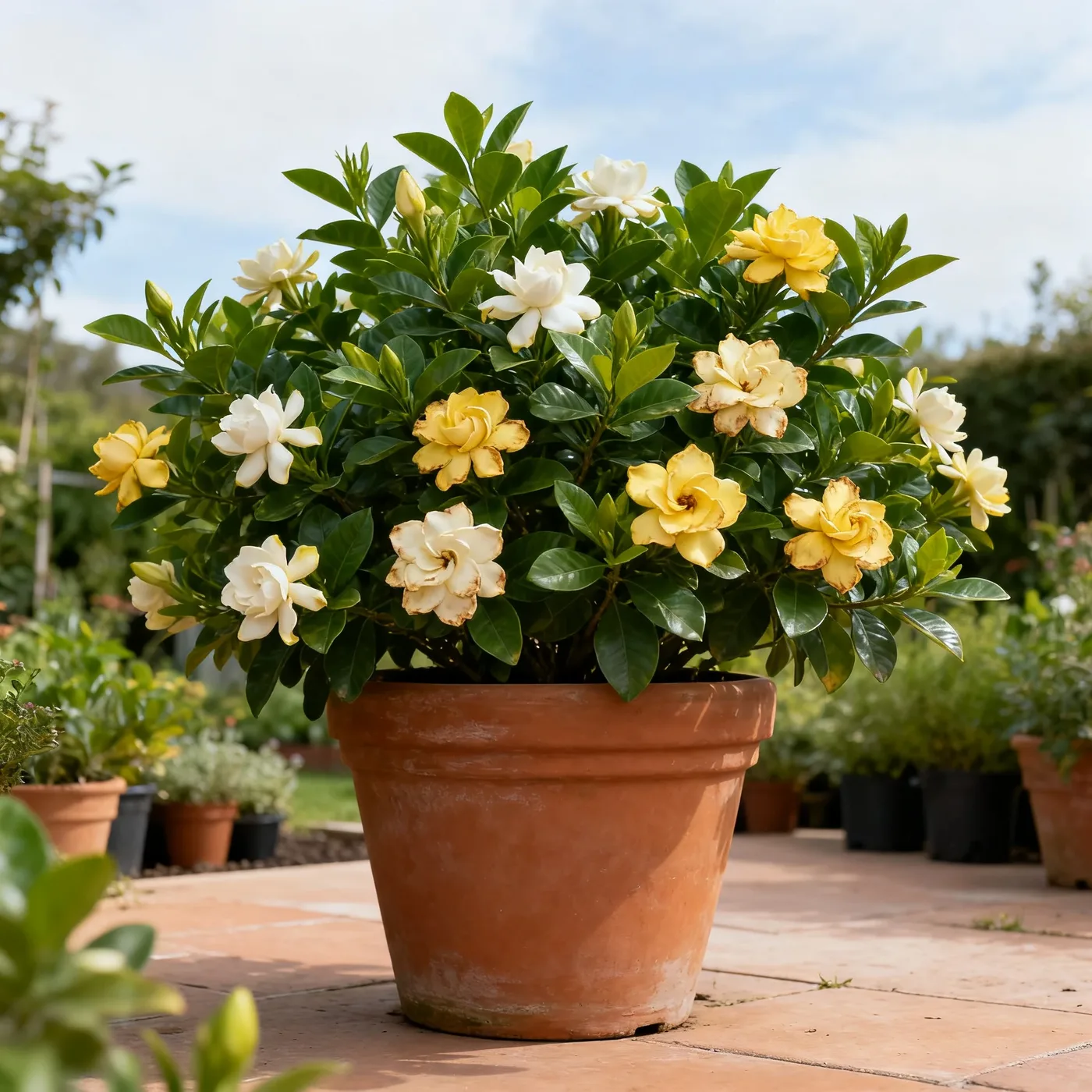
August Beauty Gardenia
Gardenia jasminoides 'August Beauty'
August Beauty Gardenia, Fragrant Evergreen Shrub Ready to Plant
This size is not in the online store yet. Ask about availability and we will reply with current stock.
- Fragrant creamy white blooms late spring through fall
- Moderate growth to 4-6 feet, ideal for hedges and foundations
- Evergreen year-round, hardy to zones 7b-10
About this plant
August Beauty Gardenia is a broadleaf evergreen shrub prized for its creamy white, fragrant blooms from late spring through summer. This moderate-growing shrub reaches 4-6 feet at maturity and works well as a foundation planting, low hedge, specimen accent near patios, or container plant. In hot southern climates, afternoon shade protects foliage while maintaining blooms.
Your Gardenia arrives as a nursery-grown plant in its container, ready to plant. Upon arrival, select a location with full sun or part shade, preferring afternoon shade in hot southern climates. Prepare well-drained soil rich in organic matter, then plant and water thoroughly. Keep soil consistently moist the first week and beyond to support establishment.
August Beauty Gardenia at a glance
| Botanical name | Gardenia jasminoides 'August Beauty' |
|---|---|
| Plant type | broadleaf evergreen shrub |
| USDA zones | 7b-10 (some sources list 8-10; borderline in 7b needs winter protection) |
| Mature height | 4-6 ft |
| Mature width | 4-6 ft |
| Sun | full sun to part shade; in hot southern climates, morning sun with afternoon shade is ideal |
| Water | moderate to consistently moist; does not tolerate prolonged drought or waterlogged soil |
| Bloom time | late spring through summer, with heaviest flush in late spring/early summer and some repeat/sporadic bloom into fall depending on climate |
| Bloom color | creamy white, aging to ivory/yellowish |
| Growth rate | moderate, roughly 6-12 in. per year |
| Deer resistance | moderate (not a preferred browse, but not deer-proof) |
| Best planting time | early spring or fall, avoiding extreme summer heat or hard freeze windows |
Container sizes explained
| #1 / 1 Gallon | A trade one gallon pot (about 6.5 inches). One to two seasons older than a quart, with an established root system. |
|---|---|
| #2 / 2 Gallon | A trade two gallon pot. Common for peonies and perennials that need root room; usually blooms the first or second year. |
| #3 / 3 Gallon | A trade three gallon pot (about 10 inches). A well-developed shrub or small tree, often 2 to 4 feet tall on arrival. |
Questions before you buy
Which size should I choose?
Start with a 1 Gallon for an economical option that blooms within 1-2 years. The 3 Gallon offers a fuller plant with faster visual impact. Choose the 7 Gallon for near-mature size and immediate landscape presence. All sizes are healthy, nursery-grown plants ready to establish in your garden.
When should I plant it after arrival?
Plant as soon as possible after arrival. Choose a location with full sun or part shade, preferring afternoon shade in hot southern climates. Prepare well-drained soil rich in organic matter, then plant and water thoroughly. Keep soil consistently moist the first week and beyond to support establishment.
How large does August Beauty Gardenia grow?
August Beauty Gardenia reaches 4-6 feet in both height and width at maturity, typically achieved in 5-7 years. Growth rate is moderate, averaging 6-12 inches per year. This makes it suitable as a foundation planting, low hedge, or specimen accent without requiring constant pruning.
What sun does this plant need?
August Beauty thrives in full sun to part shade. In hot southern climates, morning sun with afternoon shade is ideal to protect foliage and flowers. Even in afternoon shade, it blooms reliably from late spring through summer.
What zone is this plant hardy to?
August Beauty Gardenia is hardy to zones 7b-10. In zone 7b, which is borderline, provide winter protection such as mulch around the base or a sheltered planting location. Zones 8-10 are well-suited with no special winter care needed.
What does first-year care involve?
Water regularly to keep soil consistently moist but not waterlogged the first year. Avoid prolonged drought. Plant in rich, well-drained soil amended with organic matter, and provide appropriate sun exposure for your climate. Feed with a balanced fertilizer in spring and mid-summer to support establishment and blooming.