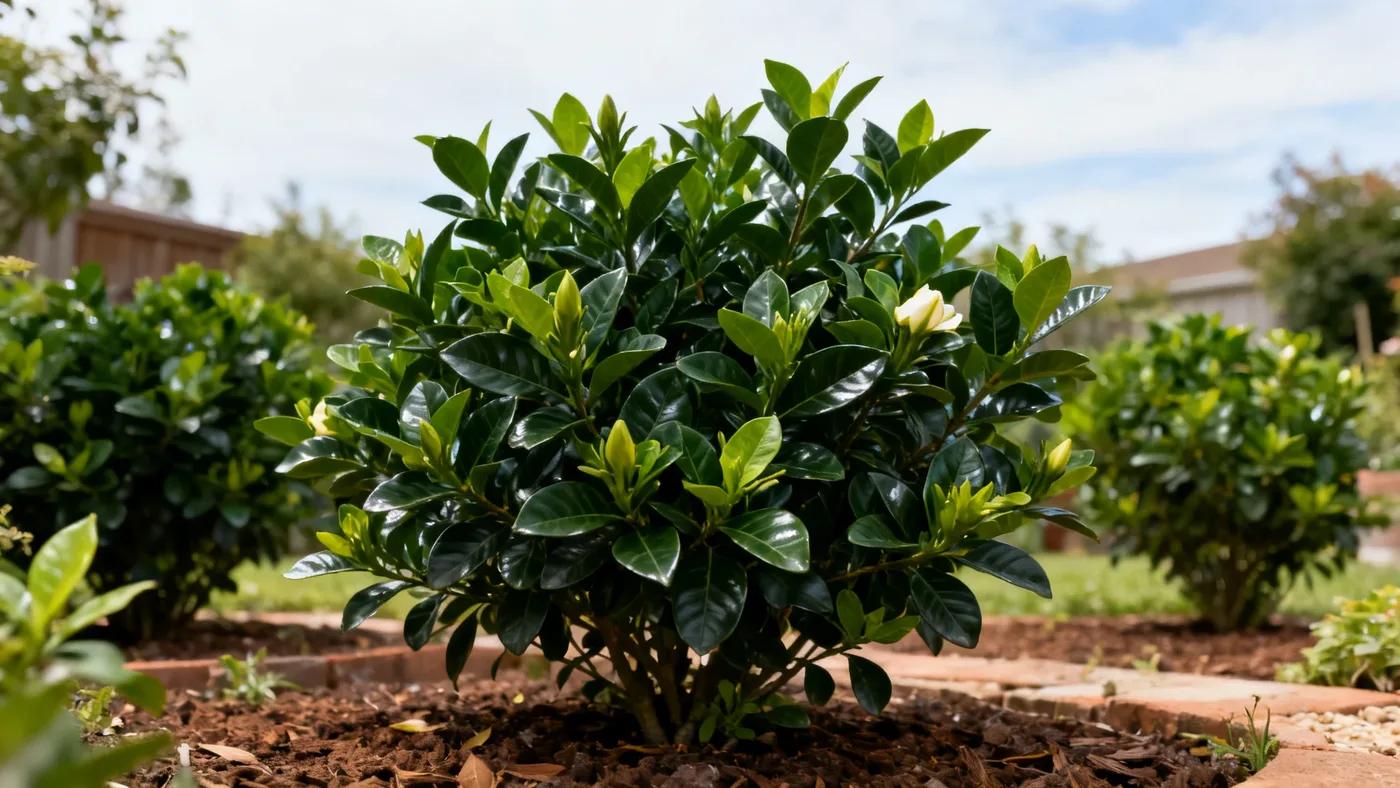
Best Soil for August Beauty Gardenia: pH and Drainage Tips
August Beauty Gardenia is not forgiving about soil. Get it right, and you'll have fragrant white blooms all summer. Get it wrong, and you'll spend the season fighting yellowing leaves, dropped buds, and stunted growth. The difference comes down to pH and drainage, two non-negotiable factors that separate thriving plants from struggling ones.
We've guided thousands of gardeners through the mechanics of this plant, and the most common mistake is simple: assuming that "regular" garden soil works for Gardenia. It doesn't. This plant is particular, and that's actually good news. Once you understand what it needs, the setup becomes straightforward and stable.
Why Soil Matters for August Beauty Gardenia
August Beauty Gardenia is a broadleaf evergreen shrub with specific soil chemistry requirements tied to its native range (China and Japan). In cultivation, it demands rich, well-drained soil high in organic matter. The plant grows to 4-6 feet tall and wide over time, and this sustained growth depends on a foundation that holds consistent moisture without sitting waterlogged.
Poor soil creates a cascade of problems. High pH causes iron deficiency (chlorosis), showing up as yellowing leaves while veins stay green. Compacted soil or standing water triggers root rot. Dry, depleted soil forces bud drop before flowers open. The plant doesn't bounce back from these stresses easily, and by the time you notice the problem, you've already lost a season of blooms.
Understanding pH Requirements
August Beauty Gardenia needs acidic soil, roughly between 5.0 and 6.5 on the pH scale. This is the same pH range preferred by azaleas, camellias, and other acid-loving ornamental shrubs. If your soil pH is above 6.5, the plant cannot access iron and other micronutrients easily, even if they're present in the soil. That's when you see yellowing.
Most home gardeners have neutral to slightly alkaline soil (pH 6.8 to 7.5), especially in regions with limestone bedrock or clay-heavy subsoil. Before planting, a soil test is worth the investment. Contact your local extension service to submit a sample. They'll measure pH and provide amendment recommendations tailored to your specific soil type.
If a test confirms high pH, you have two options. The first is to amend the entire planting area by working in sulfur or iron sulfate, following your extension service's rates. The second is to create a contained acidic planting pocket using a custom soil mix, which we'll cover below. Container planting is another route if ground soil is problematic.
Drainage: The Silent Killer
August Beauty Gardenia requires moderate to consistently moist soil, but it does not tolerate waterlogged conditions. This is a critical distinction. The plant has relatively low drought tolerance, so it can't survive prolonged dry spells, but it's equally vulnerable to rot in soil that stays soggy.
Poor drainage shows up as wilting despite moist soil, black or mushy roots, and a foul smell from the root zone. Once root rot sets in, recovery is unlikely. Prevention is everything.
Test your soil's drainage before planting. Dig a hole about 12 inches deep and 12 inches wide. Fill it with water and let it drain completely. The next day, fill it again and time how long the water takes to drain. Ideally, the hole should empty in 1 to 3 hours. If water is still sitting after 4 hours, your soil drains too slowly and needs amendment or site selection changes.
Sandy soils drain too fast and don't retain moisture; clay soils drain too slowly. The ideal is a loamy mixture: sand, silt, and clay in roughly equal proportions, enriched with organic matter. Organic matter acts as a buffer, helping sandy soils hold moisture and helping clay soils drain faster.
Step-by-Step: Preparing Your Soil
Follow these steps to build a planting site tailored to August Beauty Gardenia. This approach works for both in-ground planting and raised beds.
Step 1: Test Your Starting Soil
Dig a sample from 6 to 8 inches deep, the depth where most roots will grow. Collect samples from several spots in the planting area and mix them together. Send to your extension service or use a home test kit to measure pH and nutrient levels. Document the results; you'll reference them as you choose amendments.
Step 2: Calculate the Planting Area
August Beauty Gardenia grows 4-6 feet tall and wide at maturity, and it reaches full size in roughly 5-7 years. For in-ground planting, clear an area at least 3-5 feet across (wider is better; it eases future mulching and reduces root competition from nearby plants). For container planting, use a pot at least 18-20 inches in diameter with drainage holes.
Step 3: Remove and Assess Existing Soil
Remove the top 10-12 inches of soil from your planting area and set it aside. Look at what you've pulled out. Is it dense and sticky (clay dominant)? Does it fall apart (sandy)? Does it form a crumbly ball (closer to loam)? This observation tells you how much amendment you'll need.
Step 4: Build the Amendment Base
Combine the following materials in your planting hole or area:
- Original soil (amended): Take the removed soil and mix it with sulfur or iron sulfate if your pH test showed levels above 6.5. Follow your extension service's rate, or use 1 pound of sulfur per 100 square feet as a conservative starting point. This lowers pH over weeks to months.
- Compost or aged bark: Add 3-4 inches of finished compost or composted pine bark. This raises organic matter, improves drainage in clay, and boosts moisture retention in sandy soil. Composted pine bark is ideal because it naturally acidifies soil as it breaks down.
- Peat moss (optional): If your soil is very alkaline or very sandy, mix in 2-3 inches of peat moss. It's highly acidic and holds moisture, but use it cautiously in clay soils where excess organic matter can trap water.
Step 5: Blend and Backfill
Mix all amendments together thoroughly. If using a shovel, turn the pile 3-4 times to ensure even distribution. The final blend should feel crumbly, not clumpy, and should smell earthy (not sour or rotten).
Backfill the planting hole with your amended soil, creating a slight mound at the top so water doesn't pool. The top of the root ball should sit at or slightly above ground level to avoid waterlogging the plant base.
Step 6: Mulch and Water
Spread 2-3 inches of mulch (shredded pine bark or aged wood chips) around the base, keeping it 2-3 inches away from the stem. Mulch moderates soil temperature, retains moisture, and as it decomposes, it continues to lower pH gradually.
Water deeply after planting, then maintain moderate to consistent moisture for the first growing season. Do not let the soil dry out completely, and do not allow it to stay waterlogged.
Container Mix Recipe
If you're planting August Beauty Gardenia in a container, use a well-drained acidic potting mix. Here's a reliable blend:
- 1 part peat moss or coco coir
- 1 part compost (finished, not fresh)
- 1 part perlite or coarse sand for drainage
- 1 part composted pine bark
This mix is naturally acidic (pH 5.0-6.0), drains well, and holds enough moisture for the plant's needs. Container plants need regular feeding and more frequent watering than in-ground specimens, and they require winter protection in marginal zones (USDA 7b). Refresh the top 2-3 inches of mix each spring by replacing it with fresh compost to maintain nutrient levels.
Common Mistakes to Avoid
Using "universal" potting soil: Standard multipurpose mixes are too alkaline for August Beauty Gardenia. They're formulated for a broad range of plants, not acid-lovers. Buy an azalea or camellia mix instead, or blend your own as shown above.
Over-relying on lime-free soil alone: A neutral soil without specific acidification will gradually drift alkaline over time as organic matter breaks down. Use a pH-lowering amendment at planting, and plan to reapply sulfur or iron chelate every 2-3 years if you live in an alkaline region.
Confusing "moist" with "wet": The soil should feel like a wrung-out sponge, not like mud. If water pools around the plant or roots smell sour, drainage is too slow. Raise the planting area, add coarser amendments, or choose a different site.
Neglecting mulch: Bare soil compacts, hardens, and sheds water. Mulch is not optional; it's part of the soil system. Refresh it annually as the old layer decomposes.
Expected Results and Timeline
Once planted in properly amended soil, August Beauty Gardenia typically blooms within 1-2 years from a container plant. Growth is moderate, roughly 6-12 inches per year. You won't see a fully mature shrub (4-6 feet tall and wide) for 5-7 years, but the plant will be thriving and producing blooms each summer long before that.
If you amend soil with sulfur or iron sulfate to lower pH, allow 4-8 weeks for the pH to shift meaningfully. Don't rush; it's better to start low than to overshoot and have to raise pH later.
For more detailed care information, see our August Beauty Gardenia care guide. If you're unsure whether your climate supports this cultivar, check our guide to hardiness zones for August Beauty Gardenia; the plant thrives in USDA zones 7b-10, though zone 7b is borderline and requires winter protection.
Quick Reference Checklist
| Item | Target / Action |
|---|---|
| Soil pH | 5.0–6.5 (acidic) |
| Drainage | 1–3 hours to drain 12" test hole |
| Organic matter | 3–4 inches of compost or pine bark mixed in |
| Mulch depth | 2–3 inches (keep 2–3 inches from stem) |
| Planting area | 3–5 feet across |
| Mature size | 4–6 feet tall and wide |
| Growth rate | Roughly 6–12 inches per year |
| First bloom | Within 1–2 years from container plant |
| Full maturity | 5–7 years |
| Soil moisture | Moderate to consistently moist (not dry, not waterlogged) |
| pH test timing | Before planting; retest every 2–3 years if alkaline region |
| Sulfur reapplication | Every 2–3 years if needed to maintain pH |
| Container size | At least 18–20 inches diameter with drainage holes |
| Planting season | Early spring or fall (avoid extreme heat or hard freeze) |