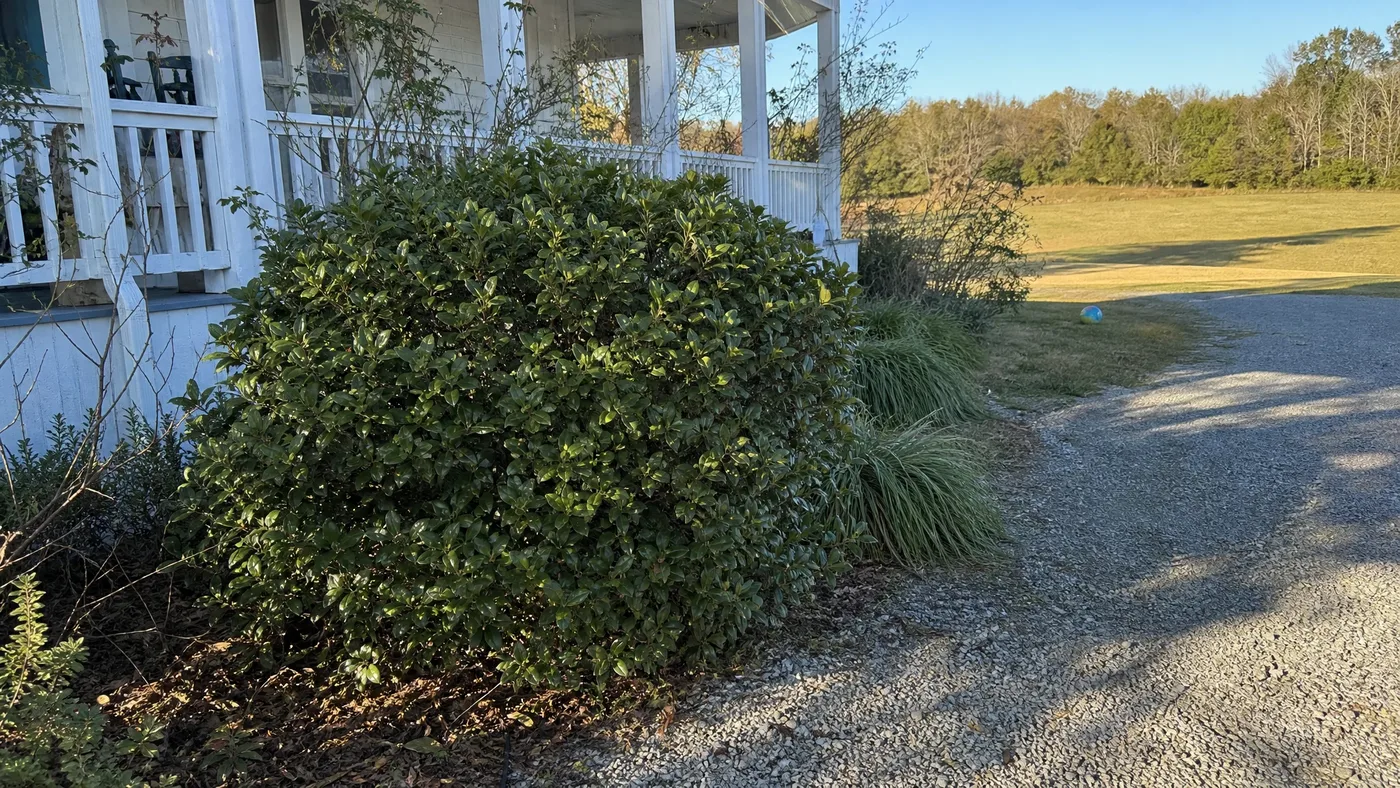
Is August Beauty Gardenia an Evergreen Perennial Shrub?
Buyers often pull out a healthy August Beauty in late winter, convinced it died the way an annual does. A few tired leaves after a cold snap, or a pot that looks quiet in February, is usually all it takes. The shrub was only doing what evergreen shrubs do.
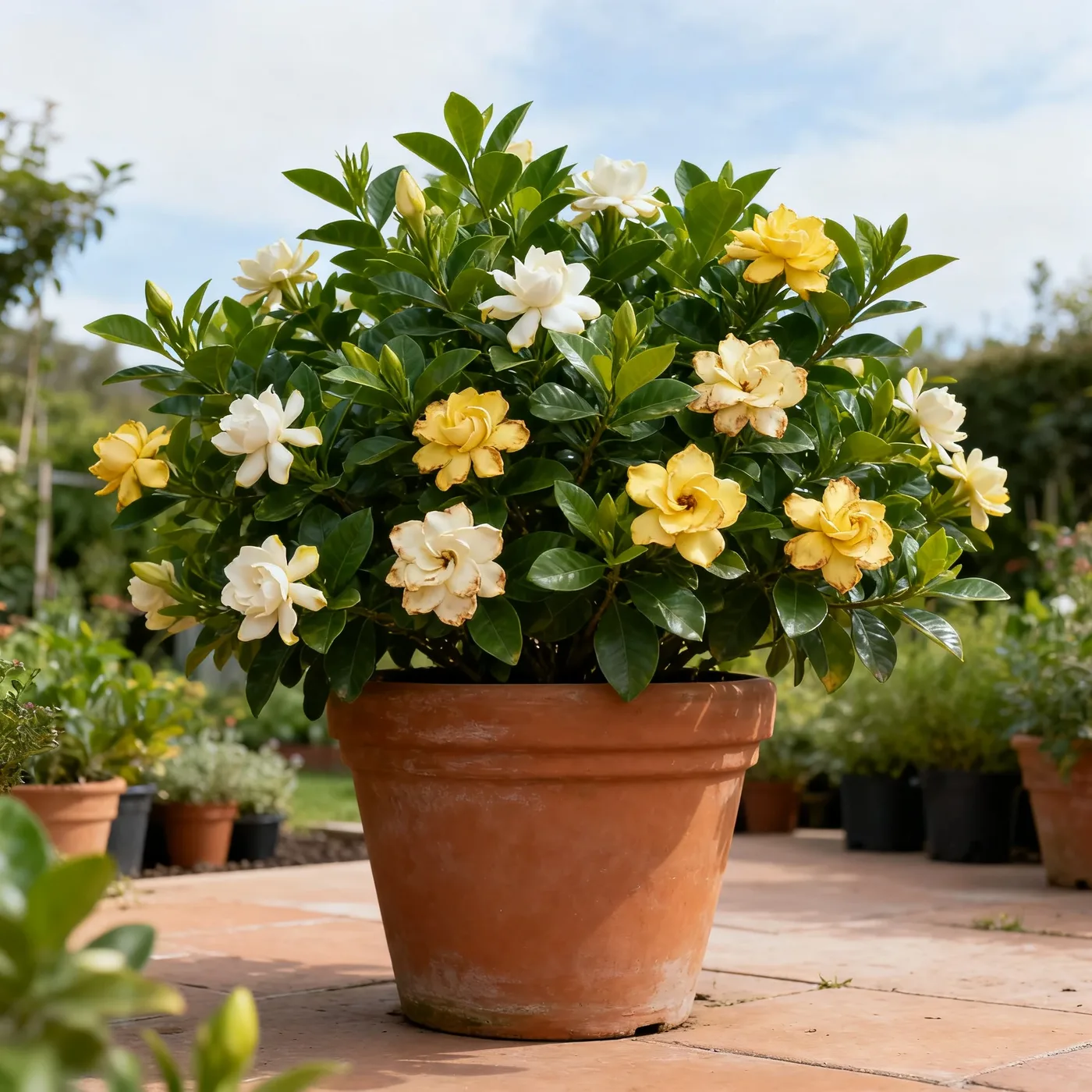
The short answer is yes. August Beauty is an evergreen perennial, a woody shrub that keeps its leaves through winter and returns year after year. Read the signs wrong and you lose a plant that would have given you double, fragrant flowers every summer.
In this article, we'll go through what perennial and evergreen mean for this shrub, how to read the leaves from planting day through the first winter, and what a mature plant looks like.
August Beauty Is an Evergreen Perennial Shrub
Both words in that heading are true of this plant, and each one tells you something different about what you will see in your yard. Here is how we explain them.
Perennial, Not Annual
An annual lives for one season and is gone. August Beauty is built to last for many.
An annual grows from seed, flowers and dies within a year. August Beauty does none of that. NC State Extension describes gardenias as a woody, broadleaf evergreen shrub. Woody means the stems thicken and stay alive through winter, so the framework you plant in year one is the framework you prune in year five.
It does not die back to the ground and resprout from the crown the way many herbaceous perennials do. The stems you see in fall are the stems you should see in spring.
There is one condition. "Perennial" depends on the plant surviving your cold. NC State lists the species for zones 7b through 11b, and Clemson says most older gardenia cultivars are hardy to USDA zone 8. Beyond that range a hard freeze can kill it, and then it behaves like an annual whatever the tag says. Our guide to the zones August Beauty can grow in covers where it holds up.
Evergreen, Not Leafless
Evergreen has a specific meaning here, and it is easy to misread in late winter.
Evergreen means the shrub is never bare as a whole. The leaves are dark green with impressed veins, opposite each other and whorled at the branch tips. It is an evergreen shrub with deep glossy green leaves. Those leaves hold through winter.
Individual older leaves still yellow and drop now and then. That gradual turnover is the part that fools people. The plant stays leafy while single leaves come and go, and that is normal.
Planting August Beauty: Reading the Leaves From Day One
The first weeks in the ground set the pattern for every year after. Your best early signal is the foliage, so it helps to know what healthy looks like.
What to Check When It Arrives
A healthy August Beauty shows its evergreen nature on day one.
Look for lustrous, dark green leaves across the whole plant. Pale or yellow foliage over the entire canopy points to a problem with the growing conditions, usually the soil, rather than a normal seasonal change. A few yellow leaves low on the plant right after a move are different, because the shrub is shedding the oldest growth while it settles.
Customers usually ask us whether a few yellow leaves right after planting mean the plant is failing. Usually they do not. Watch the new growth at the branch tips. If that stays dark green, the plant is adjusting.
Planting so the Leaves Stay Green
Evergreen foliage only stays glossy if the soil suits it, and gardenias are particular about that.
Gardenias prefer acid, moist, well-drained soil with a pH below 6.0. The University of Florida puts the range a little wider and says soil pH should be between 5.0 and 6.5. Our approach is to aim under 6.0 and test before you plant, because yellowing in an evergreen shrub often traces back to soil that is not acid enough.
For light, aim for light to partial shade, preferably morning sun and afternoon shade. Partial shade means 2–6 hours of direct sun. That is what we recommend too, even though some sources say full sun is fine. The shaded afternoon protects the leaves you will be relying on all winter.
Plant at the same depth the shrub grew in its container and keep the soil evenly moist while roots establish. Our planting guide walks through the hole, the backfill and the first watering.
The First Winter: What Evergreen Looks Like in Cold Weather
The first winter is when new owners worry most. Knowing what normal looks like saves you from reaching for the shovel too early.
What a Healthy Winter Plant Looks Like
Evergreen does not mean active. It means the leaves stay on while the plant rests.
In a mild winter you should see the same glossy, dark green foliage you bought, with little new growth and no flowers. Flowering belongs to late spring and summer. A quiet, leafy shrub in January is exactly right.
Keep the soil moist, not soggy. The species is moderately drought-tolerant, but a newly planted shrub has a small root system and dries out faster than an established one. Evergreen leaves keep losing water all winter, so a dry spell in a cold month can still hurt.
Winter Burn and What We Don't Do
Cold and wind are the two things most likely to damage evergreen leaves, and both are easy to reduce.
Gardenias do best sheltered from the cold and from strong winds, which prevents winter burn. In practice that means a planting spot out of the prevailing wind, near a wall or among other shrubs. Burned leaves turn brown or scorched, usually on the exposed side.
One piece of common advice we don't follow is feeding in fall to "toughen up" the plant. Fall fertilizer causes a rush of frost-tender growth, and that new growth is the first thing a freeze damages. We stop feeding well before cold weather arrives. Our winter care guide covers protection in colder zones.
Winter Symptoms at a Glance
This table matches what you may see in the garden to its likely cause and the response we recommend.
| What you see | Likely meaning | What to do |
|---|---|---|
| Glossy dark green leaves, no new growth | Normal winter rest | Leave it alone and keep the soil lightly moist. |
| A few older leaves yellow and drop | Normal leaf turnover | Clear them away and keep watching the tips. |
| Brown, scorched leaves on the windward side | Winter burn from cold and wind | Add shelter now and wait until spring to judge the damage. |
| Whole canopy turning pale yellow | Soil likely not acid enough | Test the pH and aim below 6.0. |
Year Two: Telling a Tired August Beauty From a Dead One
Late winter is when most gardenias get written off by mistake. Patience and one simple test will tell you more than any amount of guessing.
Wait for the New Growth
A shrub that has taken a hard winter can look rough well into spring. That does not mean it is gone.
The common advice is to cut everything back as soon as it looks damaged. We don't follow it for this plant. Early in the season you cannot tell dead wood from live wood, and cutting too soon can remove stems that would have leafed out. Wait for new growth to push from the branch tips and cut only what stays bare.
If you are unsure, scratch a small patch of bark on a stem. Green underneath means the stem is alive. In our rows, the plants that look the most hopeless in early spring are often the ones that surprise us a few weeks later.
Pruning in Spring
When you do prune, timing matters because of how this shrub flowers.
Prune gardenias in spring to maintain the shape, keeping in mind that blossoms appear on new growth. That is why we prune once the new flush is clear, and never in fall. A fall cut stimulates tender growth and takes off wood that would have carried summer flowers.
Remove dead stems, shorten stray branches and leave the rest. Our pruning guide has the details on how much to take.
What a Good Second Year Looks Like
By the second spring, a settled August Beauty should look like a fuller version of the plant you bought.
Expect dense new growth, dark green older leaves and flower buds ahead of the season. The flowers open from May through June and sporadically through the summer. If the new growth comes in pale while the old leaves stay green, recheck the soil pH before you reach for fertilizer.
Mature August Beauty: Size, Flowers and Staying Power
A mature August Beauty is a tidy, dense shrub, and it is more compact than the species. Here is what to plan around.
How Big It Gets
The cultivar stays smaller than the species, which matters when you choose a spot.
'August Beauty' grows 4–6 feet high and 3–4 feet wide. The species runs 4–8 feet, so this cultivar is the more manageable choice for a foundation bed or a border. Growth rate for the species is medium, so it fills in steadily rather than quickly.
Because the shrub is evergreen, that size is a year-round presence. Give it room to reach its full width without pruning it back each year. Our guide on how big August Beauty really gets goes further.
What It Gives You Each Year
The evergreen leaves are the backdrop. The flowers are the payoff.
August Beauty carries double flowers about 3 inches wide, while the species has 2–3 inch waxy blooms. Flowers are white to cream and age to yellow, and flowers appear late spring through summer. Fragrance comes with them.
Once established, the shrub is moderately drought-tolerant and deer resistant. Whitefly is the most common pest, so check the undersides of the leaves when the foliage looks dull or sticky.
What to Expect From August Beauty Year After Year
August Beauty is an evergreen perennial. It keeps its dark green leaves through winter, returns each spring from the same woody stems, and flowers on new growth in summer. Its limits are cold and soil. Give it shelter, acid soil and patience in spring, and a tired plant will usually recover.
August Beauty Gardenia
Nursery-grown August Beauty Gardenia in sizes from 1 Gallon, shipped to your door.
From $33.97
Shop Now →The most common reasons it fails are a freeze beyond its zone, soil that is not acid enough and a fall cut or fall feeding. Customers come back to us for the August Beauty they can count on to stay glossy green in January and be in bloom by summer. We grow it on our own farms, as top-quality shrubs we would be glad to plant ourselves.