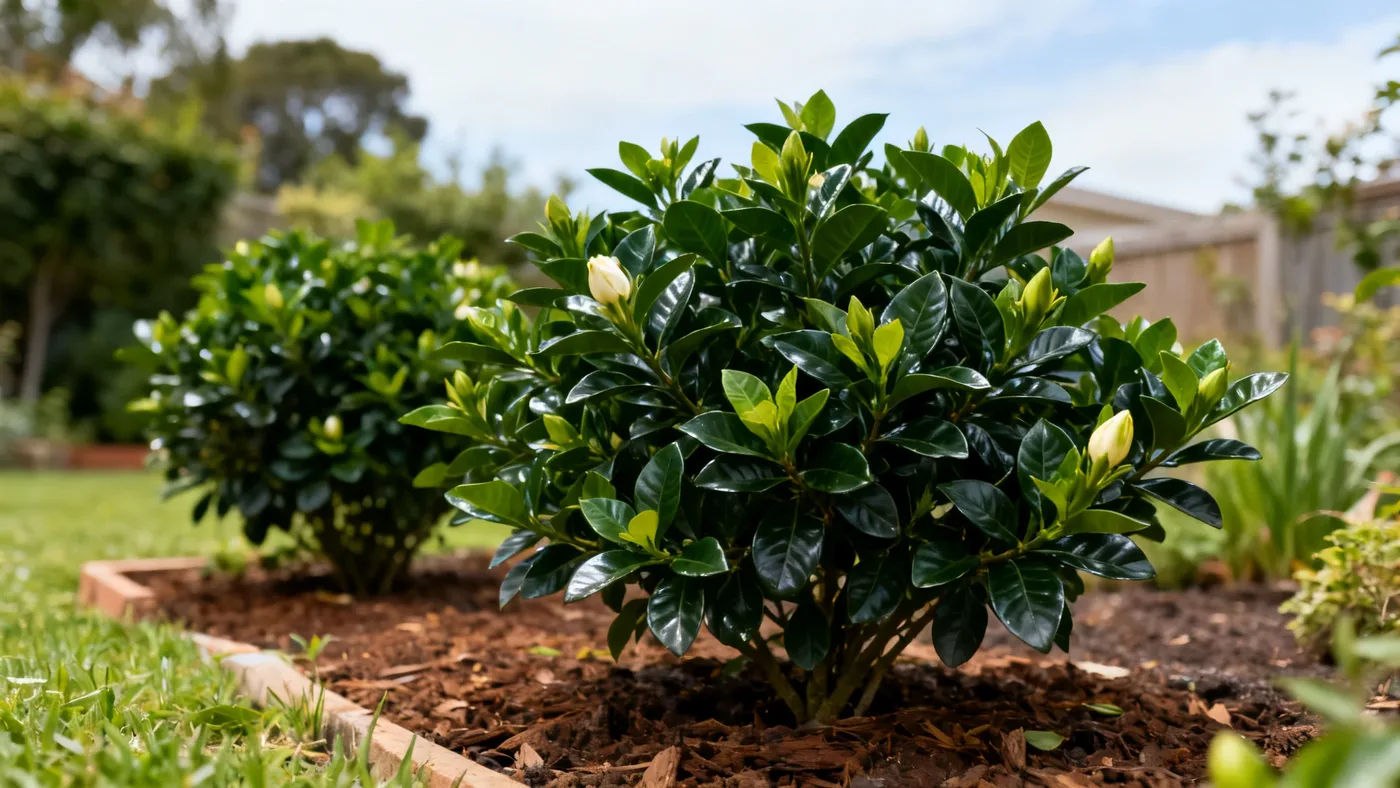
Winter Care for August Beauty Gardenia in Cold Climates
August Beauty Gardenia thrives in zones 7b through 10, but gardeners in zone 7b occupy the borderline territory where winter protection transforms a struggling plant into a reliable performer. The shrub's glossy, dark green foliage persists year-round, yet cold snaps can yellow the leaves or cause them to drop entirely if you skip preparation. Unlike southern growers who rarely worry beyond occasional frost, zone 7b gardeners need a deliberate strategy to shield their gardenias from temperature swings that can damage buds, wood, and roots.
This guide walks you through the full cycle of protecting your August Beauty Gardenia before winter arrives, managing it through the cold months, and easing it back into active growth come spring. Follow these steps to keep your plant healthy, maintain its iconic fragrance for next season, and prevent the stress-induced bud drop that leaves gardeners with fewer blooms.
Materials and Supplies You Will Need
- Organic mulch (shredded bark, wood chips, or pine needles), roughly 3 to 4 cubic feet per mature plant
- Pruning shears, sharp and sanitized
- Burlap or frost cloth (optional, for extra protection in severe winters)
- Landscape stakes or bamboo poles to anchor burlap
- Acid-loving plant fertilizer (azalea or camellia formula)
- Watering can or soaker hose
- Soil pH test kit (optional, to check acidity)
- Chelated iron supplement (if yellowing appears)
Step-by-Step Winter Protection
Step 1: Stop Fertilizing in Late Summer
Cease feeding your August Beauty Gardenia by late August or early September. A fall application of nitrogen or general-purpose fertilizer encourages tender new growth that will not harden off before frost arrives. Tender shoots are far more susceptible to cold damage than mature wood. If your plant bloomed prolifically in early summer, you may have already given it a second feeding right after that flush ended. That is sufficient. No third feeding should happen as the calendar turns toward autumn.
Step 2: Prune Spent Flowers and Dead Wood Right After Bloom
Remove dead flowers and any dead or damaged branches immediately after your plant finishes its main bloom cycle in late spring or early summer. Prune lightly to maintain shape, cutting just above a leaf node. This is critical: avoid pruning in late summer or fall, as cutting away wood at that time removes next year's flower buds, which are already formed. Once September arrives, put the pruning shears away until spring. Damaged branches that remain become entry points for disease, so remove them now while you are actively maintaining the plant.
Step 3: Water Thoroughly Before Soil Freezes
In fall, as temperatures drop but before the ground freezes hard, water your gardenia deeply and thoroughly. A well-hydrated root system handles cold stress far better than a dry one. August Beauty Gardenia does not tolerate prolonged drought, and winter dryness can be as damaging as wet roots. Water the base of the plant slowly, allowing the water to soak down 8 to 10 inches. This deep watering is your final major irrigation of the season; during winter dormancy, the plant uses very little water, and frozen ground prevents root uptake anyway.
Step 4: Apply Mulch to Insulate the Root Zone
Heap 3 to 4 inches of organic mulch around the base of your plant, starting 3 to 4 inches away from the main stem (never pile mulch directly against the bark, as this invites rot and rodent damage). The mulch acts as an insulating blanket for the root system, buffering temperature swings and protecting shallow roots from freeze-thaw cycles. Use shredded bark, wood chips, or pine needles. Pine needles are especially useful because they acidify the soil slightly as they decompose, supporting your gardenia's preference for acidic soil in the 5.0 to 6.5 pH range. Replenish mulch in spring if it has settled significantly.
Step 5: Wrap the Aboveground Plant in Severe Climates
If your area regularly experiences temperatures below 0°F (minus 18°C) or if your gardenia is young or recently planted, consider wrapping the aboveground portion in burlap or frost cloth. Drive landscape stakes or bamboo poles into the ground around the plant to create a frame, then drape the burlap loosely over the frame, leaving the top open for air circulation. Do not wrap it so tightly that moisture cannot escape; trapped humidity inside the wrapping can promote fungal disease. This step is optional in mild zone 7b winters but worthwhile insurance in exposed locations or during years when forecasters predict severe cold.
Step 6: Monitor Winter Watering
Once the soil freezes, active root uptake stops, so your plant enters near-dormancy. Check the soil around the mulch layer periodically. If a rare warm spell occurs and the surface dries out, water lightly to keep the soil barely moist, not saturated. During hard freezes, do not water at all. The goal is to maintain a stable moisture level, not to keep the plant growing. Inconsistent winter watering or excessive moisture can trigger root rot, the primary killer of gardenias in dormant months.
Step 7: Watch for Winter Foliage Problems
As temperatures drop, the foliage of August Beauty Gardenia may yellow slightly or lose some glossiness. This is normal stress response to cold and lower light. However, if yellowing is severe or spreads rapidly, it may indicate chlorosis, often triggered by high soil pH or iron deficiency. A simple soil pH test will confirm whether your pH has crept above the ideal 5.0 to 6.5 range. If it has, apply chelated iron according to label directions in early spring when growth resumes. Avoid chasing yellowing with extra fertilizer in winter; the plant cannot utilize nutrients when dormant.
Step 8: Remove Wrapping and Mulch in Spring
Once nighttime temperatures consistently stay above freezing (typically late March or early April, depending on your location), remove burlap wrapping carefully during a mild day. Leave mulch in place for another few weeks to continue protecting the roots from late frosts. As the plant leafs out and new growth emerges green, gradually pull mulch back from the base, leaving a 1 to 2 inch layer for ongoing moisture retention. Resume light pruning and feeding only once you see vigorous new growth, typically mid-spring.
Tips and Common Mistakes
Tip: Know your microclimate. Zone 7b covers a range; a sheltered spot against a south-facing wall stays warmer than an exposed location. If your gardenia is positioned in a wind tunnel or north-facing site, give it extra protection or consider relocating it in fall to a more sheltered spot if it is in a container.
Tip: Use acidic mulch deliberately. Pine needles, oak leaves, and composted pine bark all acidify soil as they break down. If your soil pH is already low or you are uncertain, stick with neutral mulches like shredded hardwood bark. This proactive approach prevents the pH swings that trigger chlorosis.
Mistake: Pruning in fall. Fall pruning removes flower buds and encourages tender growth at the worst time. The same goes for late-summer feeding. Both are top causes of sparse blooms the following year.
Mistake: Overwatering in winter. Saturated soil around dormant roots promotes rot and fungal issues. Wet, cold conditions are far worse than dry dormancy for a few months.
Mistake: Wrapping too tightly. Airtight burlap traps moisture and heat fluctuations, sometimes causing more damage than gentle cold. Drape it loosely and remove it during warm spells if possible.
Expected Results
With consistent winter protection in zone 7b, your August Beauty Gardenia should emerge from winter with most or all of its foliage intact. Some yellowing or minor leaf drop is normal in severe cold snaps; the plant recovers quickly once temperatures rise and new growth begins. Spring growth is typically robust if the plant was well-watered in fall and the roots stayed protected. Bloom production the following late spring may be slightly reduced if the plant experienced significant stress, but proper dormancy management keeps flowers abundant. A well-protected gardenia at the edge of its hardiness range can live 30 to 50 years or more, delivering reliable fragrant blooms year after year.
Quick Reference: Winter Care Checklist
| Task | Timing | Key Detail |
|---|---|---|
| Stop fertilizing | Late August to early September | No fall nitrogen; encourages tender growth |
| Prune spent blooms and dead wood | Right after main bloom ends (late spring) | Light pruning only; avoid late-summer cuts |
| Deep watering | Fall, before ground freezes | Soak base 8 to 10 inches deep |
| Apply mulch | Early fall, before first hard frost | 3 to 4 inches, 3 to 4 inches away from stem |
| Wrap with burlap (if needed) | Before temperatures drop below 0°F | Optional in mild zone 7b; required in exposed sites |
| Monitor soil moisture | Throughout winter | Keep barely moist; do not saturate |
| Check for chlorosis | Winter and early spring | Test soil pH if severe yellowing appears |
| Remove wrapping | Late March to early April | Remove when nighttime temps stay above freezing |
| Resume feeding | Mid-spring, once new growth is vigorous | Use azalea or camellia-type acid-loving formula |
Winter care for August Beauty Gardenia in zone 7b requires planning and consistency, but the investment pays dividends in plant health and bloom abundance. Start your preparation in late summer, stick with the schedule, and you will find that your gardenia not only survives the cold months but thrives when spring arrives. For additional insights on year-round care, see our complete August Beauty Gardenia care guide.