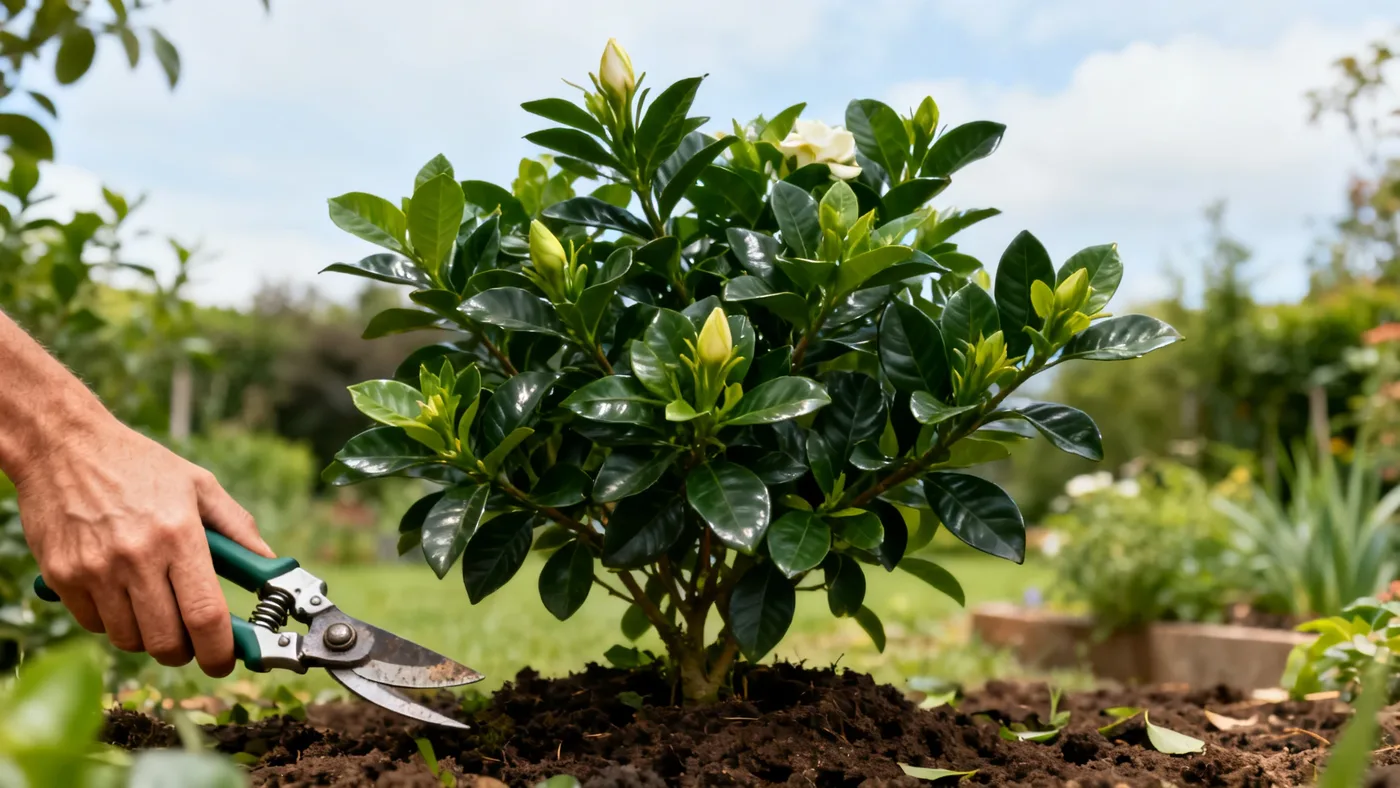
How and When to Prune Your August Beauty Gardenia
Pruning August Beauty Gardenia is one of the simplest ways to keep your shrub healthy, shapely, and blooming reliably year after year. Unlike many ornamentals that tolerate heavy cutting or flexible timing, this gardenia has a specific pruning window that matters for your bloom cycle. Get the timing right, and you'll see fuller growth and more flowers. Miss it, and you might wonder why your plant sits quiet come late summer.
The good news is that August Beauty Gardenia requires only light pruning once a year. You won't need hedge trimmers or heavy equipment. A few hand tools and 30 minutes of work in the right season will do the job.
Why Timing Matters for Pruning August Beauty Gardenia
August Beauty Gardenia sets its flower buds in late summer and early fall, months before the flowers actually open. If you prune during that window, you'll cut off next year's flowers.
The plant blooms heaviest in late spring and early summer, with sporadic repeat blooms into fall depending on your climate. Right after that main flush of flowers fades is your pruning window. For most home gardeners in zones 7b through 10, that means late spring or early summer, typically June or early July.
Pruning at any other time either removes flowering wood you're waiting for or removes growth that hasn't yet toughened enough to handle a haircut. Late summer and fall pruning is the most common mistake, and it's the hardest to recover from because you've already lost next season's buds.
Materials You'll Need
Pruning August Beauty Gardenia doesn't require a big toolkit. Gather these items before you start:
- Hand pruners (bypass type): Use these for branches up to about 0.5 inch thick. Bypass pruners crush less than anvil pruners and make cleaner cuts.
- Lopping shears: For branches between 0.5 and 1 inch in diameter. Useful if your shrub has thicker canes to remove.
- Pruning saw: Optional, but helpful if you're removing dead branches thicker than 1 inch. Hand saws are safer and more controlled than power tools for shrub work.
- Gardening gloves: The foliage won't hurt you, but gloves protect your hands and improve grip on tools.
- Disinfectant spray or rubbing alcohol: Wipe down tool blades between cuts if you encounter any diseased or pest-damaged wood. This prevents spreading problems across the plant.
- Bucket for trimmings: Makes cleanup easier than chasing clippings around your yard.
Step-by-Step Pruning Instructions
Step 1: Choose Your Timing
Prune right after the main bloom flush fades. In most climates, that's late spring or early summer, roughly June through early July. Stop by your plant and look for signs that flowering has slowed. Once you see fewer new blooms opening and more petals dropping, it's time.
Prune on a cool morning if you can. Newly pruned wood is tender and benefits from a day without intense afternoon sun or heat stress. If you live in a very hot climate (zones 9 to 10), this is even more important.
Step 2: Step Back and Assess the Plant
Before cutting anything, walk around your August Beauty Gardenia from different angles. Look at its overall shape. Gardenias naturally grow as rounded mounds, typically reaching 4 to 6 feet tall and 4 to 6 feet wide at maturity, depending on climate and care.
Identify any branches that are:
- Crossing other branches or growing inward toward the center
- Dead or obviously damaged
- Thin and weak, growing much slower than neighboring shoots
- Growing out of proportion to the rest of the plant, sticking up or out awkwardly
Light pruning means removing no more than 25 percent of the plant's total growth in any single year. If you're unsure whether you're overdoing it, err on the side of less cutting.
Step 3: Remove Dead or Diseased Wood First
Start with the easy calls. Prune out any obviously dead branches all the way back to living wood. Dead wood is dry, brittle, and gray or black in color. Cut back to the point where you see green or living bark inside the branch.
If you see branches with soft scale insects, sooty mold, or visible disease spots, remove those sections too. Make your cut at least 6 inches below the diseased area if possible, to ensure you're cutting into clean, healthy wood. Wipe your pruning shears with alcohol afterward.
Step 4: Remove Crossing and Inward-Facing Branches
Now thin for shape and air circulation. Any branch that crosses another should go. Keep the one that's more vigorous and better positioned, remove the other. If two branches are equally strong, remove the one that points inward or downward.
Inward-facing branches create a dense interior that traps humidity and pests. Removing them opens up the plant to light and air, which reduces pest and disease pressure over time. Make cuts at a 45-degree angle, about 0.25 inch above an outward-facing bud or branch junction.
Step 5: Cut Out Spent Flower Stems and Weak Growth
Deadheading spent flowers is part of light pruning. You can remove individual faded flowers by pinching or snipping just below the bloom, but after the main flush, it's often faster to remove entire branches that are mostly spent. This also tidies up the plant's appearance.
Look for weak, spindly new growth that emerged during the growing season. If you see shoots that are much thinner or slower-growing than surrounding branches, remove them. They're unlikely to become strong flowering canes.
Step 6: Shape for Symmetry (Optional)
If you want a tidier, more formal shape, now is the time for light shape pruning. August Beauty Gardenia responds well to gentle heading cuts. That means cutting branch tips back to an outward-facing bud, which encourages the plant to branch out and fill in.
Cut no more than 8 to 12 inches off the tips of any branch. If you cut too far back, you remove potential flowering wood and set yourself up for weak regrowth. The goal is to nudge the plant's shape, not restructure it.
Step 7: Clean Up and Water
Remove all trimmings from the area around the plant. Gather them in your bucket or a tarp. Leaving clippings under the shrub keeps the soil surface damp and can invite pests and disease.
After pruning, water your August Beauty Gardenia thoroughly. Fresh cuts and newly exposed growth need consistent moisture over the next week or two as the plant recovers from the pruning stress. If your region is heading into a hot, dry season, keep a careful eye on soil moisture for the next 2 to 3 weeks.
Tips for Success
Prune lightly and regularly. A little bit of pruning every year is better than heavy pruning once every few years. Light annual pruning keeps the plant vigorous and maintains its natural form without creating bold, obvious cuts that look unnatural.
Know your zone. If you're in zone 7b, which is the cooler end of August Beauty Gardenia's hardiness range, winter damage might occur. Wait until late spring (May or June) to prune, so you can see which branches made it through winter before you cut. In warmer zones (8 to 10), you have more flexibility and can prune as soon as the main bloom fades in June or early July.
Don't prune new container plants. If you've just planted a nursery-grown August Beauty Gardenia, resist the urge to prune it during its first year. Let it establish a strong root system. Wait until the second growing season to begin regular pruning.
Use sharp tools. Dull pruners tear bark and create ragged cuts that are slow to heal and vulnerable to disease. A quick sharpen on a whetstone before you start makes a real difference. You should be able to cut a thin twig cleanly without crushing it.
Don't over-fertilize after pruning. It's tempting to feed a freshly pruned plant, but hold off for 2 to 3 weeks. Your plant is healing from pruning stress, and pushing new growth with fertilizer is counterproductive. Once you see vigorous new shoots emerging, resume your regular feeding schedule with an acid-loving plant fertilizer.
Common Pruning Mistakes to Avoid
Pruning in late summer or fall. This is the number-one mistake. You'll cut off flower buds and get no blooms next year. Stick to the late spring to early summer window, right after the main bloom flush.
Heavy or severe pruning. Cutting more than 25 percent of the plant's growth at once stresses it, delays recovery, and can cause bud drop. August Beauty Gardenia prefers gentle, light pruning.
Leaving stubs. Don't cut branches partway and leave a stub sticking out. It looks messy and attracts pests. Always cut back to a branch junction, a bud, or all the way to the base.
Ignoring diseased wood. If you see scale, mealybugs, or fungal spots and leave that wood in place, the problem spreads. Remove it and dispose of it (don't compost diseased trimmings).
Pruning with dull tools. Torn, crushed cuts heal poorly and invite disease. Sharp bypass pruners make all the difference in the finished result and the plant's health.
What to Expect After Pruning
After you finish pruning, your August Beauty Gardenia will look noticeably smaller and a bit bare. That's normal. Within 2 to 3 weeks, you'll see new growth emerging just below your cuts. The plant grows at a moderate rate, roughly 6 to 12 inches per year, so the regrowth will fill in steadily over the next few months.
By late summer and fall, you should have a fuller, denser plant. The new growth matures through fall and winter, setting flower buds in late summer that will open the following spring and early summer. In some climates, you may also see scattered repeat blooms into fall, depending on temperature and day length.
Your pruned plant should look noticeably healthier: better air circulation, fewer pest hiding spots, and more vigorous new growth.
Pruning August Beauty Gardenia in Different Climates
If you're growing August Beauty Gardenia in zone 7b (the cooler end of its range), prune in late May or early June, after frost danger has passed and you're confident the new growth won't be nipped by cold. In zones 8 through 10, you have more flexibility. Prune right after the main bloom flush, typically June or early July.
In hot southern climates (zones 9 to 10), morning sun with afternoon shade is ideal for August Beauty Gardenia. If your plant is in such a location, it may have a shorter bloom window but will appreciate the shade stress relief. Prune as soon as you see the bloom slow in early summer.
For more details on climate and care, see our guide to August Beauty Gardenia zones.
Reviving an Overgrown Gardenia
If you've inherited an overgrown August Beauty Gardenia or missed pruning for a year or two, don't panic. You can recover it, but it takes patience.
First year: Prune lightly (no more than 15 percent) right after the bloom flush. This reduces the shock and allows the plant to set buds the following year.
Second year: Prune more heavily if needed (up to 25 percent), again right after blooming. You can now remove more of the crossing and inward growth you didn't touch the year before.
By the third year, your gardenia should be back to a manageable size and shape. Stick to light annual pruning after that.
For complete care information, including feeding and watering, see our full August Beauty Gardenia care guide.
Quick Reference: Pruning Checklist and Calendar
| Timing | Action | Notes |
|---|---|---|
| Late Spring to Early Summer (June or early July) |
Prune after main bloom flush fades | Right after flowering is the ONLY safe time. Do not prune in late summer or fall. |
| Cool morning, preferably | Choose your pruning day | Newly exposed growth is tender. Prune before afternoon heat if possible. |
| Before you cut | Sharpen tools and assess the plant | Sharp bypass pruners make clean cuts. Look for dead, crossing, and weak branches. |
| First | Remove dead or diseased wood | Cut back to living tissue. Disinfect shears between cuts if disease is present. |
| Second | Remove crossing and inward branches | Keep the most vigorous, outward-facing branch. Opens up the plant interior. |
| Third | Deadhead spent flowers and weak growth | Remove thin, slow-growing shoots entirely. Remove entire spent flower stems if desired. |
| Optional | Light shape pruning | Heading cuts of 8 to 12 inches on branch tips for symmetry. Do not remove more than 25 percent of plant growth. |
| After pruning | Water thoroughly | Keep soil consistently moist for 2 to 3 weeks as the plant recovers. Monitor during hot spells. |
| Weeks 2 to 4 | Watch for new growth | New shoots emerge below cuts. Growth rate is roughly 6 to 12 inches per year. |
| Late summer to fall | Plant sets flower buds | Do not prune now. Leave the plant alone so buds mature for spring bloom. |
| Spring/summer next year | Repeat annual light pruning | Light annual pruning keeps the plant healthy and shapely long-term. |