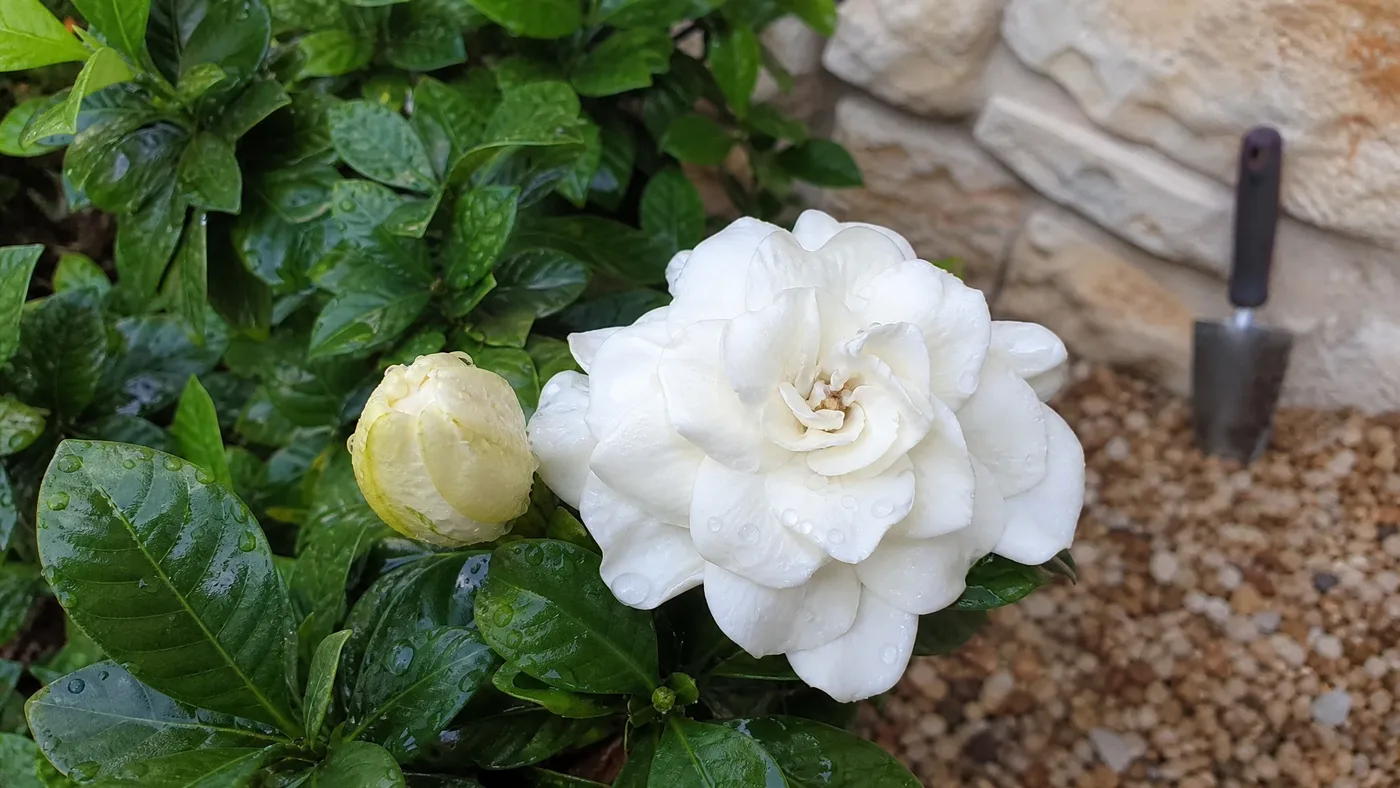
Is Cape Jasmine the Same Plant as August Beauty Gardenia?
You pick up a one-gallon shrub at a garden center and the tag says cape jasmine. At home, our website calls the same-looking plant August Beauty Gardenia, and a quick search turns up results for "gardenia" and "jasmine" as well. It feels as if three plants have been mixed up.
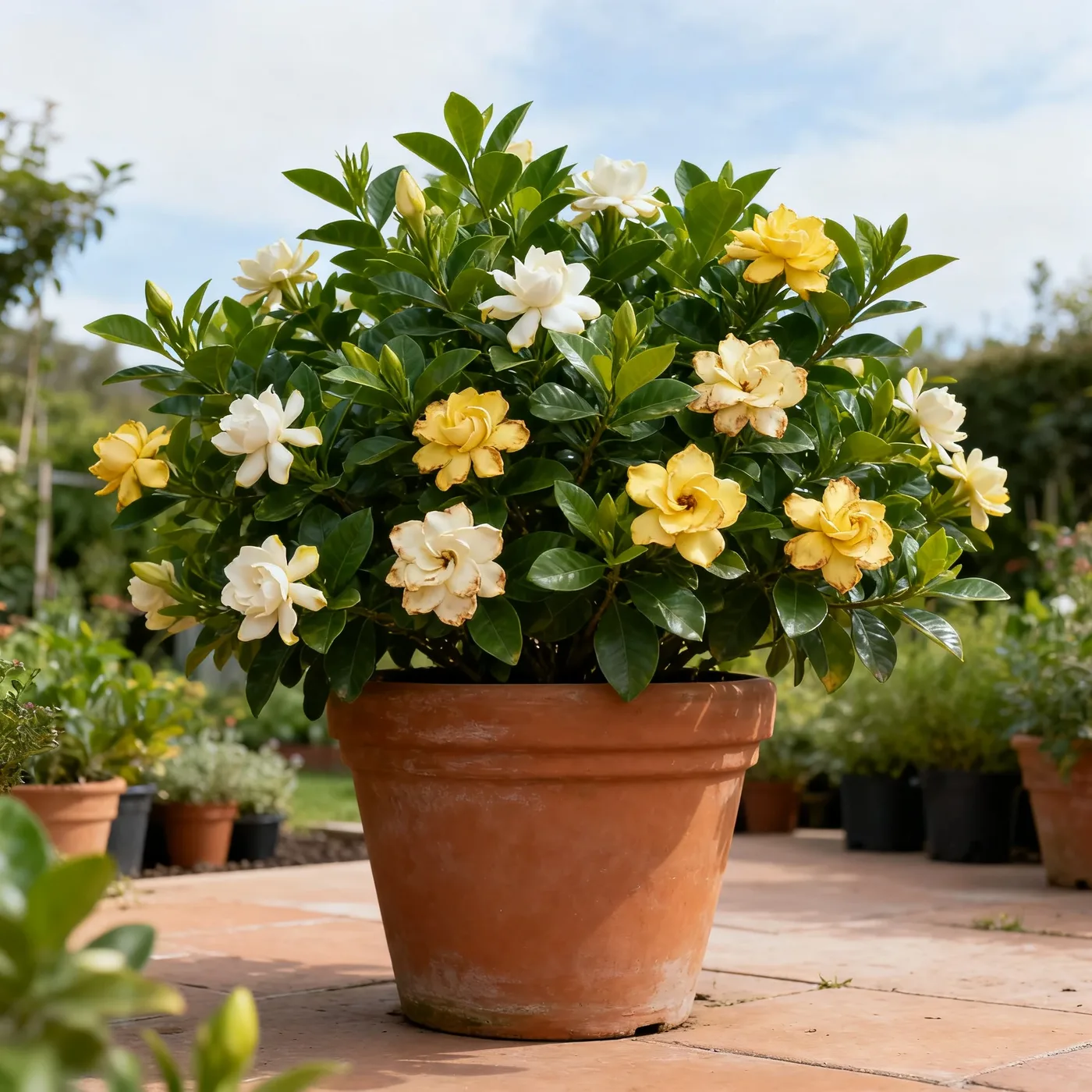
You would expect a different name to mean a different plant. Here it usually doesn't. Cape jasmine is the traditional common name for the whole species, and August Beauty is one named cultivar inside it. That is why one shrub can wear two labels, and why two shrubs carrying the same label can still grow to very different sizes.
Below, you'll find out all about how the cape jasmine name works, including where it came from, how to read a tag, and what changes in your planting plan when the cultivar is August Beauty.
Where the Name Cape Jasmine Came From
Common names rarely come with a birth certificate. It helps to separate what the sources tell us from what they leave open, so we'll do that here.
A Shrub From China With Several Names
The common gardenia is an evergreen shrub from China. Nothing about that origin points to a cape. The same shrub collected several English names as it moved into gardens elsewhere.
Cape Jasmine, Cape Jasmine Gardenia, Cape jessamine and Gardenia are all common names for Gardenia jasminoides.
"Jessamine" is an older spelling of jasmine, so cape jasmine and cape jessamine are one name written two ways. We can't give you a reliable account of how the word "cape" got attached, and we would rather say so than repeat a tidy story. What we can tell you is that the label has traveled with the species from catalog to catalog and tag to tag, and it is still printed on plants today.
Why the Jasmine in the Name Misleads
The second half of the name causes most of the confusion at the nursery counter.
The "jasmine" in cape jasmine borrows the name of a familiar plant. It does not make the shrub a jasmine. Gardenia is its own genus, and the cultivars belong to the coffee family, Rubiaceae. Our guide to how August Beauty Gardenia differs from true jasmine covers the garden differences, so here we only need the naming point: a cape jasmine is a gardenia.
One of the most common questions we get is whether cape jasmine is a different plant from gardenia. It isn't.
What Gardenia jasminoides Means for August Beauty Gardenia
A botanical name has layers, and each layer narrows the description. Reading them in order shows you exactly where August Beauty sits.
Genus, Species and Cultivar
Think of a plant name as a surname followed by a first name. Gardenia is the genus, jasminoides is the species, and together they name every cape jasmine. The species word simply means jasmine-like, which is the same borrowed comparison the common name makes.
'August Beauty' is the cultivar, a named selection inside that species. The single quotation marks are how you spot it, so a full tag reads Gardenia jasminoides 'August Beauty'.
Because a cultivar is one particular selection, it holds to its own traits where the species ranges widely. Gardenias are propagated by seed or cuttings. For a named cultivar, cuttings are what keep every plant matching the parent, since seed offers no such guarantee.
Old Names You May Still See
Older tags and catalogs sometimes carry a species name that has since changed.
The species was previously known as Gardenia augusta. A tag using the older name still points to the same species, so do not treat it as a separate plant.
How the Cultivar Compares in Numbers
The difference between species and cultivar shows up plainly in the measurements.
August Beauty is listed at 4 to 6 feet high and 3 to 4 feet wide, with 3 inch double flowers. The species as a whole runs 4 to 8 feet and bears 2 to 3 inch waxy flowers that are white to cream and age to yellow. Same species, but a more compact cultivar with a double flower.
Reading a Plant Tag That Says Cape Jasmine
A tag is a short document, and it can be read in a fixed order. Doing it the same way each time keeps you from buying on a name alone.
Step by Step at the Display Bench
Work through these five checks before you carry the pot to the register.
- Find the Latin name first. If it reads Gardenia jasminoides, you are looking at a cape jasmine, whatever common name sits beside it.
- Look for a name in single quotes after the Latin name. 'August Beauty' there means you have the cultivar. Nothing in quotes means the tag tells you the species and says nothing about which cultivar it is.
- Read "cape jasmine," "cape jessamine" and "gardenia" as the same common name for the species, not as three different shrubs.
- Translate older synonyms. Gardenia augusta is the former species name, so it describes the same plant.
- Test the tag against the numbers. A mature size well under 4 feet, a creeping habit or single flowers points to a different cultivar than August Beauty.
Common Tag Wording and What It Means
The table pairs wording we often see with what it tells you and what to do about it.
| Tag says | What it tells you | What to do |
|---|---|---|
| Cape jasmine | The species, cultivar unknown | Ask for the cultivar name or look for a Latin name on the back |
| Gardenia jasminoides | Same species, cultivar still unstated | Ask which cultivar it is |
| Gardenia jasminoides 'August Beauty' | The cultivar is named | You have the right plant |
| Gardenia augusta 'August Beauty' | Older species name, same cultivar name | Treat it as August Beauty |
| Cape jasmine 'Radicans' | A dwarf, low-spreading cultivar | Not August Beauty |
We often see tags that stop at the common name. That tag isn't wrong, only incomplete, and the missing piece is the part that decides how big the shrub gets.
How August Beauty Gardenia Differs From Other Cape Jasmines
Every cape jasmine shares a species, but the cultivars sold under that name don't share a shape. Here are the ones most likely to be confused with August Beauty.
Size, Habit and Flowers
August Beauty is an upright shrub, 4 to 6 feet high and 3 to 4 feet wide, so it is taller than it is wide. Its flowers are double and 3 inches across, a little larger than the 2 to 3 inch blooms of the species.
'Radicans' is also sold as cape jasmine, but it has a low, spreading, dwarf habit at 2 to 3 feet tall. 'Kleim's Hardy' is hardy to 10 °F and grows to 3 feet tall and wide with single flowers in summer. Neither will fill the same space as August Beauty.
Four Shrubs Sharing One Common Name
This comparison uses the figures from NC State Extension.
| Cultivar | Mature size | What sets it apart |
|---|---|---|
| August Beauty | 4–6 ft high, 3–4 ft wide | Double flowers, 3 inches wide |
| 'Radicans' | 2–3 ft tall | Low, spreading, dwarf habit |
| 'Crown Jewel' | 2–3 ft tall | Hardy to zone 6 with protection |
| 'Kleim's Hardy' | 3 ft tall and wide | Hardy to 10 °F, single flowers |
'Crown Jewel' is winter hardy with protection to zone 6, which is exceptional for gardenias. That is a trait of that cultivar, not of cape jasmines in general. For a wider look, see our comparison of how the cultivars compare.
Why Cultivar Differences Change Your Planting Plan
Differences on a tag turn into decisions once you are holding a shovel. Room, cold and the care that never changes are the three that matter.
Spacing and Room
Mature width drives spacing. August Beauty grows 3 to 4 feet wide and 4 to 6 feet high. If you plan from a label for a 2 to 3 foot dwarf, you will crowd the shrub and end up pruning to hold it back.
If you plan from the species range of 4 to 8 feet, you may leave gaps you didn't need. Plan from the cultivar's own numbers. For row distances, use our hedge spacing guide.
Cold Hardiness
The species grows across zones 7b to 11b, but a cultivar sits somewhere inside that range. Clemson notes that most of the older gardenia cultivars are cold hardy to USDA zone 8, with newer and smaller ones hardier.
Do not borrow 'Crown Jewel's' zone 6 rating for August Beauty. Our guide to which zones August Beauty Gardenia can grow in sets out what we tell customers.
Care That Stays the Same
Some traits belong to the species, so they apply to August Beauty and every other cape jasmine alike. Check each against your site.
- Soil should be acid, below pH 6.0, moist and well drained.
- Light is best as morning sun with afternoon shade.
- The species is moderately drought-tolerant, so an established shrub is not as fragile as its reputation, though it still prefers moist soil.
- Whitefly is the most common pest problem on gardenias, and they are also considered deer resistant.
- The ASPCA lists gardenia as toxic to dogs, cats and horses.
Buying August Beauty Gardenia Under Any Name
You can buy the right plant whatever the label says, as long as you know which questions get a real answer. The list below is what we would ask.
Questions to Ask Before You Pay
These four questions take less than a minute at the counter.
- Ask the seller to read the full botanical name aloud, including the part in single quotes.
- Compare the label to the cultivar's numbers: 4 to 6 feet high, 3 to 4 feet wide, and 3 inch double flowers.
- Photograph the tag so you can check it against our guides at home.
- If the pot shows only "cape jasmine," ask where the plant came from and whether the cultivar is recorded.
When the Tag Gives Only a Common Name
Common advice says to buy by the common name, since it is what everyone says. We tell customers the opposite, because "cape jasmine" covers cultivars as different as a 2 foot spreader and a 6 foot upright shrub.
If you can't confirm the cultivar, you can't plan spacing or hardiness around it. We label each August Beauty we grow with its cultivar name, so the tag never leaves you guessing. For pot sizes, our container sizes buying guide explains the options.
Cape Jasmine and August Beauty Gardenia in One Sentence
After the history and the tag reading, the relationship fits in a single plain sentence: cape jasmine is the traditional common name of the species Gardenia jasminoides, and August Beauty is one named cultivar of that species.
August Beauty Gardenia
Nursery-grown August Beauty Gardenia in sizes from 1 Gallon, shipped to your door.
From $33.97
Shop Now →So when a tag says cape jasmine, check the cultivar name before you buy. Growing on our own farms is what makes us a small business, and the shrubs we raise stay top quality all the way to your door. Every August Beauty we ship has its roots firmed in the pot and its branches wrapped against scuffs in transit, so it arrives ready to plant.