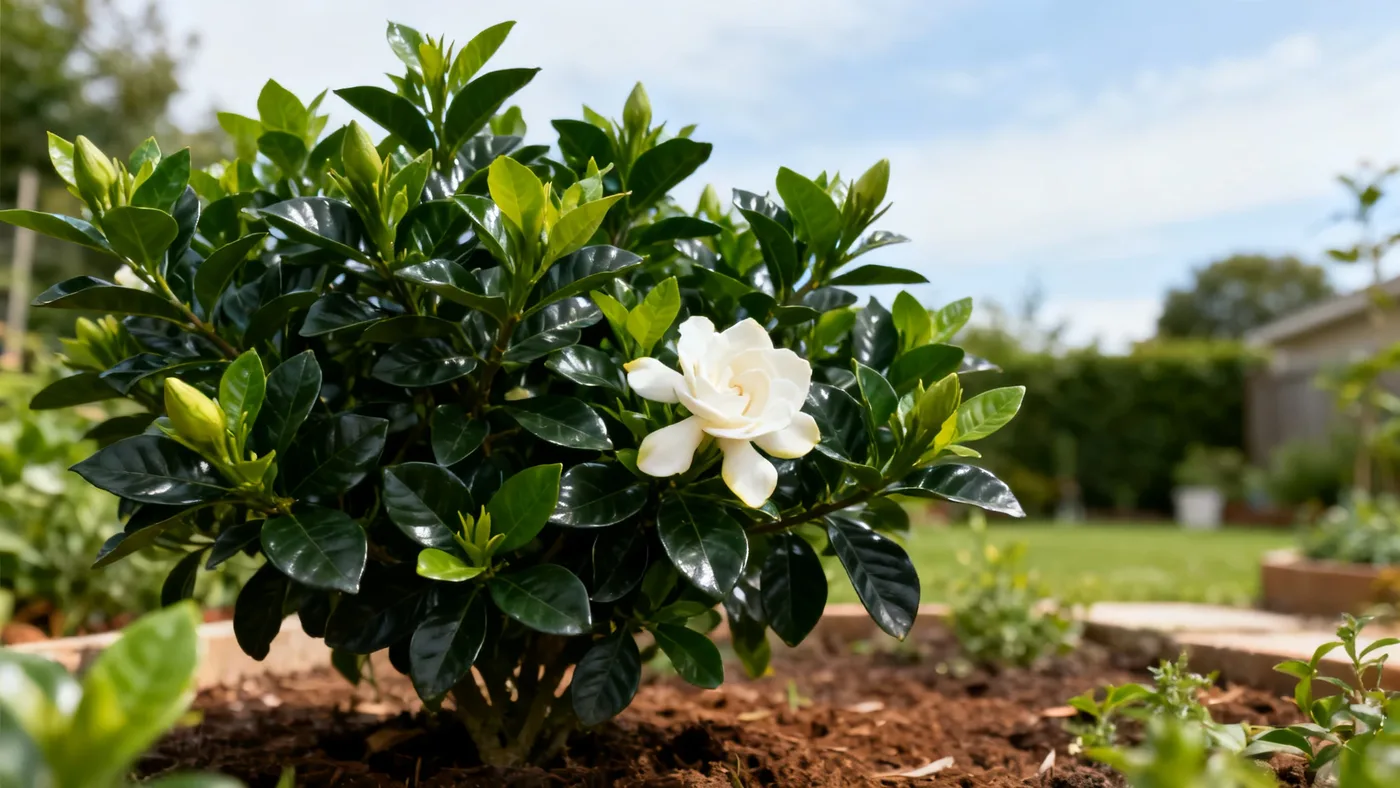
Watering August Beauty Gardenia: A Complete Guide
August Beauty Gardenia has particular water needs that sit in a narrow sweet spot: your soil must stay consistently moist, but never waterlogged. This shrub has low drought tolerance and will signal stress quickly through bud drop and yellowing foliage. Unlike drought-hardy ornamentals that you can leave unattended, gardenias require steady, attentive watering to produce those fragrant white blooms and maintain healthy dark green foliage.
The difference between thriving and struggling often comes down to how you water, not just how much. This guide walks you through the techniques and timing that work, and shows you what to look for when something is wrong.
Why August Beauty Gardenia Water Needs Matter
August Beauty Gardenia grows best in rich, well-drained soil that stays moderately moist. The plant's shallow root system draws water frequently, especially during active growth and bloom time. When soil dries out, even for a few days, flower buds abort and drop. Simultaneously, waterlogged conditions rot the roots and invite fungal disease. Your job is maintaining consistent moisture without either extreme.
If you're growing your gardenia in a zone near the lower edge of its range (zones 7b to 8), proper watering also supports overall plant vigor and winter hardiness. Strong, well-hydrated plants tolerate cold snaps better than stressed ones.
Materials and Tools You'll Need
- Garden hose with a spray nozzle, or a soaker hose
- A moisture meter (optional but helpful for beginners)
- Mulch: 2 to 3 inches of pine bark, compost, or shredded leaves
- Well-draining potting mix (if growing in containers) or aged compost for soil amendment
- Watering can or drip irrigation system
- Rain gauge (helpful for tracking natural precipitation)
Step-by-Step Watering Instructions
Step 1: Check Your Soil Before Watering
Stick your index finger into the soil about 2 inches deep. If the soil feels moist, wait another day or two before watering. If it feels dry at that depth, water thoroughly. This simple check prevents the two worst mistakes: watering on a fixed schedule regardless of conditions, and letting the plant dry out between waterings.
In spring and early summer (peak growth and bloom time), you may need to water every 2 to 3 days, depending on rainfall and temperature. In cooler months or after blooming slows, watering may drop to once a week or less.
Step 2: Water Deeply and Slowly
When you do water, apply enough to moisten the soil 6 to 8 inches deep. Water slowly so the soil can absorb moisture evenly; fast watering runs off without penetrating. Aim the spray at the base of the plant, not overhead. Wet foliage invites fungal leaf spot and makes the plant more vulnerable to disease.
For in-ground plants, run water for 10 to 15 minutes from a gentle hose setting. For container plants, water until water drains from the bottom, then let the pot drain fully before returning it to its saucer.
Step 3: Apply Mulch to Regulate Soil Moisture
Spread 2 to 3 inches of organic mulch (pine bark, compost, or shredded leaves) around the base, keeping it 2 to 3 inches away from the stem to prevent rot. Mulch acts as a buffer: it keeps soil cooler in hot weather, reduces evaporation, and moderates temperature swings that trigger bud drop. Refresh mulch annually as it breaks down.
Step 4: Adjust for Your Climate and Season
In hot southern climates where temperatures regularly exceed 85 degrees Fahrenheit, provide morning sun with afternoon shade (roughly 3 to 4 hours of afternoon shade). This keeps the plant cooler and reduces soil moisture loss from both heat and rapid evaporation. In cooler zones or coastal regions with moderate temperatures, full sun is fine and actually supports better blooming.
During summer heat, you may need to water every 1 to 2 days. In fall and winter, as growth slows and temperatures drop, reduce frequency to once or twice weekly, or less if rainfall is adequate. Always check soil before watering; never water on a calendar alone.
Step 5: Monitor for Stress and Adjust
Watch for signs of both underwatering and overwatering. If you see bud drop, yellowing leaves, or wilting despite wet soil, you have a drainage problem. If leaves turn pale yellow, edges brown, or growth slows dramatically, the plant may be thirsty or the soil pH may be too high (August Beauty Gardenia prefers acidic soil, roughly 5.0 to 6.5). Test your soil pH and amend with sulfur if needed to lower it.
Understanding Overwatering and Underwatering
The symptoms of water stress in August Beauty Gardenia can overlap, which makes diagnosis tricky. Here is what to look for:
Underwatering signs: Bud drop before blooms open, slow growth, leaf edges turning brown and papery, yellowing lower leaves, wilting even after morning watering.
Overwatering signs: Bud drop, yellowing leaves (especially lower ones), mushy stems or a musty smell from the soil, sooty mold on foliage (from fungal growth fueled by moisture), root rot preventing the plant from absorbing water even when soil is wet.
The key difference: underwatered plants usually recover quickly after a deep watering. Overwatered plants (especially those with root rot) take weeks to recover and may not survive. This is why well-drained soil is non-negotiable.
Seasonal Watering Schedule
August Beauty Gardenia's water needs shift throughout the year. Use this framework as a starting point, but always adjust based on rainfall, temperature, and soil moisture checks:
| Season | Frequency | Key Adjustments |
|---|---|---|
| Spring (growth ramp-up) | Every 2 to 3 days | Increase frequency as temperatures rise and new growth emerges. Check soil before each watering. |
| Early to mid-summer (peak bloom) | Every 1 to 2 days | Hot weather and heavy flowering demand steady moisture. Mulch heavily to reduce evaporation. In hot southern climates, provide afternoon shade. |
| Late summer to fall | Every 3 to 4 days | As heat breaks and blooming slows, reduce frequency slightly. Monitor rainfall; skipped waterings may be possible during wet spells. |
| Winter (dormancy) | Once to twice weekly | Growth is minimal; soil dries more slowly. Water only if soil is dry to the touch. In zones 7b and 8, protect from hard freezes if possible. |
Regional and Zonal Considerations
August Beauty Gardenia grows in USDA zones 7b to 10, though zones 7b and 8 are borderline and may need winter protection. Your zone affects both watering and overall care.
Zones 7b to 8 (cooler/transitional): Winter dormancy is more pronounced. Reduce watering significantly from November through February. A dry winter is less harmful than a wet one, because waterlogged roots are more likely to rot during cold snaps. Resume normal watering as temperatures warm in spring. For more details on growing in cooler zones, see our guide to August Beauty Gardenia zones.
Zones 9 to 10 (warm/tropical): Your gardenia may grow year-round with minimal dormancy. Maintain consistent moisture throughout the year, but reduce frequency slightly during any cool or dry periods (usually winter). High humidity helps prevent bud drop, but ensure good air circulation to avoid fungal disease.
Hot southern climates: Afternoon shade is critical. Without it, the plant loses moisture too quickly, stress hormones trigger bud drop, and foliage may scorch. Morning sun is ideal for blooming; afternoon shade is essential for survival during heat waves.
Container Watering Specifics
Gardenias grow well in containers, but pots dry out faster than in-ground soil. Use a quality, acidic potting mix formulated for acid-loving plants (azalea or camellia blends work well). Water container plants when the top inch of soil feels dry, which may be every 1 to 3 days depending on pot size, material, and temperature. Ensure pots have drainage holes; standing water kills roots within days.
In zones 7b and 8, bring container gardenias indoors or into a sheltered location before hard freezes. Container plants are more exposed to cold injury than in-ground plants.
Common Mistakes to Avoid
- Watering on a fixed schedule: Your plant's actual needs depend on rainfall, temperature, humidity, and soil type. Check soil moisture first.
- Watering overhead: Wet foliage invites fungal disease and wastes water. Always water the soil at the base.
- Poor drainage: No amount of careful watering overcomes heavy clay soil. Amend your planting area with compost and ensure water drains within 24 hours of a heavy rain or watering.
- Inconsistent moisture: Fluctuating between bone-dry and saturated causes bud drop faster than any other water-related factor.
- Skipping mulch: Mulch is not decorative; it is essential for moisture regulation and temperature stability.
- Overwatering in cool months: Winter or cold snaps dramatically slow a gardenia's water uptake. Even experienced growers kill plants by watering too much in winter.
Signs Your Watering Technique Is Working
When you get August Beauty Gardenia watering right, you will notice:
- Glossy, dark green foliage with no brown edges or yellowing
- Abundant flower buds that develop and open into creamy white blooms (not dropping before maturity)
- Steady, moderate growth of 6 to 12 inches per year
- No wilting even on hot days
- Soil that feels moist but never soggy when you check it
- No soft stems, musty odors, or fungal problems
For a full overview of August Beauty Gardenia care beyond watering, including pruning, fertilizing, and pest management, see our complete care guide.
Quick Reference Watering Checklist
| Task | Frequency | Notes |
|---|---|---|
| Check soil moisture by touch | Before every watering | Soil should feel moist 2 inches deep |
| Water at the base, not overhead | Every watering | Wet foliage encourages fungal disease |
| Water deeply and slowly | Every watering | Aim for 6 to 8 inches of soil moisture |
| Refresh mulch layer | Once per year (spring) | Maintain 2 to 3 inches, away from stem |
| Assess for stress signs (bud drop, yellowing) | Weekly during growing season | Adjust watering frequency or drainage if needed |
| Reduce watering frequency | Fall and winter | Water less often once blooming slows |
| Check soil pH | Every 2 to 3 years | Gardenia prefers 5.0 to 6.5; amend if higher |