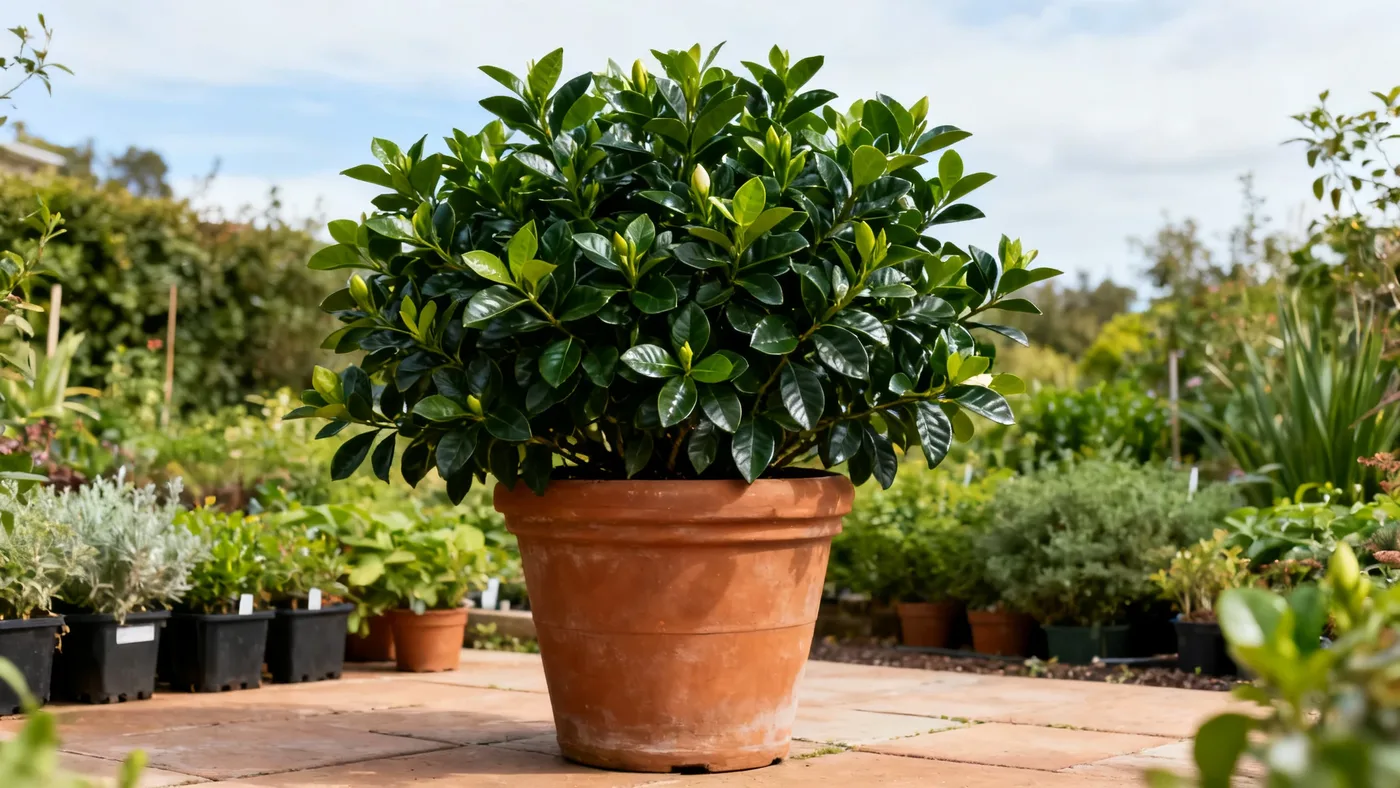
Growing August Beauty Gardenia in Pots and Containers
August Beauty Gardenia thrives in containers, bringing fragrant white blooms to your patio, porch, or entryway. With the right soil, container size, and seasonal care, you can grow this broadleaf evergreen in almost any climate, or move it to shelter during cold snaps. This guide walks you through the essentials: choosing a pot, mixing the right soil, planting step-by-step, and keeping it blooming year after year.
Why Grow August Beauty Gardenia in a Container
Containers offer flexibility that in-ground planting cannot match. You can move your gardenia to catch morning sun and afternoon shade during scorching summers, wheel it to a sheltered spot before a hard freeze, or bring it indoors in marginal climates. Potted gardenias also stay slightly smaller and more manageable than landscape shrubs, making them ideal for small patios, decks, and entryways.
In USDA zones 7b and colder (where August Beauty Gardenia is hardy only with protection), a container lets you move the plant to an unheated garage, cold frame, or sheltered porch for the winter. In zones 8 and warmer, you can keep a potted gardenia outside year-round, though even established container plants benefit from afternoon shade during heat waves or relocation during unexpected frosts. The ability to position your plant for optimal light and temperature control is a major advantage of container growing.
Materials You Will Need
Before planting, gather these essentials:
- Container: A pot 14 to 18 inches in diameter for a nursery-grown plant (typically sold in quart, #1, or #3 containers). Must have drainage holes in the bottom. Ceramic, plastic, or terracotta all work; terracotta dries faster but looks traditional.
- Potting mix: A high-quality, well-drained mix formulated for acid-loving plants (azalea or camellia blend is ideal). Avoid standard all-purpose potting soil, which holds too much moisture and lacks acidity.
- Peat moss or composted bark: To amend the potting mix and boost organic matter and acidity.
- Acid-loving plant fertilizer: Labeled for azaleas, camellias, or rhododendrons. A slow-release granular formula simplifies feeding schedules.
- Iron chelate: Optional but valuable. Treats chlorosis (yellowing leaves) if high-pH water raises soil pH over time.
- Mulch: Pine bark, pine needles, or composted leaves conserve moisture and keep roots cool.
- Watering can or soaker hose: Allows slow, thorough watering without splashing foliage.
Step-by-Step Planting Instructions
Step 1: Select the Right Container
Choose a pot 2 to 3 inches larger in diameter than the root ball of your nursery-grown plant. A 14-inch to 18-inch pot works well for most young gardenias. Drainage holes are non-negotiable. If you love a decorative pot without drainage, nest a draining pot inside it. Water pooling in the container kills gardenias through root rot; poor drainage is the leading cause of death in potted gardenias.
Material choice is secondary to drainage. Terracotta breathes and dries quickly (useful in humid climates), plastic retains moisture longer (good for dry climates), and ceramic offers a polished look. Choose based on your local humidity and how often you want to water.
Step 2: Prepare the Potting Mix
Pour your acid-loving potting mix into a large bucket or container. Lightly moisten it with water and stir in a generous handful of peat moss or composted bark (roughly one part amendment to four parts mix). A soil pH of 5.0 to 6.5 is ideal for August Beauty Gardenia. If you have a soil pH kit, test a sample. If your mix tests neutral or alkaline (above 6.5), add more peat moss or switch to a brand specifically labeled for acid-loving plants.
Acidic potting mix is essential. Alkaline soil causes iron deficiency (chlorosis), yellowing the leaves while veins remain green. Starting with the right pH saves months of troubleshooting later.
Step 3: Plant the Gardenia
Add 2 to 3 inches of moistened potting mix to the bottom of your pot. Remove your August Beauty Gardenia from its nursery container and gently loosen the roots with your fingers or a small tool. Do not aggressively tear the root ball; gentle loosening encourages roots to grow into the new soil. Place the plant in the pot so the top of its root ball sits level with the rim, or slightly lower. Never bury the main stem; this invites rot.
Fill around the sides with potting mix, pressing gently but firmly to eliminate large air pockets. Water thoroughly until water drains freely from the bottom. Soil will settle; add a bit more mix if the top of the root ball becomes exposed. The goal is firm, moist, settled soil with no air gaps.
Step 4: Mulch the Soil Surface
Spread 1 to 2 inches of pine bark or composted leaves over the soil, leaving a 1-inch gap around the stem to prevent rot and fungal issues. Mulch keeps the root zone cool and moist, mimicking the woodland conditions August Beauty Gardenia prefers. As organic mulch breaks down over a year or two, it adds humus to the potting mix.
Step 5: Position for Optimal Light
Move your potted gardenia to a spot with full sun to part shade. In hot southern climates (zones 9 and 10), morning sun with afternoon shade is ideal to prevent leaf scorch and bud drop from heat stress. In cooler zones (7b and 8), more direct sun is better, provided the plant receives afternoon shade during the hottest months. August Beauty Gardenia blooms best with at least 4 to 6 hours of direct sun daily.
Year-Round Care for Container Gardenias
Watering Schedule
August Beauty Gardenia does not tolerate prolonged drought or waterlogged soil; consistent moisture is the goal. Check the top inch of potting mix every few days during spring and summer. Water when the soil feels slightly dry to the touch, aiming for consistently moist (not soggy) conditions. In fall and winter, reduce watering frequency. In zones 7b and 8, where winter outdoors means cold soil, allow the mix to dry a little more between waterings to prevent root rot in cold, wet soil.
Water quality matters. Alkaline tap water gradually raises soil pH, encouraging chlorosis. If your tap water is hard or alkaline, collect rainwater in a barrel and use it for irrigation. Even a small amount of rainwater mixed in helps keep soil acidic.
Feeding Your Container Gardenia
Feed in early spring as new growth begins, using an acid-loving plant fertilizer (azalea or camellia type) at the label rate. After the first flush of blooms fades (usually early to mid-summer), feed again. Skip feeding in late summer and fall; excess nitrogen stimulates new growth that cold snaps will damage or kill. In winter (zones 7b-8), do not feed dormant plants in cold storage.
Container plants lose nutrients faster than in-ground plants because water drains through the potting mix, leaching nutrients with each watering. One annual feeding in spring plus one after the bloom flush usually suffices. However, if leaves pale despite good watering and drainage, a light foliar spray of iron chelate or a dilute balanced fertilizer can revive them within weeks.
Pruning and Shaping
Prune lightly right after the bloom flush ends, typically in late summer. Remove spent flower heads, any dead or diseased branches, and overall shape the shrub to your preference. In containers, you can maintain August Beauty Gardenia at 3 to 4 feet tall with pruning, keeping it compact and tidy. Never prune in late summer or fall. August Beauty Gardenia sets flower buds in late summer and early fall for spring blooming; pruning at that time removes next year's flowers.
Winter Protection in Zones 7b and 8
In zone 7b (the borderline lower limit for this cultivar), provide winter protection. Move your potted gardenia to an unheated garage, shed, or cold frame where temperatures stay above 0°F. Keep the soil slightly moist (not wet) through winter. Do not feed or prune. Alternatively, move the pot against a south-facing wall of your house, mulch the pot itself with straw or burlap, and cover the top of the plant loosely with frost cloth during hard freezes. In zones 8 and warmer, outdoor container plants usually survive outdoors. However, move plants to afternoon shade or cover them loosely if temperatures drop below 25°F, as unexpected frosts can damage buds and tender foliage.
Troubleshooting Common Problems
Bud Drop
Buds fall without opening when the plant experiences temperature swings, inconsistent watering, or low humidity. In containers, this is common in homes with dry indoor air. To prevent it: water consistently without drying out, avoid moving the pot suddenly between warm and cold locations, and if possible, mist foliage on dry days or place the pot on a pebble tray with shallow water beneath (keeping the pot itself above the water line).
Yellow Leaves (Chlorosis)
If leaves turn yellow while the veins stay green, iron deficiency (chlorosis) is the likely cause. This usually results from alkaline potting mix or hard tap water raising soil pH. Repot into fresh, acidic potting mix, or apply iron chelate as a soil drench per label directions. Switch to rainwater if possible. Chlorosis corrects slowly over weeks to months, so patience and consistent care are essential.
Failure to Bloom
No flowers usually stems from over-pruning in late summer or fall, which removes flower buds. Excess nitrogen fertilizer also promotes leafy growth at the expense of blooms. Solution: prune only right after the bloom flush, and use acid-loving or balanced fertilizers (not high-nitrogen lawn formulas). If buds form but drop, refer to the Bud Drop section above.
Pests and Diseases
Container gardenias can host aphids, whiteflies, scale insects, mealybugs, and spider mites. Inspect the undersides of leaves every few weeks. A strong spray of water often dislodges soft-bodied pests. For persistent infestations, use insecticidal soap or neem oil per label instructions. Poor drainage or high humidity (especially indoors) can invite root rot or leaf spot fungi. Ensure the pot drains freely and air circulates around the foliage.
Expected Results and Timeline
A nursery-grown August Beauty Gardenia in a container typically blooms within its first year in your care, especially if planted in early spring or fall. Blooms appear in late spring through summer, with the heaviest flush in early summer and sporadic repeat blooms into fall (timing varies by regional climate). Flowers are creamy white, aging to ivory or yellowish, with a strong, classic sweet gardenia fragrance.
Your gardenia will reach a mature size of 4 to 6 feet in height and width over several years, but containers naturally restrict size to 3 to 4 feet or smaller with selective pruning. Growth rate is moderate, roughly 6 to 12 inches per year, depending on care and climate. With consistent feeding, watering, pruning, and winter protection where needed, a potted gardenia can bloom reliably for many years, becoming a signature feature of your outdoor space.
Quick Reference: Container Gardenia Care Checklist
| Task | Timing | Key Details |
|---|---|---|
| Plant or repot | Early spring or fall | 14-18 inch pot; acidic potting mix (pH 5.0-6.5); drainage holes required |
| Water | Year-round, as needed | Consistently moist, not soggy; reduce frequency in cold months |
| Feed | Early spring and after first bloom flush | Acid-loving plant fertilizer at label rate; skip late summer and fall |
| Prune | Right after blooms fade | Remove spent flowers and dead wood; avoid pruning in late summer or fall |
| Check for pests | Monthly during growing season | Inspect leaf undersides for aphids, whiteflies, scale, spider mites |
| Position for light | Year-round | 4-6 hours direct sun daily; afternoon shade in zones 9-10 |
| Winter protection | November through February (zones 7b-8) | Move to cold frame, garage, or sheltered location; keep soil slightly moist |
| Treat chlorosis if needed | As symptoms appear | Yellow leaves with green veins = iron deficiency; apply iron chelate per label |
For year-round care guidance and troubleshooting beyond container growing, see our complete August Beauty Gardenia care guide.