August Beauty Gardenia Sun Requirements: Full Sun or Shade?
August Beauty Gardenia thrives in a range of light conditions, but getting the sun exposure right is essential for prolific flowering and healthy foliage. The answer to whether your gardenia needs full sun or can tolerate shade depends on your climate, local heat levels, and the specific microclimate where you plant. This guide walks you through assessing your space, positioning your plant correctly, and adjusting light conditions to encourage the heaviest bloom flush possible.
Understanding August Beauty Gardenia Sun Needs
August Beauty Gardenia performs best in full sun to part shade, which means 6 to 8 hours of direct sunlight daily is ideal for most regions. However, the cultivar's sun tolerance varies by climate zone. In cooler zones (7b through 9a), full sun drives stronger blooming and reduces disease pressure. In hot southern climates (zone 9b and 10), afternoon shade becomes protective rather than limiting.
The reason is simple: intense afternoon heat in the South can stress the plant and reduce bloom production, even if direct sun would otherwise encourage flowering. Morning sun with afternoon shade is the sweet spot in these regions, allowing the plant to receive sufficient light without heat scorch. August Beauty Gardenia develops a heavier bloom flush in late spring and early summer, and the right light exposure amplifies that natural rhythm. In cooler regions, you can often push the plant into full sun; in hotter zones, you shade strategically.
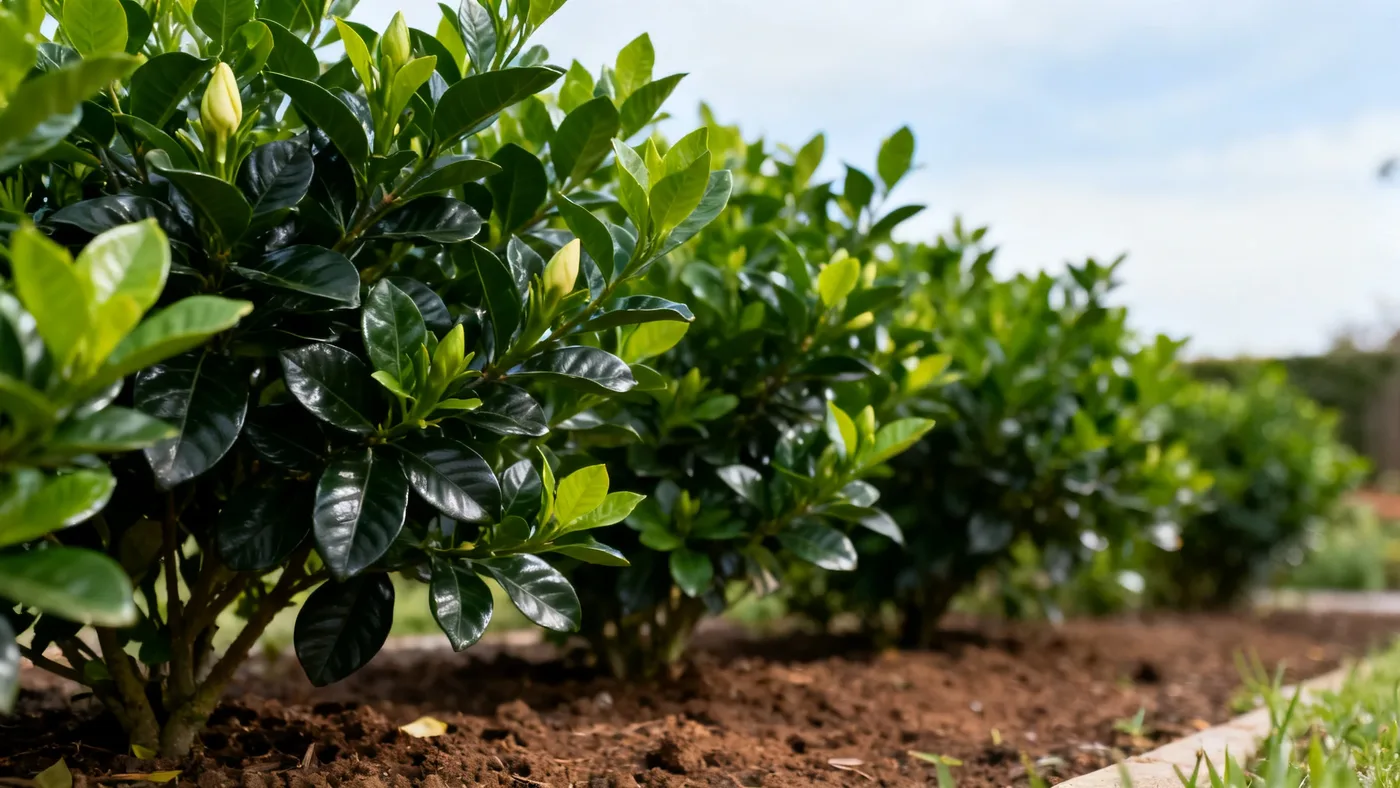
Gardenia foliage is glossy and dark green, a sign of the plant's preference for rich growing conditions that include adequate light. Too little light results in sparse blooming, yellowing leaves, and weak growth. Too much intense afternoon heat, by contrast, can wilt flowers and damage tender new growth. Neither extreme is desirable, which is why understanding your local climate is the first step.
Step 1: Assess Your Climate Zone and Summer Heat Patterns
Before planting or repositioning an existing gardenia, pinpoint your USDA hardiness zone. August Beauty Gardenia is hardy in zones 7b through 10, with borderline zone 7b locations requiring winter protection. Your zone determines how aggressively the sun will warm your soil and air in summer.
Check your local extension service for average peak summer temperatures in your area. If your region regularly exceeds 95°F in July and August, afternoon shade is beneficial. If summer highs typically stay in the 80s or low 90s, full sun is usually fine. Look at the southern and western exposures of your property. These receive the strongest, most intense afternoon rays. A south-facing wall or open garden bed gets significantly hotter than an east-facing bed or one sheltered by afternoon tree shade.
Also note the existing shade patterns on your property at different times of day. Morning sun is gentler than afternoon sun; a spot that receives 6 hours of morning and midday sun plus afternoon shade is often more forgiving than 6 hours of afternoon and evening sun.
Step 2: Choose a Planting Location Based on Sun Exposure
Once you have assessed your climate, select a planting site. You have three main options: full sun, part shade, or morning sun with afternoon shade. Here is how to position correctly for each:
Full Sun Locations (Cooler Zones, 7b-9a)
- Choose a spot that receives 6 to 8 hours of direct sunlight daily, ideally including morning and midday sun.
- East or south-facing exposures work well if there is no extreme afternoon heat in your region.
- Ensure the spot is not shaded by tall trees or buildings during the plant's peak growing season (May through August).
- Full sun encourages denser foliage and the heaviest bloom flush, making this the ideal choice in milder climates.
Part Shade Locations (Transitional Zones, 9a-9b)
- Position the plant where it receives 3 to 5 hours of direct sun, preferably morning sun.
- Trees that provide dappled afternoon shade are ideal; avoid dense shade that blocks most light.
- This approach works in zones transitioning from cool to hot summers.
- The plant will still bloom well but may need slightly more frequent watering as the soil retains more moisture in shade.
Morning Sun with Afternoon Shade (Hot Climates, Zone 10)
- Place the gardenia in a spot receiving 4 to 6 hours of morning and early midday sun.
- Position it on the east side of a structure, tree, or hedge that blocks afternoon rays after 1 to 2 p.m.
- This arrangement provides enough light for flowering while protecting tender foliage and blooms from heat stress.
- In zone 10, this is often the preferred option because it balances flowering potential with plant health.
Step 3: Evaluate Soil and Moisture at Your Chosen Site
Light exposure interacts with soil and moisture. Full-sun sites dry out faster than shaded locations. Before finalizing your planting spot, check how the soil retains moisture in your chosen area. Dig a small hole 6 inches deep and fill it with water. Note how long it takes to drain. If water disappears in under 1 hour, the soil is fast-draining. If it takes 2 to 4 hours, it is moderately well-drained. If water remains after 4 hours, the spot is too wet.
August Beauty Gardenia requires well-drained, acidic soil with consistent moisture. The plant does not tolerate prolonged drought or waterlogged soil. Full-sun spots may need supplemental irrigation in hot, dry summers, while part-shade locations may require less frequent watering. This is not a reason to avoid full sun in cooler zones, but it is a reminder to monitor soil moisture more closely when light exposure is high.
Step 4: Plant Your Gardenia in the Correct Position
Assuming you are planting a container-grown specimen (usually available in quart, #1, or #3 containers), dig a planting hole that is as deep as the root ball and 1.5 times as wide. Position the plant at the same depth it was growing in its container; burying it deeper or planting it too shallow stresses the roots. Position the plant so its position relative to sun exposure matches your chosen strategy (full sun, part shade, or morning sun with afternoon shade).
For a specimen shrub near a patio or window for fragrance, you may prioritize access over sun exposure. In this case, choose a cultivar-friendly light level (full sun to part shade) and manage watering and fertility more closely. For hedging or screening purposes, spacing of 3 to 5 feet apart allows denser canopy development, which happens most readily with good light exposure.
Backfill the hole with a soil mix rich in organic matter and acidic. August Beauty Gardenia prefers soil pH around 5.0 to 6.5. If your native soil is alkaline (high pH), amend with peat moss, sulfur, or an acid-loving plant amendment to lower pH before planting.
Step 5: Monitor Bloom Performance and Adjust if Needed
After planting, observe your gardenia over the first full growing season. The plant typically blooms within 1 to 2 years from a container specimen and reaches mature size in 4 to 6 years. Watch for the heaviest bloom flush, which occurs in late spring and early summer. If your plant produces abundant cream-colored, fragrant flowers during this window, your light choice is working. If bloom is sparse despite healthy foliage, the plant may not be receiving enough light.
Sparse blooming in part-shade locations is common if shade is denser than ideal. If this occurs, consider pruning back nearby trees or shrubs to increase light penetration. Avoid pruning your gardenia itself in late summer or fall, as this removes next year's flower buds. Prune only lightly right after flowering to shape and remove dead wood.
Conversely, if foliage shows sunburn (bleached or papery leaves) or flowers wilt rapidly despite adequate watering, your gardenia may need afternoon shade relief, especially in zone 10. Move potted gardenias or plan shade structures (shade cloth, tree pruning) for in-ground plants.
Common Mistakes to Avoid
Planting in dense shade: Deep shade from large trees or north-facing walls produces few to no blooms. If your only option is shaded, expect minimal flowering; this is not an ideal August Beauty Gardenia location.
Ignoring afternoon heat in the South: Planting a gardenia in full afternoon sun in zone 10 without afternoon shade can stress the plant and reduce blooming. This is the most common regret for gardeners in hot climates.
Assuming sun requirements are the same everywhere: Your neighbor in a cooler part of the state may grow the same cultivar successfully in full sun while you, in a hotter zone, need afternoon shade. Climate, not just USDA zone, matters.
Overwatering shade-planted specimens: Shaded soil retains moisture longer than sunny soil. Water deeply but less frequently under trees to avoid root rot.
Pruning in late summer: If you prune after August, you remove flower buds for the following spring. Prune only in late spring or early summer, right after blooming.
Expected Results Over Time
With the correct sun exposure for your climate, August Beauty Gardenia will develop into a broadleaf evergreen shrub 4 to 6 feet tall and wide, with moderate growth of roughly 6 to 12 inches per year. You can expect dense, glossy dark green foliage year-round and a heavy bloom flush in late spring and early summer, with lighter, sporadic blooms into fall depending on your region and summer heat. The fragrance is strong and classic. In cooler zones with full sun, bloom may begin as early as mid-May. In hotter zones with afternoon shade, bloom may peak in June or July. All timings depend on local weather, so late frosts or unusually cool springs can shift bloom timing.
Quick Reference: Sun Requirements by Zone and Exposure
| USDA Zone | Climate Profile | Best Sun Exposure | Daily Sun Hours | Notes |
|---|---|---|---|---|
| 7b-8a | Cool summers, cold winters | Full sun | 6-8 | Winter protection may be needed in zone 7b; no afternoon shade required |
| 8b-9a | Mild summers, occasional frost | Full sun to part shade | 5-8 | Full sun preferred if afternoon temperatures stay below 95°F |
| 9b | Hot summers, minimal frost | Morning sun with afternoon shade | 4-6, morning preferred | Peak summer temperatures often exceed 95°F; afternoon shade protects blooms |
| 10 | Very hot year-round, tropical | Morning sun with afternoon shade | 4-6, morning preferred | Afternoon shade is protective, not limiting; use dappled or filtered shade |
Planting Checklist
- Confirm your USDA hardiness zone (7b-10) and local summer heat patterns
- Assess your property for sun exposure at different times of day (morning, midday, afternoon)
- Choose a planting site: full sun (cool zones), part shade, or morning sun with afternoon shade (hot zones)
- Test soil drainage at the site; aim for moderate to well-drained
- Amend soil to acidic pH (5.0-6.5) if needed before planting
- Plant container-grown specimen at the same depth as its root ball
- Observe bloom performance in year 1 and adjust (pruning nearby trees, adding shade cloth) in year 2 if needed
- Never prune after late August to protect next year's flower buds
- Water consistently; monitor soil moisture more closely in full-sun sites
For more complete care information, see the August Beauty Gardenia care guide. If you are planting in a borderline zone, also review which zones August Beauty Gardenia can grow in to ensure winter hardiness at your location.