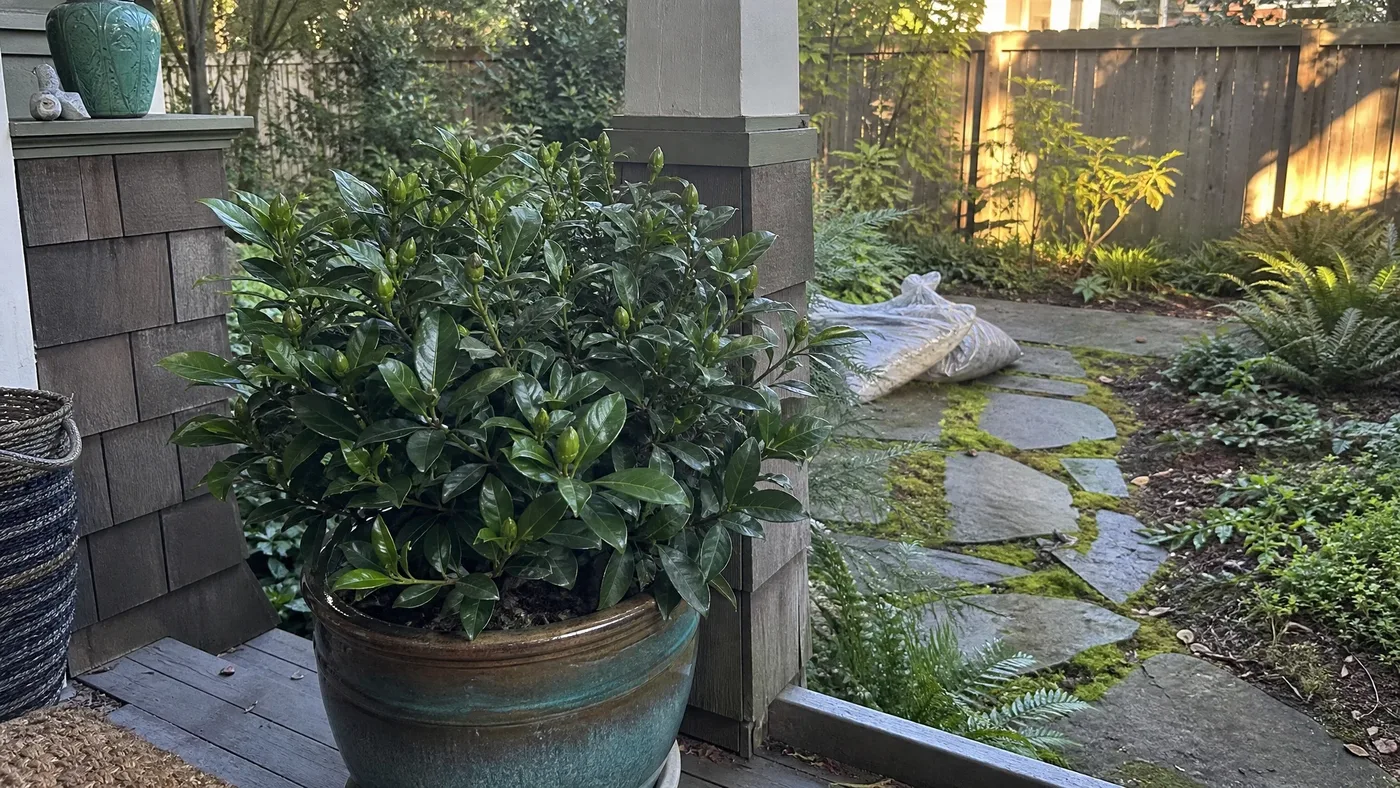
Growing August Beauty Gardenia Indoors as a Houseplant
It is January, the furnace has run for two weeks, and the buds on your gardenia are browning and dropping onto the carpet. The number behind that scene is 50 to 60 percent, the relative humidity a gardenia wants. A heated room in midwinter rarely gets close.
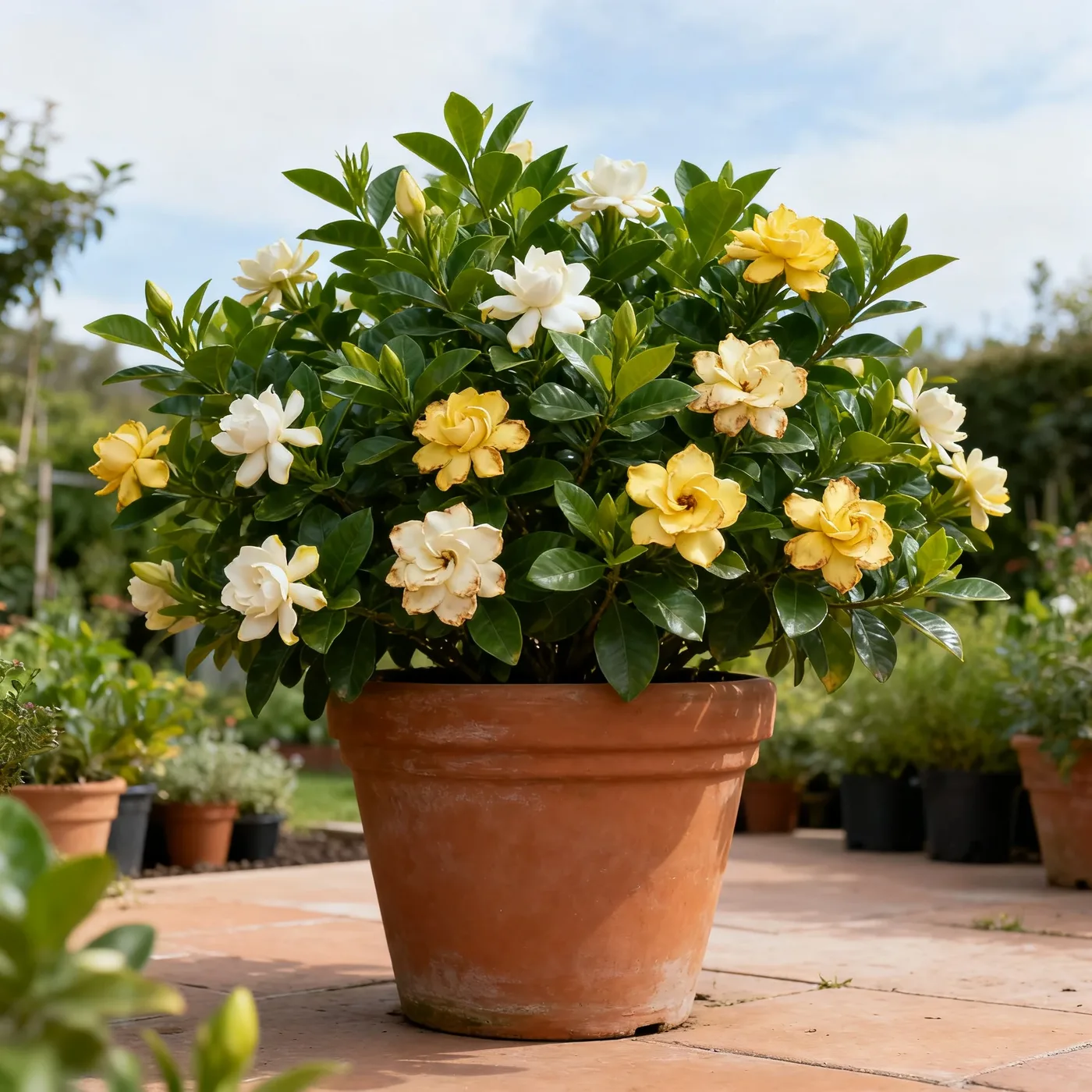
August Beauty can live indoors, but it is one of the fussier houseplants you can pick. It wants bright light, cool nights and steady moisture, and it punishes a miss on any of them by dropping the buds you bought it for. Read on for what each window, humidity fix, pot and watering habit does for this cultivar, with a plain verdict on each.
Window Light for August Beauty Gardenia Indoors
Light decides whether this plant makes buds at all, so settle the window before you buy a pot or a humidifier.
Pick the Brightest Window You Have
Here is what the window has to deliver and how to find out whether yours does.
Purdue Extension says to give an indoor gardenia plenty of bright light, preferably direct sunshine for at least half a day. Colorado State puts it at very high light for more than four hours daily to grow and flower. In practice that means a south or west window with nothing in front of it. An east window gives gentle morning sun, but it is rarely enough for flowers, and a north window will keep the leaves green and never produce a bud.
Test your spot on a clear day. If you cannot hold your hand over the pot for several hours without the shadow of a tree, curtain or building crossing it, the window is marginal.
Add a Grow Light for Short Winter Days
Winter is where most windows fall short, even good ones, and a lamp closes the gap.
Hang a full-spectrum LED fixture above the plant and run it on a timer so the hours stay the same every day. Follow the fixture maker's guidance on distance, because a light too close will scorch the glossy leaves. Turn the pot a quarter turn each week so the shrub grows evenly instead of leaning toward the glass.
Outdoors we tell customers to give this plant morning sun and afternoon shade. Indoors the glass changes the picture. A pane filters the light, so the full-sun window is the right call, with a sheer curtain only if midsummer sun through the glass bakes the leaf tips.
Verdict: a south or west window is enough from spring through fall. In winter it is enough only with a grow light added. A north or shaded east window is a no.
Humidity That Keeps Buds From Dropping
Humidity is the criterion that fails most often, and it fails in the months when the buds are forming.
Keeping relative humidity right is a challenge, particularly during the winter heating season, and gardenias thrive at 50 to 60 percent. One of the most common questions we get is why a healthy plant dropped every bud in January, and dry air plus a heating vent is usually the answer. Buy a cheap hygrometer and put it next to the plant, because guessing is how people stay stuck.
Fixes That Work
Not every trick pulls its weight, so here is how the usual options compare.
| Fix | What it does | Our verdict |
|---|---|---|
| Pebble tray | Adds a little moisture right around the leaves | Helps, but not enough alone in a heated room |
| Grouping plants | Pooled moisture from neighboring leaves and soil | Useful as a second layer |
| Room humidifier | Raises the humidity of the whole space | The only fix that reliably gets you into range |
| Misting | Wets the leaves for a few minutes | Skip it |
How to Set Up a Pebble Tray
If you use a tray, build it so the roots never sit in water.
Fill a wide saucer with pebbles, add water to just below the tops of the stones, and set the pot on top. Keep the pot base above the waterline, or the mix will stay soggy. Top up the water every few days.
Plenty of advice says to mist gardenias daily. We don't follow it, because the effect is gone in minutes and wet buds and flowers can spot or rot. A humidifier set near the pot does the same job properly.
Verdict: a pebble tray plus grouping makes a humid room a little better. Only a humidifier gets a heated room to 50 to 60 percent.
Pot Size and Soil Mix for August Beauty Gardenia
An indoor pot is a closed system, so the container and mix matter more than they do outdoors.
For the basics of pot materials and drainage, our guide to growing August Beauty Gardenia in pots and containers covers the outdoor routine. The indoor changes are small but they matter.
Size the Pot Modestly
Outdoors, this cultivar reaches 4 to 6 feet high and 3 to 4 feet wide, narrower than the species. Indoors you are not trying to match that.
Choose a pot with drainage holes that gives the root ball a little room, and move up one pot size only when roots circle the inside or poke out of the holes. An oversized pot holds wet mix around a small root system, and that is how gardenia roots rot. A saucer is fine, but empty it after every watering. If you start with one of our plants, leave it in its nursery pot for a few weeks to settle in before you repot.
Mix Acid, Light and Open
The mix has to stay acid, moist and well drained all at once.
Clemson says gardenias prefer acid soil with a pH of less than 6.0, moist and well drained. Start with a peat-based potting mix made for acid-loving plants and add perlite or fine pine bark for drainage. Skip plain garden soil and any mix with lime in it. Our soil guide, Best Soil for August Beauty Gardenia, goes deeper on pH.
Check your tap water as well. Hard water raises the pH of a small pot over months, and the first sign is yellow leaves with green veins. Rainwater or a water source your local extension service recommends avoids the problem.
Verdict: a snug pot and an acid, airy mix are easy to get right. Skip the pot upgrade and the plant is fine. Skip the drainage and it won't survive.
Temperature, Drafts and Watering Upkeep
Upkeep is where your habits, not your windows, decide the outcome. This plant hates swings more than it hates any single temperature.
Keep Temperatures Steady and Cool
The temperature that suits you in the evening is often too warm for a gardenia.
Purdue recommends around 55°F at night and about 10 degrees warmer by day. Colorado State says night temperatures between 40 and 60°F are needed to set buds. A living room held at 72°F around the clock can grow leaves all year without a single flower. Pick a bright room that you can let cool at night, and keep the plant away from radiators, heating vents, exterior doors and cold window glass.
Water on a Rhythm
The goal is mix that is evenly moist, never soaked and never dry.
Bud drop is linked to extreme or fluctuating temperatures and to too much water, too little water or irregular watering. So check the pot every few days and water when the surface feels barely dry. Water until it runs out of the drainage holes, then empty the saucer. Moderate drought tolerance outdoors does not carry over to a pot, where the mix dries fast. Our watering guide covers the outdoor schedule.
Read the Plant Before You Fix It
Match the symptom to the likely cause before you change anything.
| What you see | Likely cause | What to do |
|---|---|---|
| Buds brown and fall | Dry air, temperature swings or irregular watering | Add a humidifier, move away from vents, water on a rhythm |
| Lower leaves yellow, mix stays wet | Overwatering or poor drainage | Let the surface dry, empty the saucer, check the holes |
| Yellow leaves with green veins | Mix or water too alkaline | Repot into acid mix, switch water source |
| Sticky leaves, tiny white insects | Whitefly, the most common gardenia pest per Clemson | Wash leaves undersides and isolate the plant |
Our guide to blooming and yellowing problems has the longer diagnosis.
Verdict: manageable if you are home and watch the plant. It's not forgiving if you travel often or like a warm house.
Winter Rest Without Losing Leaves
August Beauty is an evergreen shrub from China, so it keeps its leaves through winter. What it wants then is a cooler, slower stretch.
What a Normal Slowdown Looks Like
Know what is expected so you don't treat a resting plant as a sick one.
Growth stops or nearly stops. New leaves are rare, the color dulls a little, and a couple of older lower leaves may yellow and drop. In our rows we see customers panic over exactly this in February. It is fine if the rest of the plant stays firm and green. Leaf loss from the top, blackened stems or a plant that is wholesale yellow is not slowdown.
Cool, Bright and Drier
The winter setup is a cooler room, less water and no fertilizer.
Gardenias prefer a winter temperature of 16°C (61°F) but can cope with 10 to 15°C (50 to 59°F). Move the pot to the coolest bright spot you have, such as a sunroom or an unheated but frost-free window. Reduce watering but never let the mix dry out. Hold off on feeding until growth restarts. Our winter care guide covers pots that live outdoors in summer and come in for the cold months.
Come spring, increase water and light together as new growth shows. Flowers on this species appear from late spring through summer, so the cool rest is what sets up that season.
Verdict: an easy phase if you have a cool, bright room, and a harder one in a warm apartment.
Is August Beauty Gardenia Worth Keeping Inside?
Add it up and the answer is yes for a specific sort of home. You need a south or west window, a humidifier you will actually run, a room that cools at night, and a willingness to check the pot every few days. If you have a sunroom or a bright spot near glass, this plant pays you back with double flowers up to 3 inches wide. If your house is warm and dry or the windows face north, a hardier houseplant will make you happier. Pet owners should know that ASPCA lists gardenia as toxic to dogs, cats and horses.
August Beauty Gardenia
Nursery-grown August Beauty Gardenia in sizes from 1 Gallon, shipped to your door.
From $33.97
Shop Now →This week, buy a hygrometer and set it beside the plant, and read it every morning for a few days before you change anything else. As a small grower and a small business, we want you to meet a gardenia's real needs before you bring one home, because a plant we raise is only worth it if it thrives in your living room.