Growing August Beauty Gardenia as Bonsai: What to Know
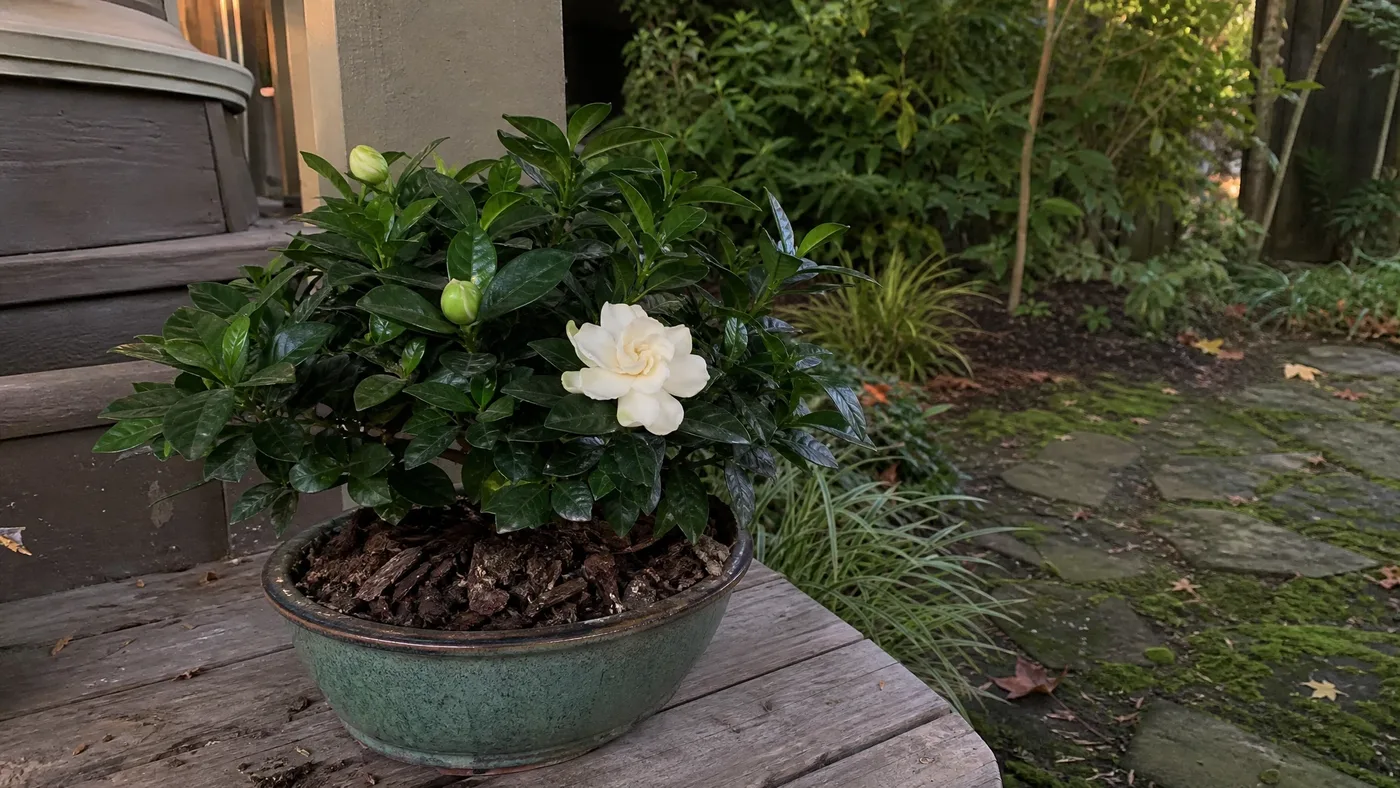
The most common call we get on this plant starts the same way. Someone is standing in the kitchen holding a gardenia in one hand and a shallow bonsai pot in the other, and they want to know whether this is a silly idea. It is not. People do grow gardenia as bonsai, and August Beauty can work if you know where it will push back.
This plant wants acid soil, steady moisture and a calm hand, and it sulks when it gets none of those. Done badly, you get yellow leaves and dropped buds. Done well, you get a small flowering tree that scents the room. In this article, we'll go through how the shrub differs from classic bonsai subjects, how pruning and repotting change in a pot, and how to light and wire it.
August Beauty Gardenia Is Not a Juniper
Most bonsai advice was written with conifers and other tough, fine-twigged trees in mind. Before you pick up a tool, see where this shrub departs from that script.
A juniper is a tree you shape by taking things away. You bend it, cut it hard and repot it, and it shrugs. August Beauty is a broadleaf evergreen shrub, and the common gardenia comes from China as a woody plant with glossy leaves, not a tree with a trunk to show off. What we tell customers is that you are not carving this plant. You are steering it.
Three things set it apart. The growth rate is medium, so a branch you remove takes real time to replace. The roots are shallow and do not do well with root disturbance, which is the opposite of what bonsai asks of a root system. And flowers appear on new growth, so every shaping cut is also a decision about next summer's bloom.
That last point is the one people overlook. A juniper has no flowers to protect, but a gardenia clipped tight all season gives you a neat silhouette and almost nothing to smell. Decide up front which you want more of, or plan to get both with the cutting rhythm described below.
Because you cannot count on quick replacement growth, look hard at the branch layout on the plant you start with. Pick one whose main limbs already sit where you want them, since you will be working with what it gives you rather than rebuilding it.
Hardiness matters too. Clemson notes that most older gardenia cultivars are hardy to zone 8, and the species grows in zones 7b to 11b. A bonsai pot holds far less insulating soil than a garden bed, so treat the tree as one that spends cold nights sheltered, whatever your zone.
Big Double Blooms on Small Leaves
This is the part people ask about most, and we would rather you hear the honest version now than discover it in June.
What Looks Out of Proportion
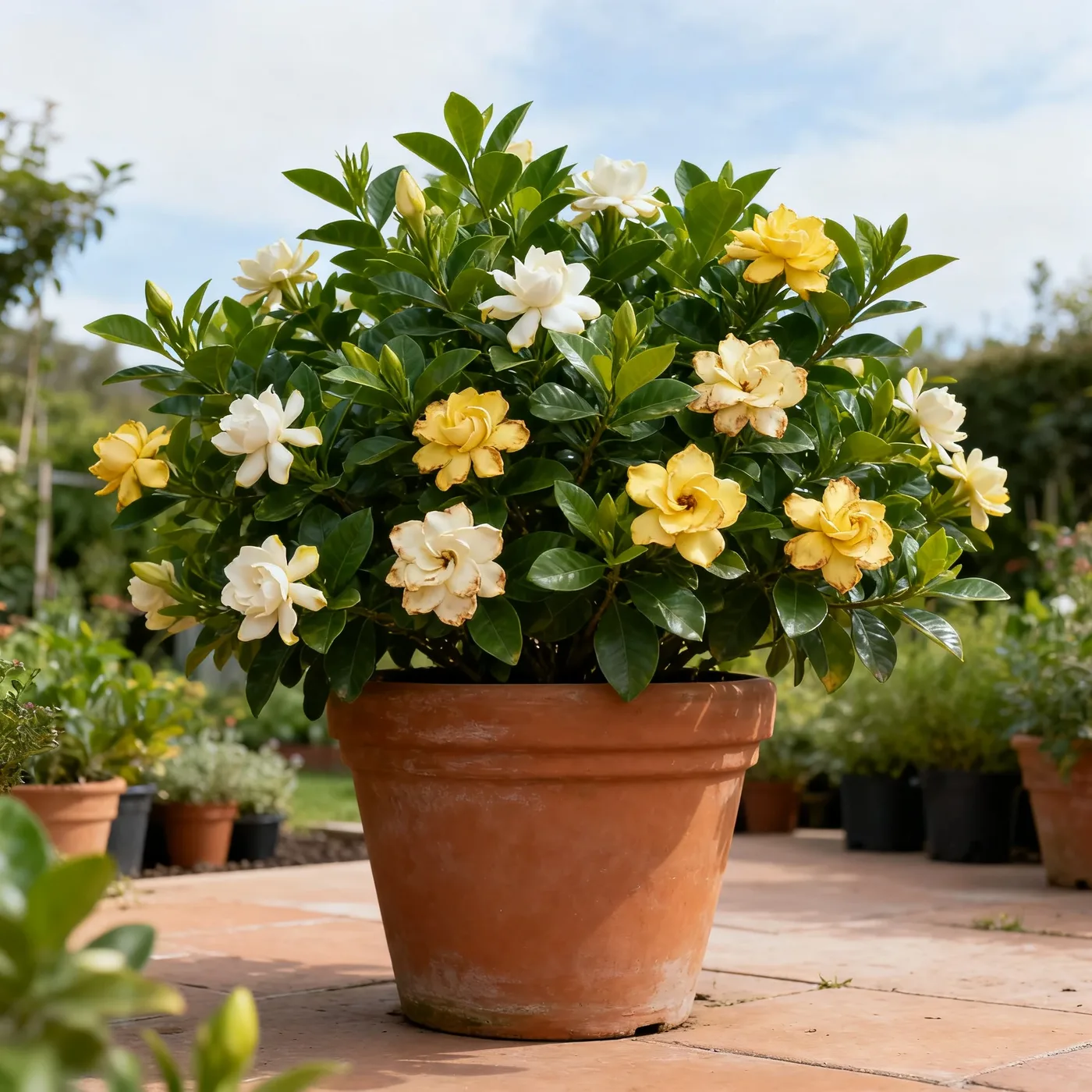
Start with the numbers. August Beauty grows 4 to 6 feet high and 3 to 4 feet wide with 3 inch wide double flowers. On a small tree, a 3 inch bloom is enormous. The species runs 2 to 3 inches, so this cultivar sits at the big end.
The leaves will not rescue the proportions. They stay glossy and close to normal size, and you should not expect them to shrink to miniature scale. August Beauty is also not a dwarf, so a plant sold under a dwarf label is a different cultivar, and you should check the tag before you assume.
Making the Scale Work
These steps help the tree and its flowers look like they belong together.
Aim for a bigger tree, not a tiny one. A sturdier trunk and a fuller canopy carry a large flower far better than a spindly miniature does. Medium-sized bonsai forms, kept well under the 4 to 6 feet of the garden shrub, are the sensible target.
Treat the bloom as an event. The flowers open white to cream and age to yellow, mostly from May through June and sporadically through summer. Show the tree at its best in that window and enjoy the mismatch.
Remove spent flowers. Doing so encourages blooming, and it keeps browning petals off a tree small enough that you notice every one.
Garden Shears and Bonsai Snips for August Beauty Gardenia
A landscape shrub gets one or two haircuts a year. A bonsai gets small cuts all season, and the timing has to protect the flowers.
The Landscape Schedule
The extension advice for garden plants is not unanimous. UF/IFAS says pruning should be done just after the plant finishes blooming, usually mid-summer, and that hard pruning after October 1 will decrease next year's blooms. NC State instead says to prune in spring for shape, keeping in mind that blossoms appear on new growth.
For a bonsai, you can sidestep that disagreement. You are not cutting a big shrub back once. You are making small corrections often, so no single cut costs you much.
The Bonsai Rhythm
Follow this sequence through the growing season. Our pruning guide covers the full-size shrub if you want the comparison.
Pinch as shoots extend. Take off the soft tip of each new shoot with your fingers or sharp snips, so the branch thickens and divides instead of running long.
Make structural cuts after the main bloom. Once the big flush of flowers is over, remove crossing, upward-shooting and crowded branches.
Stop heavy cutting by early fall. Keep any October trimming light, and do not fertilize in fall, because it causes a rush of frost-tender growth.
Pinching Around Bloom Time
Since flowers come on new growth, pinching and flowering compete for the same shoots. Pinch early in the season while shoots are still soft, and stop once you see buds forming at the tips.
If you pinch a shoot that carries a bud, you lose that flower. When in doubt, leave the budded shoot alone, enjoy the bloom, and shorten it afterward.
Roots in a Pot, Not the Border
In the ground, you leave gardenia roots alone. In a bonsai pot, you have to manage them, which is where this plant needs the most patience.
Repotting With a Light Hand
Because the roots are shallow and resent disturbance, trim only a little of the root mass at each repotting. Do the work while the tree is in active growth, not in fall or winter, and water it well afterward. We often see people take off a third of the roots as they would on a juniper, then call us two weeks later about falling leaves.
Repot only when the roots truly fill the pot. A gardenia that is root-bound but healthy is better off than one that has been unsettled for no reason.
Soil and Drainage Cautions
Gardenias prefer acid, moist, well-drained soil. Soil pH should be less than 6.0, or between 5.0 and 6.5. A standard bonsai mix built for conifers may not be acid enough, so check what is in it before you buy it.
A shallow pot dries faster than a garden bed, yet this plant wants steady moisture. Choose a mix that holds some water and drains freely, make sure the pot has open drainage holes, and never let it sit in a saucer of water. Our soil and drainage guide goes deeper on mixes.
Reading Trouble After a Repot
When new leaves come in yellow with green veins, suspect the mix first. That pattern usually points to soil that has drifted away from acid, not to a lack of care.
A general yellowing with leaf drop in the weeks after repotting more often means the roots were cut too hard. Hold steady, keep the soil evenly moist, and do not fertilize to fix it.
Windowsill Light or Outdoor Morning Sun?
Both spots can work, but they do different things to buds and leaves. Pick one on purpose and keep the tree there.
The Bright Indoor Spot
A bright windowsill suits a bonsai in winter or in a cold climate. Indoors, the air is drier and the light is thinner than outside, so watch for yellowing leaves and buds that drop before they open. Moving the pot around is a common cause, so choose a place and leave it there. Our indoor growing guide covers the details.
Outdoor Morning Sun, Afternoon Shade
Outdoors, gardenias are best planted in light to partial shade, preferably with morning sun and afternoon shade. NC State describes partial shade as direct sun for only 2 to 6 hours, and in the ground they can take full sun or partial shade.
For a bonsai, lean toward the shadier end. A small pot heats quickly in afternoon sun, the shallow roots cook, and the soil dries out between your visits. Leaf edges that brown and curl are the usual sign of too much sun. Our sun requirements guide explains the in-ground range.
Whichever you choose, bring the tree under cover before cold nights arrive.
Wire Gently on August Beauty Gardenia Branches
Gardenia branches are soft and mark easily, so how you wire matters more than how much you wire.
The Wrong Way
The common mistakes are wire wrapped tightly, wire left on after the branch has thickened, and a branch bent hard in one move. Each leaves a spiral scar in the bark, and the scar stays. Snapped branches are the other casualty, because a soft branch forced into a sharp bend splits at the bend.
The Gentle Way
Wrap the wire loosely, with the coils spaced apart, and bend the branch a little at a time. Check it every week or two while it is on the tree. Remove the wire early, as soon as the branch holds its position, by snipping it off in sections rather than unwinding it.
For larger branches, use a tie-down or a guy line instead of heavy wire. In our rows, the branches that heal cleanest are the ones guided slowly and never forced. Pair the wiring with pinching and you will often need less wire than you expect.
Choosing August Beauty Gardenia Bonsai With Open Eyes
Not everyone needs to be talked into this project, and not everyone needs to be talked out of it. Here is how we help people decide.
Who This Suits
This suits you if you enjoy small daily check-ins, have a bright spot with morning sun, and would be pleased by one good bloom flush a year. It also suits you if you can accept that the flowers will always be larger than the tree's scale suggests.
If you would rather plant it and leave it, the gardenia belongs in the garden, and our container guide shows a lower-effort pot option.
Before You Begin
Check one more thing. The ASPCA lists gardenia as toxic to dogs, cats and horses, so keep the pot out of reach of pets.
If you want to start from a cutting, rooting is usually most successful in June, July and August. A healthy nursery plant gives you a head start, though, and it is the quicker route to a tree with some structure.
Start With One August Beauty Gardenia
August Beauty is not an easy bonsai, but it is a rewarding one if you keep the cuts small, the roots calm, the light steady and the wire loose. Give it acid soil, steady moisture and a morning sun spot, and it will tell you quickly when something is off.
August Beauty Gardenia
Nursery-grown August Beauty Gardenia in sizes from 1 Gallon, shipped to your door.
From $33.97
Shop Now →Start with one plant and ask us questions along the way, because the first season teaches more than any guide can. Our own farms turn out top-quality shrubs, and we answer for every one. Customers come back to us as much for the answers as for the plants, whether the question is when to pinch, when to repot or why a leaf turned yellow.