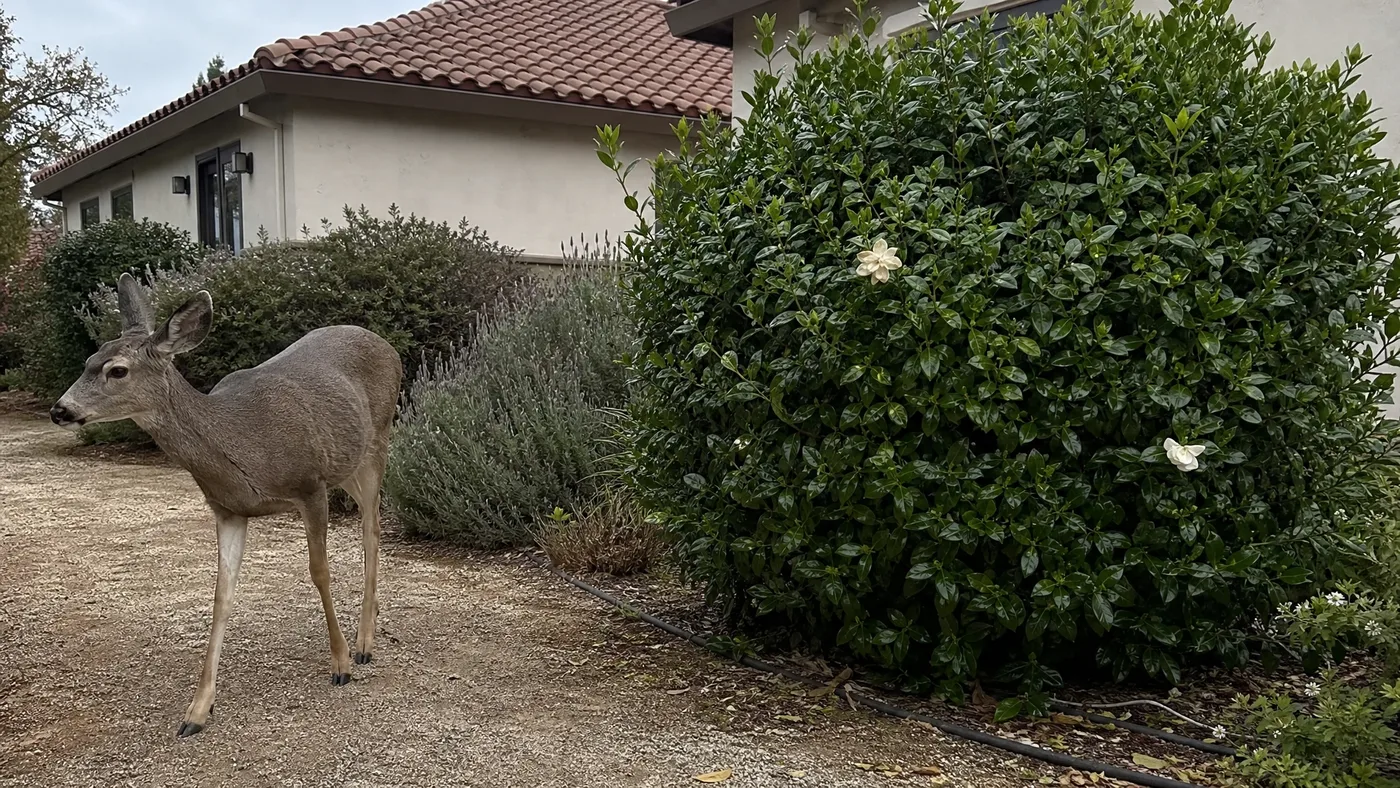
Is August Beauty Gardenia Deer Resistant? What to Expect
Mostly, yes. August Beauty gardenia is considered deer resistant, which means deer usually walk past it, not that they never touch it. A hungry deer will sample almost anything, and a young plant is the easiest one to damage.
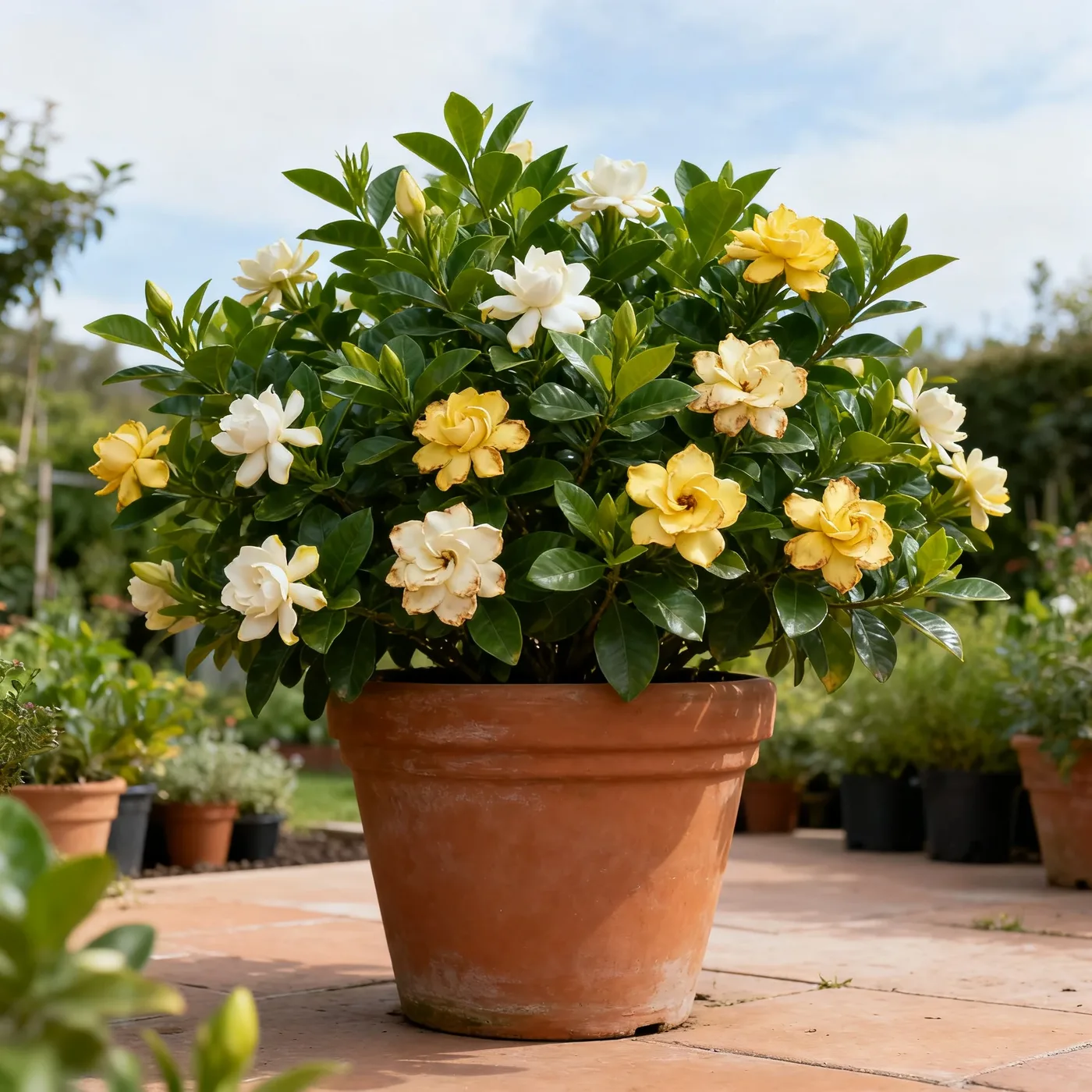
This guide covers everything you need to know about deer and August Beauty, from what the "resistant" label really promises to where you plant the shrub, how to read browse damage and what to do about it. The stakes are real for this plant. Done well, you keep a glossy evergreen shrub that carries its big double flowers through summer. Done badly, one night of browsing can take a season of buds.
August Beauty Gardenia and the Deer-Proof Myth
The most common mistake we see is treating "deer resistant" as "deer proof." This section explains what the label means, what it leaves out and why you should plan for the gap.
What the Label Actually Promises
Resistant is a ranking of how often deer eat a plant. It is not a guarantee about any one yard.
Clemson Extension states that gardenias are considered deer resistant shrubs. Notice the wording. It says "considered," and it speaks of gardenias as a group. We have no source that tests August Beauty on its own against deer, so the species rating is the best guide available. Treat it as a good sign, not a promise.
Why the Rating Varies From Yard to Yard
The same shrub can go untouched in one neighborhood and get nibbled in the next. The label can't account for what the local herd has available.
Deer habits change with weather, food supply and the number of animals nearby. A dry summer or a hard winter pushes deer toward plants they would normally skip. A yard with plenty of other food gives a gardenia a better chance. Your county extension service can tell you how heavy deer pressure runs in your area, and that local knowledge is worth more than any list.
The Mistake Behind Most Deer Losses
Here is how it usually plays out. Someone reads that gardenias are deer resistant, plants a small shrub at the edge of the yard near woods and leaves it unprotected. Then a deer samples it.
One of the most common questions we get is whether deer will leave August Beauty completely alone. The honest answer is that they usually will, but the plants most at risk are new, small and standing in the open. A browsed young shrub has little foliage to spare, so the loss costs far more than the same bite would cost a mature plant.
The Advice We Don't Follow
You will often read that a plant on a deer-resistant list needs no protection at all. We don't follow that advice for August Beauty.
Protect a new planting for its first season, even if your yard has never had a deer problem. A cheap cage or fence costs less than replacing a shrub. If a season passes without a single nibble, you will know your deer leave it alone, and you can relax the protection with some confidence.
Why Deer Usually Pass Over August Beauty
The plant's own traits help explain its reputation. We can describe them, though no study we know of names the exact reason deer skip gardenias, so read these as traits and not proven causes.
Foliage and Habit
Gardenias are woody, broadleaf evergreen shrubs. The leaves are lustrous, dark emerald green, rugose and marked with impressed veins. They are opposite and whorled at the branch tips.
That texture gives the plant a dense, deeply ridged look, quite unlike the soft new growth on many garden perennials. The thick, tight canopy also leaves little open space for a deer to browse neatly, so damage tends to look ragged when it does happen.
The Evergreen Factor in Winter
Because the foliage stays on the plant all year, August Beauty is still standing when most of the garden has gone bare.
Winter is when deer have the fewest options, so it is the season to watch a planting most closely. A shrub that was ignored all summer can look different to a hungry animal in February. If you have lost other plants to deer in cold months, give your gardenia the same protection you give those, at least until you know how your herd behaves.
How the Cultivar Differs From the Species
August Beauty is smaller than the species. The cultivar grows 4 to 6 feet high and 3 to 4 feet wide, with double flowers about 3 inches across. The species runs 4 to 8 feet, with 2 to 3 inch waxy flowers that are white to cream and age to yellow.
Size matters here. A shrub topping out at 4 to 6 feet never grows out of a deer's reach, so every leaf and bud stays in range. You can read more in our guide on how big August Beauty really gets.
Deer and Toxicity Are Separate Questions
People often assume a toxic plant is automatically safe from deer. The ASPCA does list gardenia as toxic to dogs, cats and horses, but that listing says nothing about deer. Do not lean on it as a deer defense. Our guide on whether August Beauty is toxic to dogs, cats or kids covers the pet side in full.
Where You Plant August Beauty Gardenia Changes the Risk
Placement does more than any spray. Deer move along edges and routes, and a shrub close to the house sees far less traffic than one at the far corner of a lot.
Beds Near the House and Patio
Put August Beauty where people walk: foundation beds, beside a patio, along a path near a door. Deer are wary of activity, so these spots tend to get fewer visits than the edge of a field or tree line.
The plant also wants the conditions found there. It does best in light to partial shade, ideally with morning sun and afternoon shade. Avoid planting among tree roots, because gardenias have shallow roots and dislike root disturbance. That rules out most woods edges anyway, which is where deer travel most.
Hedges and Mass Plantings
A row of August Beauty makes a continuous wall of leaves. That cuts both ways. A deer that tests one plant finds the next one waiting, and a browsed hedge can show gaps for a long time.
If you plant a hedge, protect the outer plants of the row while they establish, especially at the ends facing open ground. Spacing affects how quickly the row closes up, and our hedge spacing guide gives the details. Once the plants knit together, the row becomes a thicker barrier than a single shrub.
Containers
Pots let you move the plant out of reach. A container beside the front door or on a deck, close to human activity, is a lower-risk spot than a pot at the edge of the yard.
Raising a pot off the ground does not help much, because a deer can still reach the foliage. Position is what counts. Because a pot can be moved, you can also bring it closer to the house in winter, when pressure from hungry deer is highest.
Reading Browse Damage and Protecting August Beauty
Before you blame deer, check that deer are the cause. Several gardenia problems look alike from a distance, and the fix is different for each.
Telling Deer From Other Problems
This table matches what you see to the most likely cause. Use it as a first check, then look closely at the leaves.
| What you see | Most likely cause | What we do |
|---|---|---|
| Torn, ragged leaf edges or missing branch tips, all at about the same height | Deer browsing | Cage or fence the plant, then watch the new growth |
| Yellowing leaves with sticky residue and tiny white insects underneath | Whitefly | Treat the pest and ease the plant's stress |
| Yellowing leaves with no sign of chewing | Soil, water or root trouble | Check pH and moisture first |
| Buds gone from the branch ends but leaves intact | Possible browsing, so check the stems for torn ends | Protect bud-bearing branches |
Whitefly deserves a note. It is the most commonly occurring gardenia problem, and whiteflies can be a problem on stressed plants. If leaves yellow and you find no chewing, read why August Beauty is not blooming or turning yellow before you reach for a deer repellent.
Protection That Works
For a new plant, we favor a physical barrier: a wire cage or a fence, with the top above the shrub's height. It works every night, in every weather. Repellents can help as a second layer, but they wash off in rain and need reapplying. Follow the product label.
In our rows, the shrubs that come through a deer visit best are the ones that were healthy beforehand. A plant in good acid soil recovers faster than one already struggling. The University of Florida gives the target as soil pH between 5.0 and 6.5, and our soil and pH guide shows how to get there.
Timing Protection Through the Year
Protection matters most at three points. Knowing them lets you put the effort where it counts and skip it the rest of the time.
Put the cage up the day you plant, since a new shrub has the least foliage to lose. Keep it in place through the main flush in May and June, when buds are forming on the branch tips. Check it again before winter, when other food runs short. Once the shrub is established and has gone a full year untouched, you can loosen up. Keep an eye on it each cold season anyway.
After a Deer Visit
Stay calm. A browsed gardenia usually pushes new growth if the roots are sound. Keep the soil evenly moist and the plant out of further harm, and hold off on drastic pruning until you can see which stems are alive.
Expect fewer flowers that season if buds were taken. A gardenia that is also stressed by dry soil or poor drainage will recover slowly, so fix those basics at the same time you fit the cage.
Planning Around Deer With August Beauty Gardenia
August Beauty is a good bet where deer are present, because it is considered deer resistant and its leaves are not a favorite. It is not a plant to leave unguarded in its first season. Place it near activity, protect it while it establishes and learn the signs of browsing so you do not mistake other problems for deer.
August Beauty Gardenia
Nursery-grown August Beauty Gardenia in sizes from 1 Gallon, shipped to your door.
From $33.97
Shop Now →Before a plant leaves us, our growers check its leaves, stems and roots so it starts out strong enough to shrug off a nibble. We are growers with our own farms who grow and sell top-quality plants, and we want your August Beauty to reach its full 4 to 6 feet.