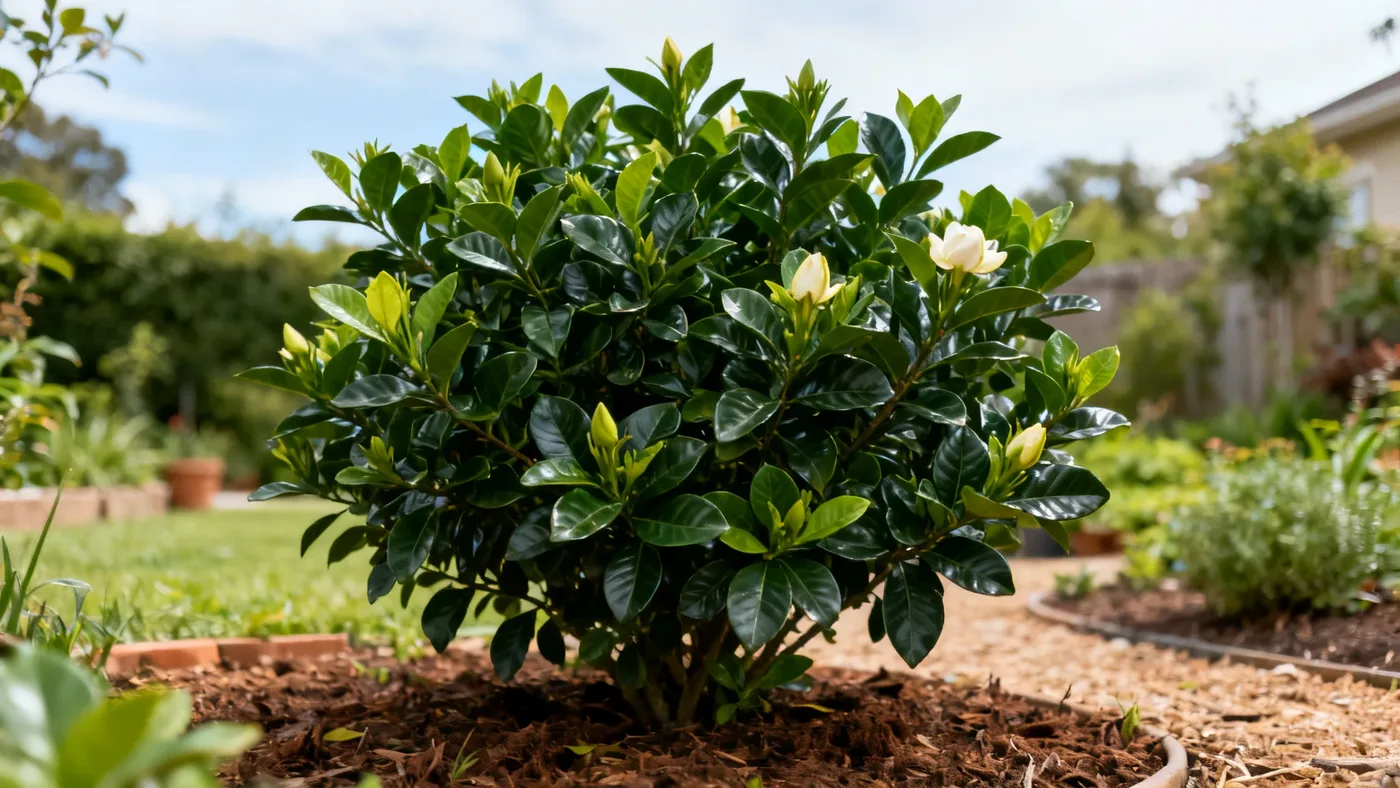
10 Common August Beauty Gardenia Problems and Fixes
August Beauty Gardenia is a reliable bloomer known for its creamy white flowers and signature fragrance, but like any plant, it faces challenges. The good news: most problems are preventable or fixable if you know what to look for. In this guide, we walk through the most common August Beauty Gardenia problems, what causes them, and exactly how to solve them.
1. Bud Drop: When Flowers Never Arrive
Bud drop is the most frustrating August Beauty Gardenia problem. You see tight buds forming, then suddenly they fall off without opening. The plant seems healthy, but the blooms never materialize. This happens for three main reasons: temperature swings, underwatering, or low humidity.
Temperature stress is a primary culprit. Gardenias set buds in response to cooler fall nights, but sudden warm spells or hard freezes can shock the plant and cause it to abort buds. Inconsistent watering does the same. If soil alternates between bone-dry and soggy, the plant redirects energy away from blooms. Low humidity, especially common indoors or in arid climates, can also trigger bud drop within days.
The fix: Keep soil consistently moist during the growing season without waterlogging it. Mulch the root zone with 2-3 inches of bark or compost to buffer temperature swings and maintain soil moisture. Mist foliage every few days if humidity is below 50 percent. Move container plants away from heating vents and cold drafts. Once buds are set, avoid moving the plant or subjecting it to sudden temperature changes.
2. Yellowing Leaves (Chlorosis): Iron Deficiency Signs
Leaves turn yellow while veins stay green, a classic sign of iron deficiency (chlorosis). This is especially common in August Beauty Gardenia because the plant prefers acidic soil (around 5.0 to 6.5 pH), and iron becomes unavailable in neutral or alkaline soil. Container plants and those in high-pH tap water are frequent victims.
Chlorosis starts with new growth at the branch tips and spreads downward if untreated. Beyond yellowing, affected leaves may drop early, and flowering can suffer. The plant isn't lacking iron; the soil chemistry is locking it up.
The fix: Apply iron chelate or chelated micronutrients according to product directions. Choose a formulation specifically for acid-loving plants. In containers, repot with an acidic, well-draining potting mix rated for azaleas or camellias. For established plants in the ground, topdress with 1-2 inches of sulfur or an aluminum sulfate product to lower soil pH over time. If using tap water high in alkalinity, collect rainwater for watering instead. Feed in early spring and again after the first bloom flush with an acid-loving plant fertilizer (azalea/camellia type).
3. Failure to Bloom: Why Your Gardenia Has No Flowers
A healthy-looking August Beauty Gardenia plant that refuses to bloom is usually a pruning problem or excess nitrogen. Gardenias set flower buds from late summer into fall and carry them through winter, ready to open in late spring or early summer. If you prune in late summer or fall, you slice off next year's buds. Similarly, over-fertilizing with high-nitrogen formulas pushes leafy growth at the expense of flowers.
Insufficient light is another factor. While August Beauty Gardenia tolerates part shade, plants in deep shade or far from windows will produce fewer blooms. In hot southern climates, afternoon shade helps prevent wilting, but the plant still needs morning sun and 6 hours of good light daily.
The fix: Prune only right after flowering ends, never in late summer or fall. Keep fertilizer nitrogen moderate, and use the acid-loving plant formulas mentioned above rather than general-purpose feeds. Ensure the plant receives at least 4-6 hours of direct sun daily, or bright filtered light all day. If you're in a hot climate, morning sun with afternoon shade is ideal. Patience helps too: a newly planted gardenia may take 1-2 years to establish before blooming reliably.
4. Aphids: Sticky Leaves and Deformed Growth
Aphids are small, soft-bodied insects that cluster on new growth and under leaves, sucking plant sap. Infested gardenias show sticky residue (honeydew) on foliage, yellowing leaves, and sometimes curled or stunted shoots. You may also notice black sooty mold growing on the honeydew.
Aphids reproduce rapidly in warm weather and spread quickly if unchecked. They're attracted to tender new growth, which makes newly fertilized plants a target. Unlike some pests, aphids don't cause immediate plant death, but chronic infestations weaken the plant and invite secondary problems like sooty mold.
The fix: For small infestations, blast aphids off with a strong spray of water from the hose, hitting the undersides of leaves. For moderate infestations, spray with insecticidal soap or neem oil on a cool evening, coating both leaf surfaces. Repeat every 7-10 days as needed. Avoid over-fertilizing with nitrogen, which promotes the tender growth aphids prefer. Remove heavily infested branches entirely if the infestation is severe.
5. Whiteflies: White Clouds and Wilting Foliage
Whiteflies are tiny white insects that swarm up when you brush the foliage. They cluster on the undersides of leaves and suck plant juices, causing yellowing, wilting, and leaf drop. Affected plants look gradually weaker over weeks. Container gardenias and indoor plants are especially vulnerable because whiteflies thrive in warm, sheltered conditions.
Like aphids, whiteflies produce honeydew, leading to sooty mold. An active infestation produces visible white dust on lower leaves and stems.
The fix: Spray the plant thoroughly with insecticidal soap or neem oil, targeting leaf undersides where whiteflies congregate. Spray in evening when bees are inactive. Repeat every 5-7 days for 2-3 weeks to break the life cycle. Yellow sticky traps placed near the plant help monitor the population and trap adults. Improve air circulation around the plant with a small fan if indoors, which makes conditions less favorable for whiteflies. Isolate infested plants from others temporarily.
6. Scale Insects (Soft Scale): Hard Bumps on Stems
Scale insects appear as small, raised bumps on stems and the underside of leaves. Unlike other pests, scales have a waxy shell that protects them. Soft scale is the variety most common on August Beauty Gardenia. Infested plants look dull, with slow growth and leaf yellowing. Heavy infestations can kill branches or eventually the whole plant.
Scale insects are harder to control than aphids or whiteflies because the waxy coating repels many sprays. They spread slowly, so an infestation may go unnoticed for months before damage becomes visible.
The fix: For light infestations, prune out heavily infested branches and dispose of them in the trash. Wipe remaining scales off with a soft brush or cloth dipped in rubbing alcohol. Spray the plant with horticultural oil (a refined petroleum product) every 7-10 days in early spring and again in early fall when scales are in their vulnerable crawler stage. For persistent infestations, systemic insecticides labeled for ornamental plants can work, but always follow label directions. Check treated plants weekly and remove new scale by hand if numbers remain low.
7. Mealybugs: White Cottony Clusters
Mealybugs look like small cotton balls clustered in leaf joints and on stems. They're related to scale insects and feed by puncturing plant tissues. Affected areas show yellowing, wilting, and eventual leaf drop. Like other sap-sucking insects, mealybugs produce honeydew and attract sooty mold. Container plants indoors are prime targets.
Mealybugs reproduce quickly in warm temperatures and are stubborn to eradicate once established because the fuzzy coating protects them from some sprays.
The fix: Isolate the infested plant immediately to prevent spread. Dab visible mealybugs with a cotton swab soaked in rubbing alcohol to kill them on contact. Spray the entire plant with insecticidal soap or neem oil, coating all stems, leaf bases, and undersides. Repeat every 5-7 days for at least 3 weeks. For severe infestations, consider a systemic insecticide, but start with organic options first. Keep the plant isolated until you've seen no mealybugs for 4 weeks.
8. Spider Mites: Fine Webbing and Speckled Leaves
Spider mites are nearly invisible to the naked eye, but their damage is unmistakable: fine webbing on foliage, tiny yellow or brown speckles on leaves, and a general dull appearance. Affected leaves eventually drop. Spider mites thrive in hot, dry conditions, so they're common in August Beauty Gardenias grown indoors near heating vents or in arid climates.
These mites reproduce explosively in warm weather. A light infestation can become severe in 2-3 weeks if left untreated.
The fix: Increase humidity around the plant by misting foliage daily or setting container plants on a pebble tray filled with water. Spider mites hate humidity. Spray the plant with water to remove webbing and mites, then apply insecticidal soap or neem oil every 5-7 days. For heavy infestations, use a miticide labeled for ornamental plants, following label directions carefully. Avoid overhead watering as a regular practice, but do it strategically to control mite populations. Ensure good air circulation with a small fan.
9. Root Rot: Wilting Despite Moist Soil
Root rot is a silent killer, especially in containers or areas with poor drainage. The plant wilts even though soil is moist, leaves turn yellow and drop, and the base of the plant may smell foul or feel soft. This happens when soil stays waterlogged for extended periods, suffocating roots and allowing fungal pathogens to establish. August Beauty Gardenia needs moisture, but not waterlogged soil. The difference is critical.
Container plants are most at risk, particularly if the pot lacks drainage holes or if heavy soil or mulch has accumulated on top of the root ball. In the ground, root rot occurs in clay soils or low-lying areas where water pools after rain.
The fix: For container plants, unpot the gardenia and inspect roots. If they're black and mushy, trim them away with a clean knife and repot into fresh, well-draining acidic potting mix (azalea or camellia mix). If roots are brown and firm, they're still alive. Ensure the pot has drainage holes at the bottom and water only when the top 1 inch of soil is dry. For in-ground plants, improve drainage by amending the soil with compost and perlite to a depth of 12-18 inches before replanting. Mulch at 2-3 inches but keep mulch 3 inches away from the stem to allow air circulation. Water deeply when rain is scarce, but allow the soil to dry slightly between waterings.
10. Sooty Mold and Leaf Spot: Fungal Infections
Sooty mold appears as black powder on leaves and stems, a secondary infection that grows on the sticky honeydew left by aphids, whiteflies, and scale insects. While sooty mold doesn't directly harm the plant, it blocks light and looks unsightly. Leaf spot diseases are fungal infections that cause brown or tan spots with yellow halos on foliage, eventually leading to leaf drop and weakened growth.
Both problems are more common in warm, humid conditions without adequate air circulation. Leaf spot spreads via water splash, so overhead watering in the evening or on cloudy days increases risk.
The fix: For sooty mold, control the insect pests causing honeydew first (see items 4-8 above). Once aphids and mealybugs are under control, sooty mold will gradually disappear. You can speed cleanup by spraying affected foliage with water and a soft brush. For leaf spot fungi, remove affected leaves and improve air circulation by pruning lower branches and thinning the canopy slightly. Water at soil level, not overhead, to keep foliage dry. If leaf spot persists, apply a fungicide labeled for ornamental plants in early summer when humidity is high, following label directions.
Quick Reference: August Beauty Gardenia Problems at a Glance
| Problem | Signs | Quick Fix |
|---|---|---|
| Bud Drop | Buds fall before opening | Keep soil moist, maintain humidity, avoid temperature swings |
| Chlorosis (Yellowing) | Yellow leaves, green veins | Apply iron chelate; lower soil pH with sulfur or alum |
| No Blooms | Healthy plant, no flowers | Prune only after flowering; provide 4-6 hours sun; use acid fertilizer |
| Aphids | Sticky residue, curled leaves | Spray with water; apply insecticidal soap or neem oil |
| Whiteflies | White insects swarm from foliage | Spray neem oil or soap every 5-7 days; isolate plant |
| Scale Insects | Bumps on stems and leaf undersides | Remove by hand; spray horticultural oil in spring and fall |
| Mealybugs | White cotton-like clusters | Dab with rubbing alcohol; spray with insecticidal soap |
| Spider Mites | Fine webbing, speckled leaves | Increase humidity; spray with water and neem oil |
| Root Rot | Wilting despite moist soil | Repot into fresh soil; ensure drainage; water less frequently |
| Sooty Mold / Leaf Spot | Black powder on leaves or brown spots | Control insect pests; improve air circulation; water at soil level |
Most August Beauty Gardenia problems are preventable with consistent care: well-draining acidic soil, moderate to consistently moist watering, adequate light, and good air circulation. Regular inspection of leaf undersides and new growth catches pest problems early, when they're easiest to fix. For more guidance on keeping your gardenia healthy year-round, see the complete August Beauty Gardenia care guide.