Best Fertilizer Products for August Beauty Gardenia
Which fertilizer should I buy for my August Beauty? Customers ask us this more than almost anything else, and the answer is short. Buy a granular fertilizer sold for azaleas, camellias and gardenias, or any granular landscape-plant product labeled "acid-forming," and apply it only in the growing season. Add chelated iron only if new leaves turn yellow.
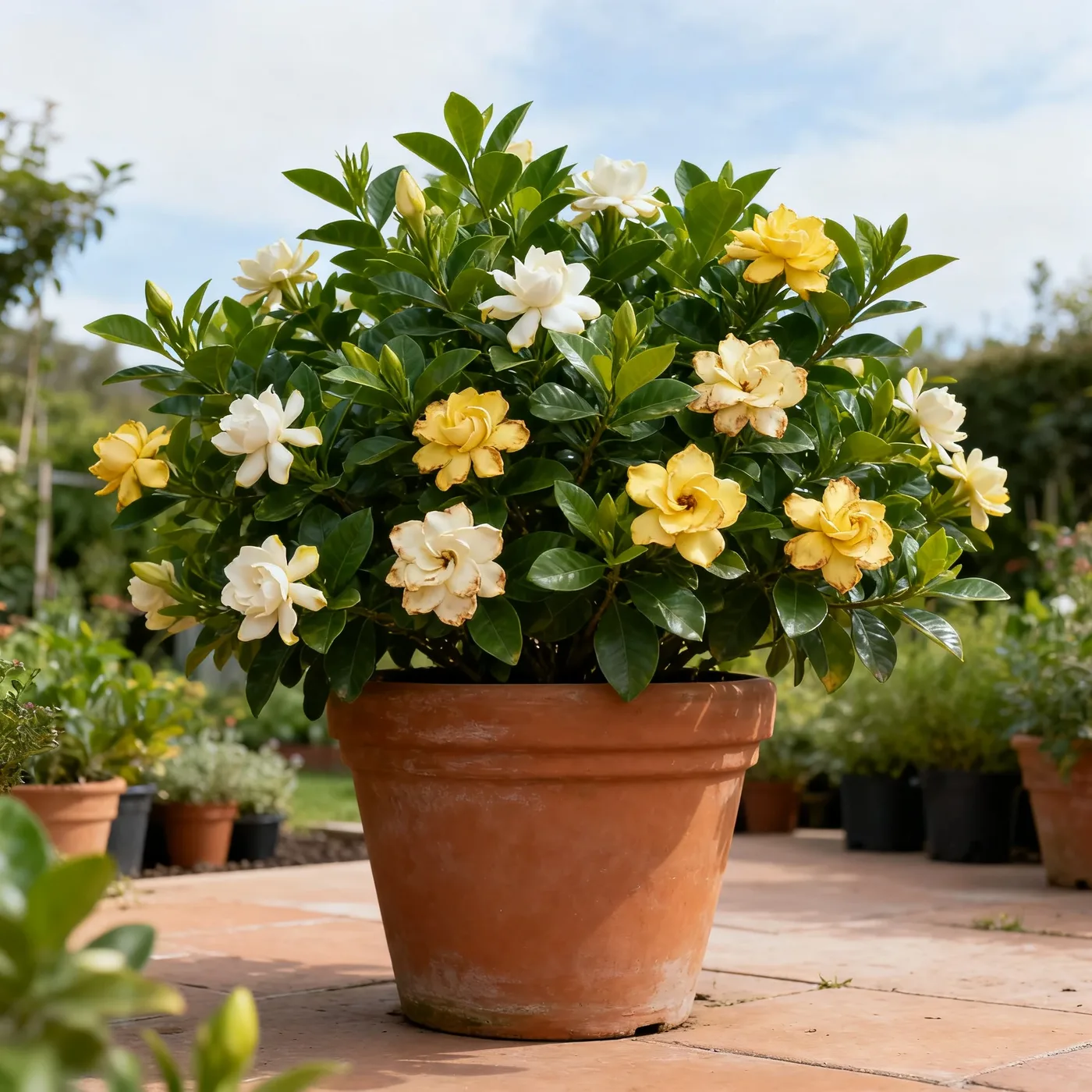
We'll walk you through what to look for on a label and how the main product types compare, then how to match a product to a plant in the ground or in a pot. After that we cover what goes wrong when feeding is off and how to read the leaves. The stakes are real. The wrong product leaves a 4–6 foot shrub pale and short on buds, and the right one keeps it dark green and flowering from late spring through summer.
The Short Answer: What to Feed Your August Beauty Gardenia
Here is our recommendation, followed by the reasoning behind it and the one product we tell people to keep in reserve.
Our Pick: A Granular Acid-Forming Product
Buy one granular fertilizer made for acid-loving shrubs and use it for the whole season. A granular fertilizer formulated for landscape plants or an "acid-forming" product is suitable for gardenias. Azalea and camellia blends fit that description, and many are labeled for gardenias too.
Granular feed suits August Beauty because the plant is a medium-paced grower rather than a fast one. It does not need a hit of nutrients every few weeks. It needs a modest, even supply while it carries its double, 3 inch flowers.
The Backup: Chelated Iron
Keep a small container of chelated iron on the shelf, but do not use it as a routine feed. Apply chelated iron annually to the soil or directly to the leaves to supply the iron a gardenia cannot get on its own.
Think of it as a repair product. It treats a symptom, so it only helps while you also work on whatever is locking the iron up, which is usually soil that is too sweet.
Advice We Don't Follow
You will often hear that a bloom-booster with a high middle number is the way to get more flowers. We don't recommend it for this plant. August Beauty's trouble is rarely a shortage of bloom food. It is an acid-soil and iron problem, and a bloom-booster does nothing for either. Choose by what the soil needs, not by what the bag promises.
How to Read a Fertilizer Label for August Beauty Gardenia
Labels are crowded, and most of the marketing is noise. Three things on the bag decide whether it suits this gardenia.
Look for "Acid-Forming" or an Acid-Plant Claim
NC State and Clemson put gardenia soil below pH 6.0, and a working range runs 5.0 to 6.5. A product that says "for acid-loving plants" or "acid-forming" is built not to push the soil the wrong way. A general-purpose product may be fine for a season, but it gives you no help keeping pH down.
If you are unsure where your soil sits, test it before you buy anything. Our soil and pH guide explains how to do that and what to change.
Check That Micronutrients Are Listed
Yellow new leaves usually point to a shortage of a micronutrient, and according to the University of Florida, iron is usually the one. A good acid-plant fertilizer lists iron in its guaranteed analysis, and often manganese and magnesium as well. If the label shows only the three big numbers and nothing else, we would pass.
Prefer Slow-Release Over Quick-Dissolve
Slow-release granules feed over weeks, which matches how this shrub grows. Quick-dissolve products give a fast flush, and a fast flush is the opposite of what you want on a gardenia that blooms over a long season. Salt burn is also likelier from the quick products.
Follow the application rate printed on the bag and never add extra. More is not safer than less. Underfeeding shows up slowly and is easy to fix. Overfeeding can scorch roots and set the plant back.
Ignore the Front-of-Bag Promises
Big claims about "blooms," "greener leaves" or "faster growth" tell you little. The guaranteed analysis on the back tells you what is actually in the bag. Read that panel, check for the acid-plant wording and the micronutrients, and you have judged the product better than any slogan can.
Comparing Product Types for August Beauty Gardenia
Every product you will meet falls into one of a few types. The table below sets them side by side so you can see where each one fits and where it falls short.
| Product type | Best use | Watch out for |
|---|---|---|
| Granular acid-forming fertilizer | Main seasonal feed for shrubs in the ground | Keep granules off the leaves and off the crown |
| Azalea, camellia and gardenia blend | Same job, with iron and other micronutrients usually included | Confirm gardenia is not excluded on the label |
| Slow-release or controlled-release granules | Container plants, and anyone who forgets to feed | Heat and frequent watering can speed release in pots |
| Water-soluble or liquid acid-plant feed | A gentle top-up for pots | Easy to overdo, and it washes out quickly |
| Chelated iron | Correcting yellow new leaves | Treats the symptom, not high pH |
Which One We Would Buy First
If you only buy one, buy the granular acid-forming blend. It covers most situations and usually costs less over a season than liquids. Add the others only if your plant gives you a reason, such as yellowing, or if you grow in a pot where the soil drains fast.
Why We Don't Lean on Liquids
Liquids feel responsive because you see results quickly. With gardenias that is part of the problem. The plant does not respond well to swings, and a weekly liquid habit tends to end in salt buildup in pots or a flush of soft growth. Use liquids as an occasional supplement, not the plan.
Matching the Product to Your August Beauty Gardenia
The same product behaves differently depending on where the plant lives. Here is how we adjust for soil, containers and the calendar.
Shrubs in the Ground
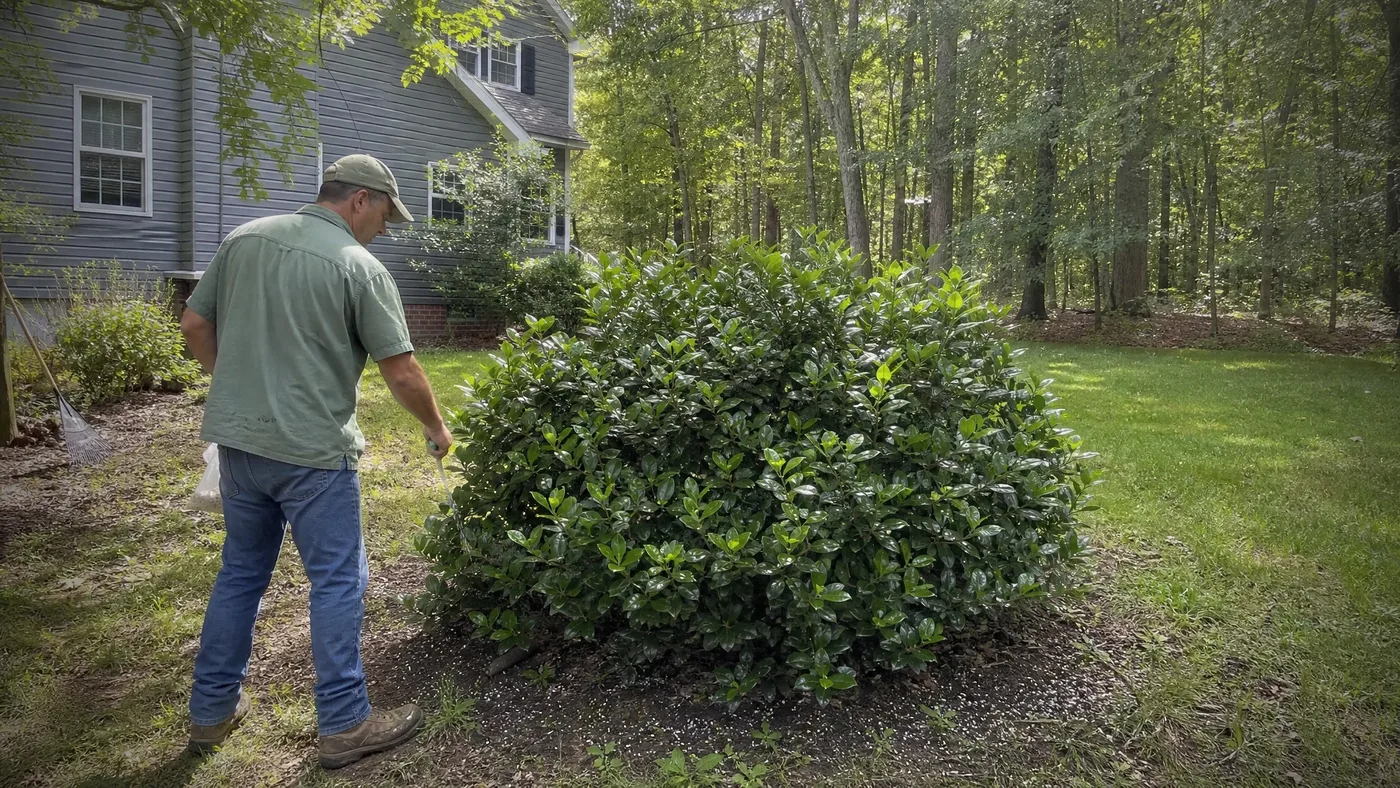
For a plant in the ground, a granular acid-forming product is all you need. Most established gardenias grow well with two or three applications a year. Sprinkle the granules evenly under the branches, keep them a few inches off the stems, and water them in.
Our fertilizing guide has the timing and amounts, so we won't repeat them here. August Beauty stays at 4–6 feet tall and 3–4 feet wide, so it needs less than the bigger gardenias that reach 8 feet. Do not size your dose to a shrub twice its dimensions.
Shrubs in Pots
Containers lose nutrients faster because every watering carries some through the drainage holes. Slow-release granules do best here, since one application keeps working through repeated watering. Measure to the pot size on the label, not to a guess.
Our container guide covers potting mix and watering, and both affect how a fertilizer performs. If the pot has stood for a while, flush it with plain water now and then. White crust on the soil or rim means salts are building up, and more fertilizer is the wrong answer.
When the Soil Is the Real Problem
Sometimes the best fertilizer decision is not a fertilizer at all. If a soil test comes back above the acid range, no feed will keep the leaves green for long. Fix the pH first, then feed. Your local extension service can tell you what raises or lowers pH in your region's soils, and that is better advice than any rule of thumb from us.
Timing and the Fall Cutoff
Feed during active growth, around the time bloom begins. Clemson says the flowers open from May through June and sporadically through the summer. Then stop. NC State says not to fertilize in the fall because it causes a rush of frost-tender growth.
That rule matters most where winters are cold, and our winter care guide shows what else to do before frost.
When Fertilizer Goes Wrong: Reading the Leaves
Most feeding problems show first in the leaves. The patterns below are the ones we check first when someone describes a struggling plant.
Yellow New Leaves With Green Veins
This is the classic iron pattern. Iron chlorosis develops when gardenias cannot absorb enough iron, most commonly because the soil pH is too high. The soil may hold plenty of iron and the roots still cannot reach it.
Adding more fertilizer will not fix that. Check pH first, lower it if needed, and use chelated iron for a quick green-up in the meantime. Our guide to yellowing and missing blooms goes deeper on telling this apart from watering trouble.
Brown Leaf Edges and Wilting After Feeding
Crispy margins a week or two after feeding usually mean fertilizer burn. The usual causes are too much product, granules left against the stem, or feeding dry soil. Water deeply and repeatedly to leach the excess, hold off on further feeding for the rest of the season, and expect slow recovery.
Soft, Lush Growth Late in the Year
We often see this after a late-summer or fall feeding. The plant pushes tender shoots that frost then blackens. Do not cut them back right away. Leave the damage until growth restarts in spring, then prune out what is clearly dead.
Our list of common problems covers other causes of leaf drop and dieback that look similar.
A Quick Troubleshooting Checklist
Run through these steps in order before you reach for another bag.
- Test the soil pH, because a result above 6.0 explains most yellowing no matter what you feed.
- Check whether granules were applied against the stems or on dry soil, which points to burn rather than hunger.
- Look at the age of the yellow leaves: new growth suggests iron, while a general pale cast suggests the plant needs a regular feed.
- Confirm the last feeding date, and stop feeding in fall regardless of how the plant looks.
Choosing Fertilizer for August Beauty Gardenia: The Takeaway
Buy one granular, acid-forming or azalea-type fertilizer with micronutrients on the label, apply it two or three times in the growing season, and skip it in fall. Keep chelated iron on hand for yellow new leaves, and test your soil pH before you blame the feed. Most problems come from the soil, not from a missing product.
August Beauty Gardenia
Nursery-grown August Beauty Gardenia in sizes from 1 Gallon, shipped to your door.
From $33.97
Shop Now →Our growers watch for pale new growth in spring, scorched edges after summer feeding and tender late shoots in fall, and we tune our own feeding around what the plants show us. We grow and sell August Beauty ourselves on our own farms, so the advice here is what we follow with our own plants.