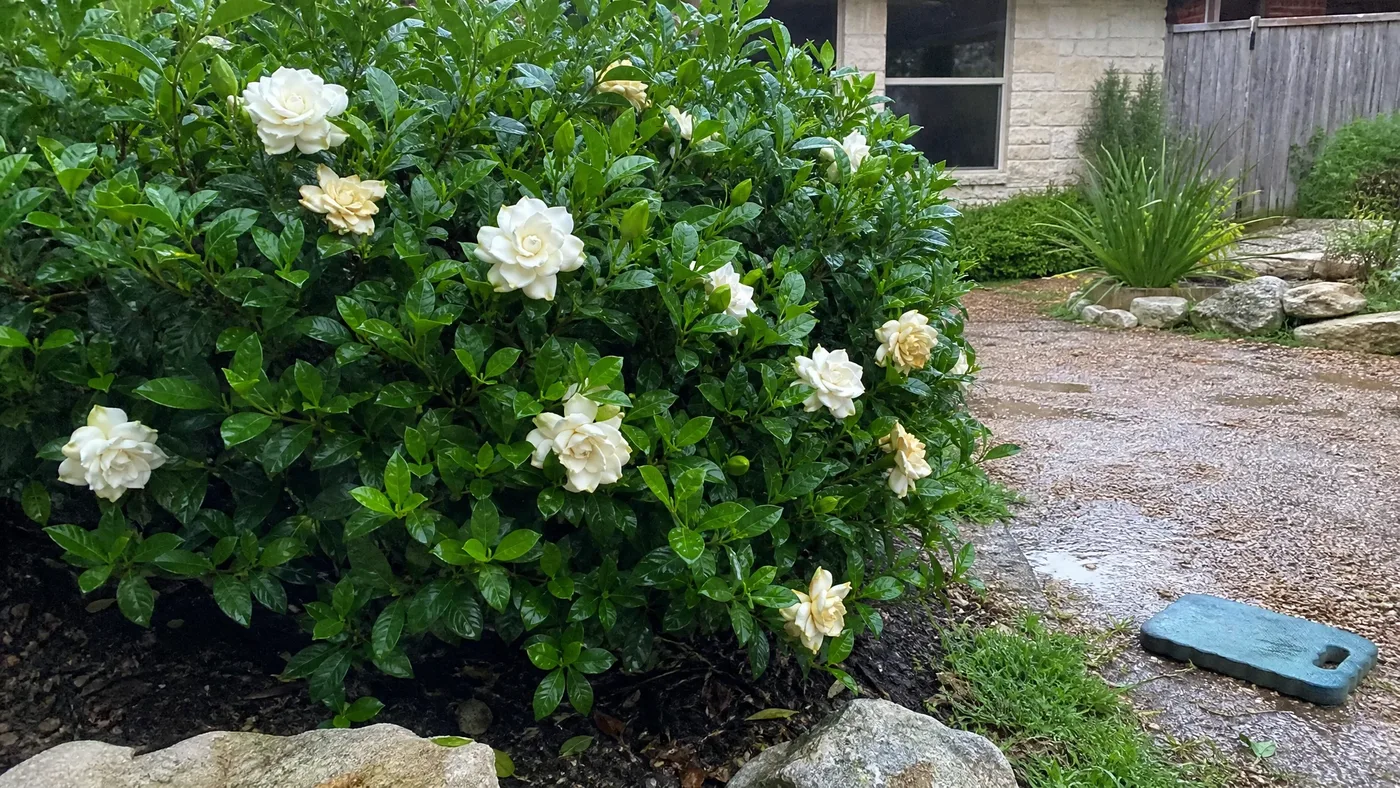
Do Coffee Grounds and Epsom Salt Help August Beauty Gardenia?
It is mid-August and your August Beauty has gone pale. The newest leaves look washed out, the flowers are thinning, and a neighbor tells you to tip the morning coffee grounds around the base and sprinkle on a little Epsom salt. Both tips are old, and both sound reasonable.
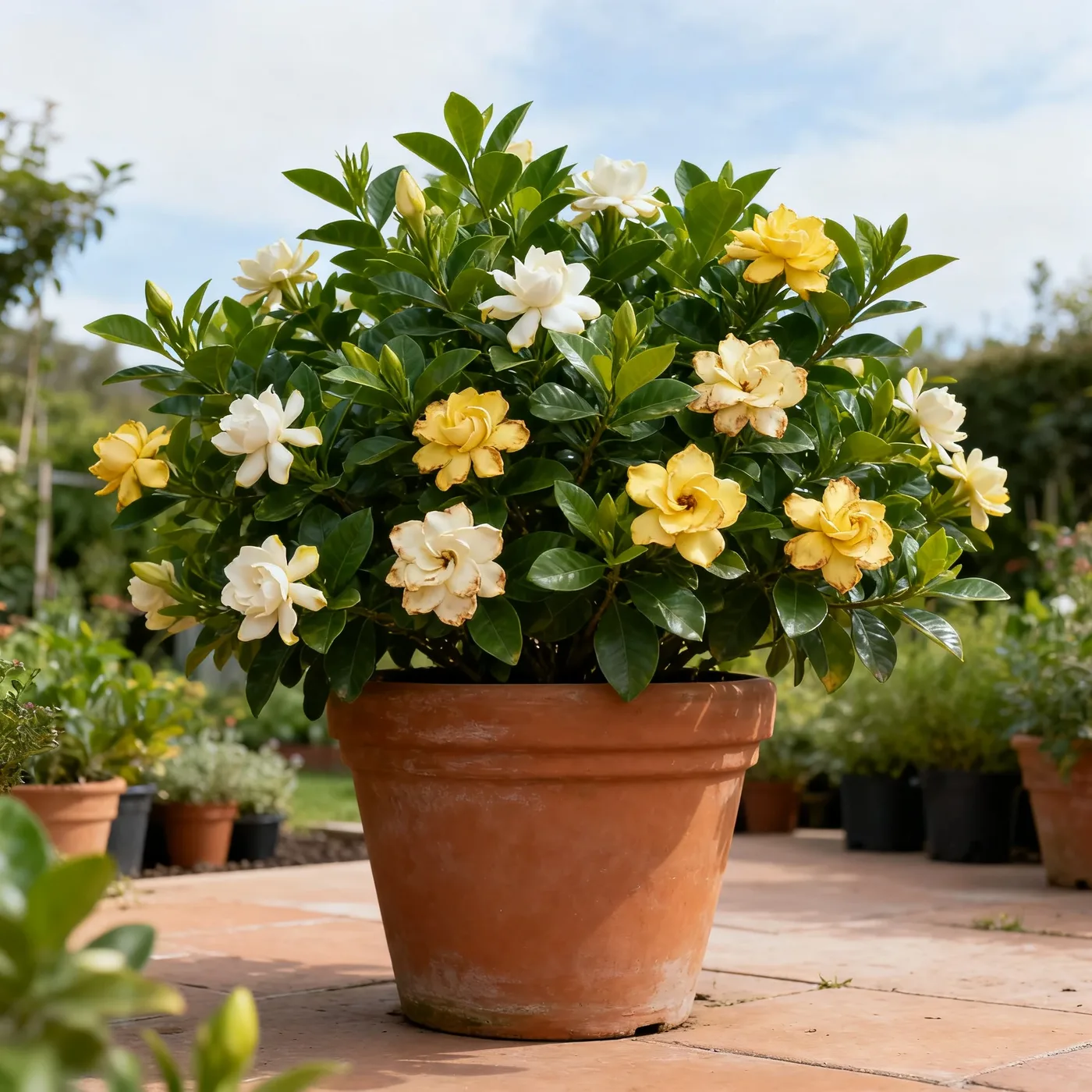
This article talks about what coffee grounds and Epsom salt actually do in the soil around a gardenia and answers the questions customers ask us most. Read on to learn why grounds do not acidify the soil, the one case where Epsom salt makes sense, what really fixes yellow leaves, and how to read the symptoms before you reach for anything.
Get this wrong and you can spend a season treating the wrong problem while the real one gets worse.
Do Coffee Grounds and Epsom Salt Help August Beauty Gardenia?
Here is the plain answer first, then the reasons behind it in the sections that follow.
The Short Answer
For most August Beauty plants, no. Used coffee grounds are not the acid boost people think they are, and they can starve the roots of nitrogen as they break down. Epsom salt supplies magnesium, which your shrub needs only if the soil is short of it, and most yellow gardenias are not short of it.
The usual cause of a pale, yellowing gardenia is iron the plant cannot reach because the soil pH has crept too high. Neither remedy fixes that.
Why Both Tips Keep Circulating
Both remedies come from real chemistry that gets stretched too far. Coffee is acidic in the cup, so people assume the leftovers are acidic in the soil. Epsom salt is magnesium sulfate, and magnesium is part of chlorophyll, so people assume it greens up any pale leaf. Each idea has a grain of truth and a large gap between that grain and your gardenia.
One of the most common questions we get is whether the kitchen can replace the fertilizer bag. It cannot. What we tell customers is to treat these as side topics, and to put the real effort into soil pH and a proper acid-forming feed. Our fertilizing guide covers that routine in full.
What Used Coffee Grounds Really Do in the Soil
The myth rests on one assumption, so it is worth checking the number and then looking at what grounds do to the roots.
The pH Is Close to Neutral
Oregon State University reports that after brewing, the grounds are close to pH neutral, between 6.5 and 6.8. The acid mostly leaves with the coffee. The same university names gardenias among the plants that need a lower soil pH to thrive, and says coffee grounds will not provide it.
A neutral material cannot pull a soil down into the acid range. At best it does nothing to the pH. At worst it sits there while your pH problem continues.
Grounds Can Tie Up Nitrogen
As coffee grounds break down, soil microorganisms use nitrogen to grow and reproduce, and that nitrogen is tied up while they work. For a gardenia this matters. August Beauty is a mid-size shrub, 4–6 feet high and 3–4 feet wide, and it is putting energy into double flowers up to 3 inches across. A layer of fresh grounds can pull nitrogen away from the roots just when the plant needs it.
The result looks a lot like the problem you were trying to solve: slow growth and pale foliage. That is why a heap of grounds so often seems to make things worse.
A Layer Can Also Cake
Fine, wet grounds tend to pack into a crust at the surface. A crust sheds water and slows air getting to the shallow roots that gardenias depend on. If you do use grounds, they should never be piled around the stems.
If You Still Want to Use Grounds, Do It This Way
Some customers will use their grounds regardless, and there is a safe way to do it that keeps them from hurting the plant.
Compost Them First
The approach we recommend is to put grounds in the compost bin and use the finished compost. Oregon State advises that a compost pile should not exceed 20% coffee grounds by volume, or it can become toxic to plants. Mix them with leaves and other plant waste, let the pile finish, and then work a modest amount of the result into the bed.
Finished compost improves soil structure and moisture holding, which a gardenia appreciates. Just do not count it as an acidifier.
Keep Amounts Small
If you must apply grounds directly, spread a thin scatter and mix it into the top of the mulch rather than stacking it against the trunk. Skip them entirely on a plant that is already yellow and struggling. A stressed shrub does not need a nitrogen competitor added to its root zone.
Skip the Rescue Plan
One piece of advice we don't follow for this plant is the idea that grounds can rescue a gardenia in alkaline soil. If your soil is the problem, a thin layer of kitchen waste will not move it. Fix the soil itself, which the soil section below explains.
When Epsom Salt Helps and When It Hurts
Epsom salt is a legitimate product with a narrow use, and the dividing line is a soil test result rather than leaf color.
Only on Proof of a Shortfall
The University of Minnesota Extension says that Epsom salts can be a good source of magnesium, but only if a soil test indicates a magnesium deficiency. That is our position too. A yellow gardenia leaf has many possible causes, and magnesium is rarely the first suspect.
If a lab test does show low magnesium, ask your local extension service how much to apply for a shrub of this size. We will not give a dose here, because the right amount depends on your test.
Too Much Does Harm
The same extension source warns that adding Epsom salts to soil that already has enough magnesium can harm the soil and the plants, for instance by inhibiting calcium uptake. So a sprinkle meant to green up the leaves can add a second problem on top of the first.
Gardenias that sit in a container are even easier to overdo, because there is less soil to buffer what you add. Our container guide explains how to feed a potted plant in small, measured steps.
Why It Fools People
Magnesium shortage and iron shortage can both leave leaves pale. A grower who sees yellowing and reaches for Epsom salt may feel a bit better, but they have skipped the test that tells them which nutrient is actually missing.
What August Beauty Gardenia Actually Needs
Once the two remedies are set aside, the real needs are simple. The plant wants acid soil, steady moisture and a way to get iron.
Acid Soil Is the Real Lever
NC State Extension lists acid soil, below pH 6.0, for the species, and the University of Florida says the pH should be between 5.0 and 6.5. Test your bed before you change anything. Our soil guide shows how to correct it and keep it there.
Iron Is Usually Present but Locked Up
Clemson Extension explains that although soil often contains adequate iron, it becomes unavailable when the soil pH is above 7.0. This is why a bed full of iron can still produce yellow leaves. The shrub is surrounded by the nutrient and cannot use it.
The Fix Has Two Steps
Clemson recommends chelated iron applied annually to the soil or directly to the leaves, which greens the plant while you work on the underlying pH. Lowering the pH is the long-term answer. We cover suitable feeds in our fertilizer products guide.
Chelated iron is a quick correction. It does not replace getting the soil right, so plan on both.
How to Read Yellow Leaves Before You Treat Them
A careful look at where the yellowing starts, and what you have recently added, will usually point to the cause. Check these before you buy or sprinkle anything.
Start With What You Changed
Ask three questions. Did you add grounds, lime, bark or fresh mulch recently? Has the weather been unusually wet or dry? Is the plant in the ground or in a pot? The table below lines up common patterns with the most likely cause and the response we would make.
| What you see | Likely cause | What we would do |
|---|---|---|
| Pale new leaves with veins staying greener | Iron locked up by high pH | Test the soil, apply chelated iron, then lower the pH over time |
| Slow growth and general paleness after a heavy layer of grounds | Nitrogen tied up by microbes | Rake the grounds back, then feed with an acid-forming fertilizer |
| Yellowing with a soil test showing low magnesium | Magnesium shortfall | Apply Epsom salt at the rate your extension service gives |
| Yellow leaves with soggy soil | Watering or drainage | Let the root zone drain and review the schedule |
Rule Out Water and Light
Overwatering and poor drainage can yellow a gardenia even in perfect soil, so read our watering guide alongside this one. For a fuller walk through of blooming and yellowing together, see why an August Beauty may not bloom or may turn yellow.
In our rows, the plants that struggle most are the ones where someone added three or four fixes at once. Change one thing, then wait to see the result.
What We Tell August Beauty Owners About Home Remedies
Grounds will not acidify your soil and can tie up nitrogen, so keep them in the compost bin. Epsom salt earns a place only when a soil test shows low magnesium, since too much can block calcium uptake. Yellow leaves on an August Beauty most often mean iron the roots cannot reach, and the cure is a lower soil pH plus chelated iron.
August Beauty Gardenia
Nursery-grown August Beauty Gardenia in sizes from 1 Gallon, shipped to your door.
From $33.97
Shop Now →Test first, change one thing at a time and give the plant a few weeks to answer. On our farms we give August Beauty acid, moist, well-drained soil and light shade with morning sun and afternoon shade, because getting those conditions right does more for the leaves than anything from the kitchen.